
Call us
301-363-4651 (Available 9 a.m. to 5 p.m. CST from Monday to Friday)

| Code | CSB-RA934881A0HU |
| Size | US$210 |
| Order now | |
| Image |
|
| Have Questions? | Leave a Message or Start an on-line Chat |
| Application | Recommended Dilution |
|---|---|
| WB | 1:500-1:5000 |
| IHC | 1:50-1:200 |
| IP | 1:200-1:1000 |
CD8A serves as a critical co-receptor on cytotoxic T lymphocytes, working alongside the T-cell receptor to recognize antigens presented by MHC class I molecules. This surface glycoprotein plays an essential role in adaptive immune responses, making it an indispensable marker for researchers investigating T-cell biology, tumor immunology, and immune checkpoint pathways.
This recombinant monoclonal antibody, clone 2F2, offers the reproducibility that demanding immunological studies require. Because the antibody sequence is defined and produced recombinantly in rabbit host cells, you can expect consistent performance across experiments and between lots, eliminating the variability that can complicate longitudinal studies or multi-site collaborations.
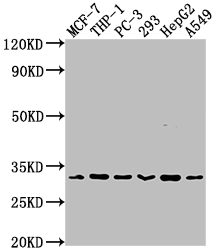
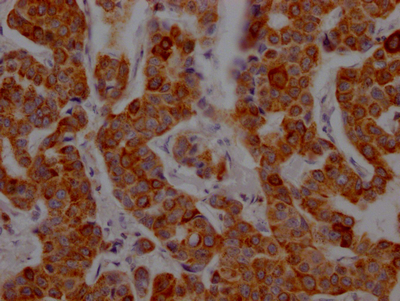
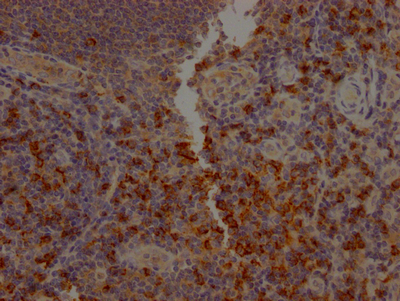
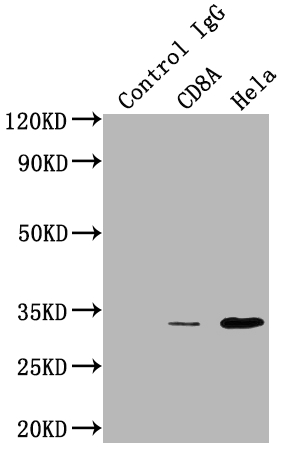
Validation across multiple experimental platforms demonstrates genuine workflow flexibility. Western blot analysis confirms reliable detection in diverse human cell lines including MCF-7, THP-1, PC-3, 293, HepG2, and A549, with an observed band at 31 kDa. This molecular weight aligns with the larger predicted isoform and likely reflects the glycosylated form of CD8A, consistent with its nature as a cell surface glycoprotein. For tissue-based studies, immunohistochemistry has been validated in paraffin-embedded human breast cancer and tonsil sections using citrate buffer antigen retrieval, providing clear visualization of CD8-positive cell populations. Immunoprecipitation capability has been confirmed in HepG2 lysates, enabling protein interaction studies and complex isolation.
The antibody is supplied in a glycerol-containing buffer optimized for long-term storage stability at -20°C or -80°C. Working dilutions span from 1:500 to 1:5000 for western blotting, 1:50 to 1:200 for immunohistochemistry, and 1:200 to 1:1000 for immunoprecipitation, allowing optimization for your specific experimental conditions. This reagent supports investigations across immunology research, from basic T-cell characterization to translational immuno-oncology applications.
There are currently no reviews for this product.





