
Call us
301-363-4651 (Available 9 a.m. to 5 p.m. CST from Monday to Friday)

| Code | CSB-RA825204A0HU |
| Size | US$210 |
| Order now | |
| Image |
|
| Have Questions? | Leave a Message or Start an on-line Chat |
| Application | Recommended Dilution |
|---|---|
| IF | 1:20-1:200 |
| FC | 1:20-1:200 |
AKR1C3, also known as aldo-keto reductase family 1 member C3, serves as a multifunctional enzyme with critical roles in steroid hormone metabolism, prostaglandin biosynthesis, and xenobiotic detoxification. This enzyme catalyzes the conversion of androgens and estrogens, functioning as both a 17-beta-hydroxysteroid dehydrogenase and 3-alpha-hydroxysteroid dehydrogenase. Its involvement in androgen biosynthesis has made it a significant focus in prostate cancer research, while its broader metabolic functions connect it to studies spanning neuroscience, cancer biology, and cellular signaling pathways.
This recombinant rabbit monoclonal antibody, clone 4D12, was generated against a synthetic peptide derived from human AKR1C3, ensuring precise epitope targeting. The recombinant production method delivers the consistency that demanding experimental workflows require, with each lot maintaining identical binding characteristics and eliminating the variability often encountered with traditional hybridoma-derived antibodies. Affinity chromatography purification further ensures high specificity for your target.
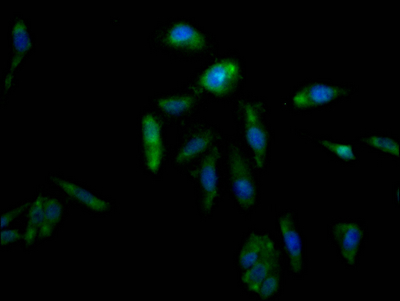
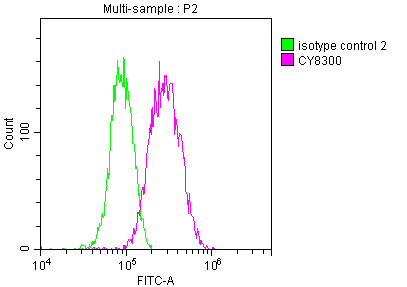
Validation studies demonstrate reliable performance across multiple detection platforms. Immunofluorescence analysis of HeLa cells reveals clear cytoplasmic localization patterns when used at dilutions from 1:20 to 1:200, with FITC-conjugated secondary detection providing excellent signal resolution. Flow cytometry applications have been validated using A549 lung adenocarcinoma cells, where the antibody produces distinct positive population shifts compared to isotype controls, confirming specific detection of endogenous AKR1C3 expression.
The unconjugated format offers flexibility for pairing with your preferred secondary detection systems across immunofluorescence, flow cytometry, and ELISA applications. Whether investigating steroid metabolism in cancer models, exploring prostaglandin signaling, or examining metabolic enzyme expression patterns, this antibody provides a dependable tool for human AKR1C3 detection in your research.
There are currently no reviews for this product.





