
Call us
301-363-4651 (Available 9 a.m. to 5 p.m. CST from Monday to Friday)

| Code | CSB-RA585843A0HU |
| Size | US$210 |
| Order now | |
| Image |
|
| Have Questions? | Leave a Message or Start an on-line Chat |
| Application | Recommended Dilution |
|---|---|
| IHC | 1:50-1:200 |
PTGER2, also known as the prostaglandin E2 receptor EP2 subtype, plays a central role in mediating the diverse physiological effects of prostaglandin E2 signaling. As a G protein-coupled receptor, PTGER2 activation influences inflammatory responses, tissue homeostasis, and cellular proliferation pathways. Its involvement in prostaglandin signaling has made it a target of considerable interest in cancer biology, metabolic research, and signal transduction studies, where understanding receptor expression patterns can provide valuable insights into disease mechanisms and potential therapeutic approaches.
This recombinant monoclonal antibody, generated against a synthetic peptide derived from human PTGER2, offers the consistency and reliability that demanding research applications require. Because recombinant antibodies are produced from defined genetic sequences, researchers benefit from lot-to-lot reproducibility that supports longitudinal studies and ensures experimental comparability across projects. The rabbit IgG format, purified by affinity chromatography, delivers the specificity expected from a monoclonal clone while maintaining the sensitivity needed for detecting membrane-associated receptor proteins.
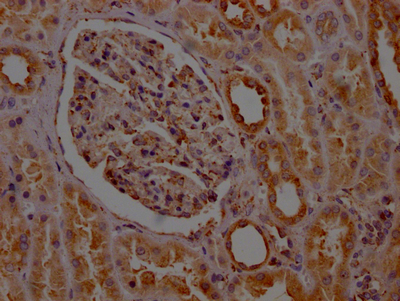
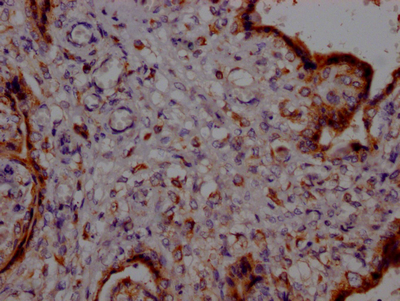
Validation studies demonstrate robust performance in immunohistochemistry applications, with successful staining observed in paraffin-embedded human kidney and placenta tissues at 1:100 dilution using citrate buffer antigen retrieval. These results confirm the antibody's utility for examining PTGER2 expression across different human tissue contexts, providing researchers flexibility when investigating receptor distribution in both normal physiology and pathological conditions.
For investigators exploring prostaglandin receptor biology in cancer progression, metabolic regulation, or signal transduction mechanisms, this antibody provides a reliable tool for characterizing PTGER2 expression patterns in human tissue samples through immunohistochemical analysis.
There are currently no reviews for this product.





