
Call us
301-363-4651 (Available 9 a.m. to 5 p.m. CST from Monday to Friday)

| Code | CSB-RA200985A0HU |
| Size | US$210 |
| Order now | |
| Image |
|
| Have Questions? | Leave a Message or Start an on-line Chat |
| Application | Recommended Dilution |
|---|---|
| IHC | 1:50-1:200 |
| FC | 1:20-1:200 |
Neutrophil elastase, encoded by the ELANE gene, is a serine protease released by neutrophils during inflammatory responses and plays a critical role in antimicrobial defense, tissue remodeling, and immune regulation. Dysregulation of this enzyme has been implicated in chronic inflammatory conditions, tumor microenvironment modulation, and various immunological disorders, making it a compelling target for researchers investigating cancer biology, immunology, and signal transduction pathways.
This recombinant monoclonal antibody, generated against a synthetic peptide derived from human neutrophil elastase, offers the reproducibility and consistency that demanding experimental workflows require. Because recombinant antibodies are produced from defined sequences rather than traditional hybridoma methods, researchers benefit from lot-to-lot uniformity that supports longitudinal studies and multi-site collaborations without the variability concerns associated with conventional antibody production.
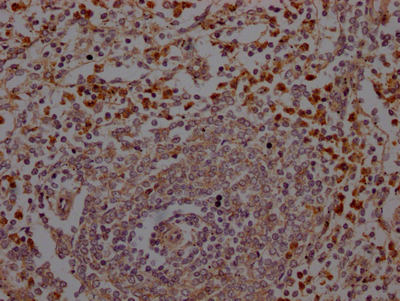
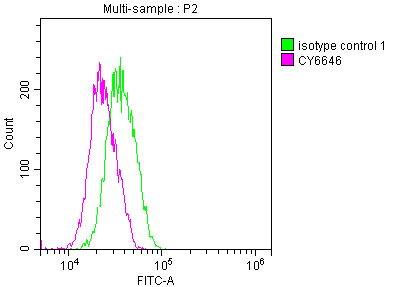
Validation studies demonstrate reliable performance across multiple applications. Immunohistochemical staining of paraffin-embedded human spleen tissue at 1:100 dilution reveals clear target detection using standard citrate buffer antigen retrieval on automated platforms, confirming suitability for archival tissue analysis. Flow cytometry experiments using Jurkat cells show distinct signal separation from isotype controls at 1:50 dilution following ethanol fixation, providing researchers with flexibility for intracellular detection protocols. The antibody is additionally validated for ELISA applications, offering versatility across quantitative and qualitative experimental approaches.
Supplied in a glycerol-containing buffer optimized for long-term stability at ultra-low temperatures, this unconjugated format allows researchers to select secondary detection systems appropriate for their specific instrumentation and multiplexing requirements. Whether investigating neutrophil-mediated inflammation, characterizing immune cell populations in tumor samples, or exploring elastase activity in infectious disease models, this antibody provides a dependable tool for human target detection.
There are currently no reviews for this product.





