
Call us
301-363-4651 (Available 9 a.m. to 5 p.m. CST from Monday to Friday)

| Code | CSB-RA008585A0HU |
| Size | US$210 |
| Order now | |
| Image |
|
| Have Questions? | Leave a Message or Start an on-line Chat |
| Application | Recommended Dilution |
|---|---|
| WB | 1:500-1:5000 |
| IHC | 1:50-1:200 |
| IF | 1:20-1:200 |
FEN1 (Flap endonuclease 1) serves as a critical structure-specific nuclease essential for DNA replication and repair processes. This enzyme processes Okazaki fragments during lagging strand synthesis and participates in long-patch base excision repair, making it indispensable for maintaining genomic stability. Dysregulation of FEN1 has been implicated in cancer progression and cellular senescence, positioning it as a significant target for researchers investigating DNA damage response pathways and cell cycle regulation.
This recombinant monoclonal antibody, generated against a synthetic peptide derived from human FEN1, offers the reproducibility and consistency that demanding experimental workflows require. As a sequence-defined reagent produced through recombinant technology, clone 4D9 eliminates the lot-to-lot variability that can compromise longitudinal studies, ensuring your results remain comparable across experiments conducted months or years apart.
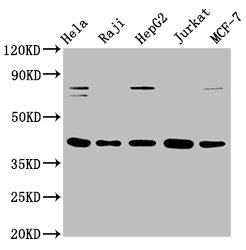
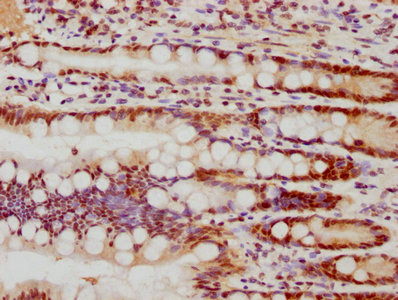
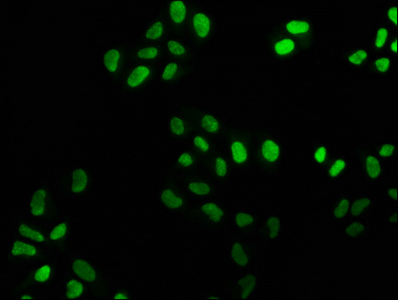
Validation across multiple detection platforms demonstrates this antibody's experimental versatility. Western blot analysis confirms reliable detection of FEN1 at the expected 43 kDa molecular weight across diverse human cell lines including HeLa, Raji, HepG2, Jurkat, and MCF-7, providing confidence when working with various cellular models. Immunohistochemistry testing in paraffin-embedded human small intestine tissue confirms suitability for archival sample analysis, while immunofluorescence staining in HeLa cells reveals clear nuclear localization consistent with FEN1's known biological function in DNA metabolism.
Whether you are investigating DNA repair mechanisms, exploring replication stress responses, or examining epigenetic regulation, this antibody provides a dependable tool for detecting FEN1 in your experimental system. The flexibility to move seamlessly between biochemical, histological, and cell-based imaging approaches makes it particularly valuable for comprehensive target characterization studies.
There are currently no reviews for this product.





