
Call us
301-363-4651 (Available 9 a.m. to 5 p.m. CST from Monday to Friday)

| Code | CSB-RA018694A0HU |
| Size | US$210 |
| Order now | |
| Image |
|
| Have Questions? | Leave a Message or Start an on-line Chat |
| Application | Recommended Dilution |
|---|---|
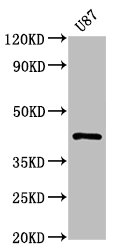
| WB | 1:500-1:5000 |
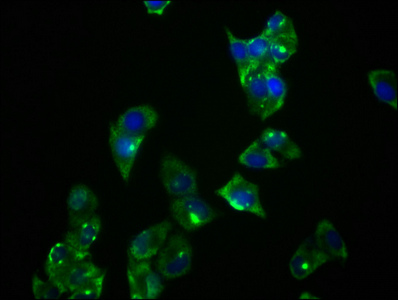
| IF | 1:20-1:200 |
PRKAR1A serves as the type I-alpha regulatory subunit of cAMP-dependent protein kinase, functioning as a critical gatekeeper in the PKA signaling pathway. By binding cAMP and releasing the catalytic subunits, PRKAR1A directly modulates cellular responses to hormonal and metabolic signals. Mutations in this gene are associated with Carney complex and various endocrine tumors, making it a significant target for researchers investigating signal transduction mechanisms, tumor suppression, and metabolic regulation.
This recombinant monoclonal antibody, clone 1C3, offers the consistency and reproducibility that demanding experimental workflows require. Because it is generated from a defined sequence rather than traditional hybridoma methods, researchers benefit from lot-to-lot uniformity that supports reliable data across extended studies and multi-site collaborations. The rabbit host and monoclonal nature combine high affinity with exceptional specificity for human PRKAR1A.
Validation studies demonstrate reliable performance across multiple applications. In western blot analysis of U87 glioblastoma whole cell lysate, the antibody detects a clear band at the predicted 43 kDa molecular weight, confirming target specificity at dilutions ranging from 1:500 to 1:5000. Immunofluorescence studies in HeLa cells reveal distinct cytoplasmic localization patterns consistent with PRKAR1A's known subcellular distribution, with effective staining achieved at dilutions between 1:20 and 1:200. The antibody is also validated for ELISA applications, providing flexibility for quantitative studies.
Supplied in a glycerol-containing buffer optimized for long-term stability, this antibody supports researchers exploring cAMP-PKA signaling dynamics, endocrine tumor biology, and broader signal transduction questions where precise detection of this regulatory subunit is essential.
There are currently no reviews for this product.





