Recombinant Mouse Lysosomal acid Glucosylceramidase (Gba1)

In Stock
Code CSB-EP009289MO
Abbreviation Recombinant Mouse Gba1 protein
MSDS
Size US$306
Order now
Image
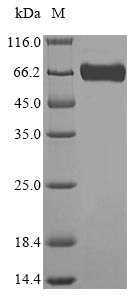
  • (Tris-Glycine gel) Discontinuous SDS-PAGE (reduced) with 5% enrichment gel and 15% separation gel.
Have Questions? Leave a Message or Start an on-line Chat

Product Details

Purity
Greater than 85% as determined by SDS-PAGE.
Target Names
Uniprot No.
Research Area
Neuroscience
Alternative Names
GbaLysosomal acid glucosylceramidase; Lysosomal acid GCase; EC 3.2.1.45; Acid beta-glucosidase; Beta-glucocerebrosidase; Cholesterol glucosyltransferase; SGTase; EC 2.4.1.-; Cholesteryl-beta-glucosidase; EC 3.2.1.104; D-glucosyl-N-acylsphingosine glucohydrolase
Species
Mus musculus (Mouse)
Source
E.coli
Expression Region
20-515aa
Target Protein Sequence
AQPCIPKSFGYSSVVCVCNASYCDSLDPVTLPALGTFSRYESTRRGRRMELSVGAIQANRTGTGLLLTLQPEKKFQKVKGFGGAMTDATALNILALSPPTQKLLLRSYFSTNGIEYNIIRVPMASCDFSIRVYTYADTPNDFQLSNFSLPEEDTKLKIPLIHQALKMSSRPISLFASPWTSPTWLKTNGRVNGKGSLKGQPGDIFHQTWANYFVKFLDAYAKYGLRFWAVTAENEPTAGLFTGYPFQCLGFTPEHQRDFISRDLGPALANSSHDVKLLMLDDQRLLLPRWAEVVLSDPEAAKYVHGIAVHWYMDFLAPAKATLGETHRLFPNTMLFASEACVGSKFWEQSVRLGSWDRGMQYSHSIITNLLYHVTGWTDWNLALNPEGGPNWVRNFVDSPIIVDIPKDAFYKQPMFYHLGHFSKFIPEGSQRVALVASESTDLETVALLRPDGSAVVVVLNRSSEDVPLTISDPDLGFLETVSPGYSIHTYLWRRQ
Note: The complete sequence may include tag sequence, target protein sequence, linker sequence and extra sequence that is translated with the protein sequence for the purpose(s) of secretion, stability, solubility, etc.
If the exact amino acid sequence of this recombinant protein is critical to your application, please explicitly request the full and complete sequence of this protein before ordering.
Mol. Weight
71.5kDa
Protein Length
Full Length of Mature Protein
Tag Info
N-terminal 6xHis-SUMO-tagged
Form
Liquid or Lyophilized powder
Note: We will preferentially ship the format that we have in stock, however, if you have any special requirement for the format, please remark your requirement when placing the order, we will prepare according to your demand.
Buffer
If the delivery form is liquid, the default storage buffer is Tris/PBS-based buffer, 5%-50% glycerol.
Note: If you have any special requirement for the glycerol content, please remark when you place the order.
If the delivery form is lyophilized powder, the buffer before lyophilization is Tris/PBS-based buffer, 6% Trehalose.
Troubleshooting and FAQs
Storage Condition
Store at -20°C/-80°C upon receipt, aliquoting is necessary for mutiple use. Avoid repeated freeze-thaw cycles.
Shelf Life
The shelf life is related to many factors, storage state, buffer ingredients, storage temperature and the stability of the protein itself.
Generally, the shelf life of liquid form is 6 months at -20°C/-80°C. The shelf life of lyophilized form is 12 months at -20°C/-80°C.
Lead Time
3-7 business days
Notes
Repeated freezing and thawing is not recommended. Store working aliquots at 4°C for up to one week.
Datasheet & COA
Please contact us to get it.
Description

Recombinant Mouse Lysosomal acid Glucosylceramidase (Gba1) comes from an E.coli expression system and contains the complete mature protein sequence spanning amino acids 20 to 515. The protein carries an N-terminal 6xHis-SUMO tag that appears to improve both solubility and purification efficiency. SDS-PAGE analysis shows the product achieves greater than 85% purity, which should provide consistent results for most research applications.

Lysosomal acid Glucosylceramidase, or Gba1, serves a vital function in lysosomal degradation by breaking down glucosylceramide into glucose and ceramide. This enzymatic process is crucial for proper cellular lipid balance. Given its central role in these pathways, Gba1 represents an important research target for understanding lysosomal disorders and related conditions.

Potential Applications

Note: The applications listed below are based on what we know about this protein's biological functions, published research, and experience from experts in the field. However, we haven't fully tested all of these applications ourselves yet. We'd recommend running some preliminary tests first to make sure they work for your specific research goals.

The mouse Gba1 is a lysosomal enzyme that requires correct folding, disulfide bond formation, glycosylation, and proteolytic processing for its enzymatic activity in glucosylceramide metabolism. E. coli, as a prokaryotic system, lacks the eukaryotic chaperones, glycosylation machinery, and lysosomal proteases necessary for proper Gba1 maturation. The SUMO tag may improve solubility, but it cannot compensate for these fundamental limitations. Without experimental validation (e.g., enzyme activity assays), the protein is highly unlikely to be correctly folded or bioactive. The >85% purity indicates low impurities but does not guarantee functional conformation.

1. Protein-Protein Interaction Studies Using His-Tag Affinity Purification

The His-SUMO tag enables pull-down assays to identify potential binding partners. However, if Gba1 is misfolded (as expected in E. coli), interactions may be non-physiological. The tags themselves may cause artifactual binding. Validate any identified partners using native Gba1 from mouse lysosomes or eukaryotic expression systems.

2. Antibody Development and Validation

This application is suitable. The recombinant Gba1 can serve as an immunogen for generating antibodies against linear epitopes, even if misfolded. The high purity supports consistent immunization. However, antibodies generated may not recognize conformational epitopes of native, properly folded and glycosylated Gba1. Validate antibody specificity against endogenous Gba1 from mouse tissues.

3. Biochemical Characterization and Stability Studies

Suitable for basic biophysical analysis of the recombinant Gba1 protein (e.g., thermal stability, aggregation state). However, data will reflect the properties of the misfolded E. coli product, not native Gba1. Do not extrapolate results to physiological enzyme behavior.

4. Structural Biology Sample Preparation

The 85% purity is insufficient for high-resolution structural studies. Even with further purification, the misfolded protein will not yield meaningful structural insights into native Gba1. The SUMO tag and lack of glycosylation make it unsuitable for crystallography or cryo-EM of the physiological enzyme.

Final Recommendation & Action Plan

This E. coli-expressed Gba1 is unsuitable for functional studies without rigorous validation. First, test enzymatic activity using a fluorogenic substrate (e.g., 4-MUG) to confirm glucocerebrosidase function. If inactive (as expected), limit use to non-functional applications like antibody production, but validate antibodies against native Gba1. For structural or interaction studies, use Gba1 expressed in mammalian or insect cells that support proper folding and glycosylation. Always include appropriate controls with native Gba1 when possible.

Customer Reviews and Q&A

 Customer Reviews

There are currently no reviews for this product.

Submit a Review here

Target Background

Function
Glucosylceramidase that catalyzes, within the lysosomal compartment, the hydrolysis of glucosylceramide/GlcCer into free ceramide and glucose. Thereby, plays a central role in the degradation of complex lipids and the turnover of cellular membranes. Through the production of ceramides, participates in the PKC-activated salvage pathway of ceramide formation. Also plays a role in cholesterol metabolism. May either catalyze the glucosylation of cholesterol, through a transglucosylation reaction that transfers glucose from glucosylceramide to cholesterol. The short chain saturated C8:0-GlcCer and the mono-unsaturated C18:0-GlcCer being the most effective glucose donors for that transglucosylation reaction. Under specific conditions, may alternatively catalyze the reverse reaction, transferring glucose from cholesteryl-beta-D-glucoside to ceramide. Finally, may also hydrolyze cholesteryl-beta-D-glucoside to produce D-glucose and cholesterol.
Gene References into Functions
  1. Thus, while the underlying mechanism is not clear, this model shows that gba deficiency impacts the age of onset and disease duration in aged SNCA(A53T) mice, providing a valuable resource to identify modifiers, pathways and possible moonlighting roles of glucocerebrosidase in Parkinson pathogenesis. PMID: 29173981
  2. The data support the contention that prolonged antagonism of glucosylceramide synthase (GCS)in the central nervous system (CNS)can affect alpha-synuclein processing and improve behavioral outcomes. Hence, inhibition of GCS represents a disease-modifying therapeutic strategy for GBA-related synucleinopathies and conceivably for certain forms of sporadic disease PMID: 28223512
  3. These results indicate that Gba1 deficiency enhances neuronal vulnerability to neurodegenerative processes triggered by increased alpha-synuclein expression. PMID: 28969384
  4. This study demonstrated that the gba1 deficiency mice showed gene regulation expression of the type I interferon. PMID: 27175482
  5. Rab7 accumulated in GCase deficient cells, supporting the notion that lysosomal recycling is impaired. Since recombinant GCase can reverse ALR impairment, we anticipate that strategies to restore GCase activity in the brains of both sporadic patients with PD and those with GBA1 mutations will improve autophagy lysosomal pathway, preventing the accumulation of a-synuclein and spread of pathology. PMID: 27378698
  6. heterozygosity for a Gaucher disease-associated mutation in glucocerebrosidase interferes with alpha-synuclein degradation and contributes to its accumulation PMID: 25351739
  7. Data indicate that ABC transporter A family member 12 knockout (Abca12(-/-)) epidermis had 5-fold more beta-glucocerebrosidase (GCase) protein, and a 5-fold increase in GCase activity. PMID: 24293640
  8. These results demonstrate, for the first time, a novel function of GBA1 as a beta-ChlGlc-synthesizing enzyme. PMID: 24211208
  9. Substrate compositional variation with tissue/region and Gba1 mutations in mouse models--implications for Gaucher disease. PMID: 23520473
  10. GBA1 and GBA2 activities had characteristic differences between the studied fibroblast, liver and brain samples. PMID: 22659419
  11. results not only point to a fundamental role for GBA in immune regulation but also suggest that GBA mutations in GD may cause widespread immune dysregulation through the accumulation of substrates PMID: 22665763
  12. This study suggested that several leads connecting GBA1 mutations with alpha-synuclein misprocessing have emerged as potential targets for the treatment of GBA1-related synucleinopathies. PMID: 22327140
  13. IFG stabilizes GCase in tissues and serum and can reduce visceral substrates in vivo. PMID: 22167193
  14. Mutations in GBA1 can cause Parkinson disease-like alpha-synuclein pathology; rescuing brain glucocerebrosidase activity might represent a therapeutic strategy for GBA1-associated synucleinopathies. PMID: 21730160
  15. evidence for the involvement of deletion of the GBA1 gene in multiple cell lineages in nonneuronopathic type 1 Gaucher disease PMID: 20962279
  16. The saposin C deficient mice backcrossed to point mutated GCase mimics the central nervous system phenotype and biochemistry of some type 3 (neuronopathic) variants of Gaucher disease. PMID: 20047948
  17. isofagomine increases the activity of the Gaucher disease L444P mutant form of beta-glucosidase PMID: 20148966
  18. Saposin C has multiple roles in glycosphingolipid catabolism and functions in Central Nervous System independent of its role as an stabilizer of GCase. PMID: 20015957
  19. mRNA shows generalized low level expression early in gestation with gradual appearance of differential expression appearing around gestational age E14 and significantly increasing at term and into adulthood. PMID: 11749048
  20. Results indicate that glucocerebrosidase deficiency, even in the absence of large amounts of sphingolipid storage, can trigger an inflammatory reaction. PMID: 11994410
  21. data indicate that saposin C is required for acid beta-glucosidase resistance to proteolytic degradation in the cell PMID: 12813057

Show More

Hide All

Subcellular Location
Lysosome membrane; Peripheral membrane protein; Lumenal side.
Protein Families
Glycosyl hydrolase 30 family
Database Links
icon of phone
Call us
301-363-4651 (Available 9 a.m. to 5 p.m. CST from Monday to Friday)

icon of address
Address
7505 Fannin St., Ste 610, Room 7 (CUBIO Innovation Center), Houston, TX 77054, USA
icon of social media
Join us with

Subscribe newsletter

Leave a message

* To protect against spam, please pass the CAPTCHA test below.
CAPTCHA verification
© 2007-2025 CUSABIO TECHNOLOGY LLC All rights reserved. 鄂ICP备15011166号-1
×
Place an order now

I. Product details

*
*
*
*

II. Contact details

*
*

III. Ship To

*
*
*
*
*
*
*

IV. Bill To

*
*
*
*
*
*
*
*


