
Call us
301-363-4651 (Available 9 a.m. to 5 p.m. CST from Monday to Friday)

| Code | CSB-BP303961BDK |
| Abbreviation | Recombinant Bacteriophage H30 stxB protein |
| MSDS | |
| Size | $352 |
| Order now | |
| Image |
|
| Have Questions? | Leave a Message or Start an on-line Chat |
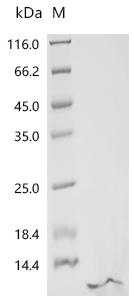
Recombinant Bacteriophage H30 Shiga-like toxin 1 subunit B (stxB) is produced through the baculovirus expression system, spanning amino acids 21 to 89. This full-length mature protein carries a C-terminal 6xHis tag, which makes purification and detection more straightforward. The product achieves greater than 95% purity based on SDS-PAGE analysis, suggesting it may deliver reliable results in research settings.
The Shiga-like toxin 1 subunit B (stxB) appears to be central to how the Shiga-like toxin complex functions. It enables the toxin to bind to host cell receptors—a critical step in the toxin's mechanism of action. Research on this protein could shed light on host-pathogen interactions and proves valuable for understanding microbial pathogenesis.
Potential Applications
Note: The applications listed below are based on what we know about this protein's biological functions, published research, and experience from experts in the field. However, we haven't fully tested all of these applications ourselves yet. We'd recommend running some preliminary tests first to make sure they work for your specific research goals.
The Baculovirus system provides a eukaryotic environment that supports proper folding, disulfide bond formation, and some post-translational modifications, which is advantageous for toxin proteins like stxB that require precise folding for receptor binding. stxB naturally forms a pentamer that binds to globotriaosylceramide (Gb3) receptors on host cells. The C-terminal His tag is unlikely to significantly interfere with the functional domain. While the expression system suggests a high probability of correct folding, the protein's bioactivity (specifically, its ability to form pentamers and bind Gb3) remains unknown without experimental validation.
1. Protein-Protein Interaction Studies Using Pull-Down Assays
The His tag enables pull-down assays to identify potential binding partners, particularly Gb3 or other host cell receptors. However, if stxB is misfolded or fails to form proper pentamers, interactions may be non-physiological. Validate any identified interactions using native Shiga toxin or confirm pentamer formation via size-exclusion chromatography before functional studies.
2. Antibody Development and Characterization
This application is highly suitable. The recombinant stxB can serve as an excellent immunogen for generating specific antibodies. The Baculovirus expression system likely preserves native conformational epitopes important for toxin neutralization. Validate antibodies against native Shiga toxin to ensure recognition of physiological forms.
3. Biochemical Characterization and Stability Studies
This recombinant Bacteriophage H30 stxB is well-suited for biophysical analysis of stxB properties. The high purity allows accurate assessment of oligomerization state (pentamer formation), thermal stability, and structural integrity. The Baculovirus system may produce glycosylation patterns similar to the native toxin. However, confirm pentamer formation before extrapolating data to native toxin behavior.
4. Comparative Structural and Functional Analysis
This application requires validated bioactivity. If stxB is confirmed to form functional pentamers with Gb3-binding capability, it can be used for comparative studies with other Shiga-like toxins. Without activity validation, structural comparisons may not reflect functional differences. First, verify receptor binding affinity and specificity.
Final Recommendation & Action Plan
Before using this recombinant stxB for functional applications, validate its folding and bioactivity. First, analyze its oligomeric state using size-exclusion chromatography with multi-angle light scattering (SEC-MALS) to confirm pentamer formation. Then, perform receptor binding assays using Gb3-coated surfaces or cell-based assays to verify biological activity. If active, proceed with interaction, structural, or comparative studies; if inactive, limit use to antibody production or biochemical characterization. For reliable results, always include appropriate controls with native Shiga toxin when possible.
There are currently no reviews for this product.





