
Call us
301-363-4651 (Available 9 a.m. to 5 p.m. CST from Monday to Friday)

| Code | CSB-EP351195ENV |
| Abbreviation | Recombinant E.coli gpmA protein |
| MSDS | |
| Size | $388 |
| Order now | |
| Image |
|
| Have Questions? | Leave a Message or Start an on-line Chat |
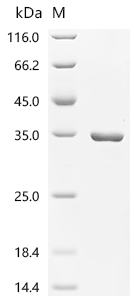
Recombinant Escherichia coli 2,3-bisphosphoglycerate-dependent phosphoglycerate mutase (gpmA) is produced in an E. coli expression system, containing the full length of the mature protein (2-250aa). The protein carries an N-terminal 10xHis tag and a C-terminal Myc tag, which makes purification and detection more straightforward. SDS-PAGE analysis shows purity greater than 95%, suggesting it should deliver reliable results for research applications.
2,3-bisphosphoglycerate-dependent phosphoglycerate mutase appears to play a central role in both glycolytic and gluconeogenesis pathways. It catalyzes the interconversion of 3-phosphoglycerate and 2-phosphoglycerate. The enzyme's activity seems essential for efficient energy production and consumption within cells. Studying this protein may be important for understanding bacterial metabolism, and the findings could potentially inform broader research on metabolic processes.
Potential Applications
Note: The applications listed below are based on what we know about this protein's biological functions, published research, and experience from experts in the field. However, we haven't fully tested all of these applications ourselves yet. We'd recommend running some preliminary tests first to make sure they work for your specific research goals.
Based on the provided information, the recombinant E. coli gpmA is expressed in its native E. coli system, which significantly increases the probability of proper folding and functionality. As a bacterial enzyme expressed in its homologous prokaryotic system, gpmA has a high likelihood of correct folding since E. coli contains the necessary chaperones and cellular environment for its own proteins. The protein is full-length mature (2-250aa) with dual tags (N-terminal 10xHis and C-terminal Myc) and exhibits high purity (>95%). However, since activity is unverified and the presence of dual tags may potentially interfere with the active site or oligomerization state, the protein cannot be assumed to be fully functional without experimental validation of its phosphoglycerate mutase activity.
1. Protein-Protein Interaction Studies Using Dual-Tag Pull-Down Assays
The dual tagging system enables technical feasibility for interaction studies, but caution is warranted. While E. coli expression favors proper folding, the tags may still affect protein conformation or oligomerization. If gpmA is properly folded, pull-down assays could identify genuine metabolic interactors. However, the tags might cause steric hindrance or non-specific interactions. This application should include controls to distinguish specific from tag-mediated interactions.
2. Antibody Development and Validation Platform
This application is appropriate and relatively low-risk. The recombinant gpmA can serve as an effective immunogen for generating antibodies against linear epitopes. The high purity supports immunization protocols. However, antibodies may not recognize conformational epitopes if tags affect protein folding. Validation against native E. coli gpmA is recommended to ensure recognition of the endogenous enzyme.
3. Comparative Biochemical Analysis and Enzyme Characterization
This application is well-suited but requires activity validation for functional studies. Basic biophysical characterization (thermal stability, oligomeric state) is feasible and valuable. However, enzymatic assays (kinetic parameters, cofactor studies) should only be performed after confirming mutase activity. The tags may affect catalytic efficiency or substrate binding, so results should be interpreted cautiously.
4. Tag-Assisted Protein Complex Assembly Studies
This application carries a significant risk. While the tags enable technical approaches for complex assembly, they may drive non-physiological oligomerization or interactions. gpmA functions in metabolic complexes, but tag-mediated assembly may not reflect native metabolon formation. This application should only be pursued after confirming that tags don't interfere with native structure and function.
Final Recommendation & Action Plan
Given the homologous expression system, this gpmA has high potential for proper folding and function. Recommended first steps: 1) Validate phosphoglycerate mutase activity using standard enzymatic assays with 2,3-bisphosphoglycerate and 3-phosphoglycerate substrates; 2) Perform biophysical characterization (size-exclusion chromatography, circular dichroism) to confirm proper folding and oligomeric state; 3) If possible, compare with tag-cleaved protein to assess tag effects. Antibody development can proceed immediately. For interaction and complex studies, include appropriate controls (e.g., tag-only controls, competition experiments) and validate findings with native E. coli extracts. For precise functional studies, consider using a tag-cleaved protein or verifying that tags don't affect enzymatic activity.
There are currently no reviews for this product.
KEGG: ecj:JW0738
STRING: 316385.ECDH10B_0822





