
Call us
301-363-4651 (Available 9 a.m. to 5 p.m. CST from Monday to Friday)

| Code | CSB-EP325325SMM |
| Abbreviation | Recombinant Streptococcus phage Cp-1 CPL1 protein |
| MSDS | |
| Size | $388 |
| Order now | |
| Image |
|
| Have Questions? | Leave a Message or Start an on-line Chat |
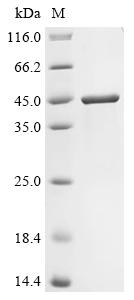
Recombinant Streptococcus phage Cp-1 Lysozyme (CPL1) is expressed in E.coli and contains the complete protein sequence spanning amino acids 1 to 339. The protein carries a 10xHis-tag at the N-terminus and a Myc-tag at the C-terminus, which makes purification and detection more straightforward. SDS-PAGE analysis confirms that the product reaches purity levels above 90%. This lysozyme is intended strictly for research purposes and doesn't undergo endotoxin removal procedures.
Lysozyme from Streptococcus phage Cp-1 appears to play a central role in breaking down bacterial cell walls, particularly by attacking the peptidoglycan layer. This enzymatic function seems crucial for bacterial breakdown and bacteriophage reproduction. CPL1 has become a popular model enzyme for researchers investigating bacteriophage-host relationships, enzyme mechanics, and possible antimicrobial applications.
Potential Applications
Note: The applications listed below are based on what we know about this protein's biological functions, published research, and experience from experts in the field. However, we haven't fully tested all of these applications ourselves yet. We'd recommend running some preliminary tests first to make sure they work for your specific research goals.
Based on the provided information, the recombinant Streptococcus phage Cp-1 Lysozyme (CPL1) is expressed in E. coli, a prokaryotic system that can often correctly fold bacterial or phage-derived proteins like lysozymes, as they may not require complex post-translational modifications. However, since the protein's activity is explicitly unknown and unvalidated, it cannot be guaranteed to be correctly folded or bioactive. The presence of dual tags (N-terminal His-tag and C-terminal Myc-tag) might potentially interfere with folding or function, though tags are often designed to minimize such issues. Therefore, without experimental validation (e.g., enzymatic activity assays), the folding and bioactivity remain uncertain.
1. Protein-Protein Interaction Studies Using Dual-Tag Pull-Down Assays
The dual-tagged CPL1 protein offers technical advantages for pull-down assays, as the His-tag allows immobilization on nickel resins and the Myc-tag enables detection. However, if the protein is misfolded, it may not interact authentically with binding partners (e.g., from bacterial lysates), leading to non-physiological results. The dual-tag system improves reliability for capture and detection, but findings should be interpreted cautiously until folding is confirmed. If correctly folded, this application is feasible; otherwise, results may be artifactual.
2. Antibody Development and Validation Platform
This recombinant CPL1 can serve as an immunogen for antibody generation, as antibodies often target linear epitopes that are less dependent on native folding. The high purity (>90%) is suitable for immunization, and the dual tags facilitate purification and validation assays (e.g., Western blotting). However, if the protein is misfolded, antibodies may not recognize the native lysozyme in its functional context. Validation against native CPL1 is recommended to ensure specificity for conformational epitopes.
3. Biochemical Characterization and Stability Studies
This application is highly appropriate and can directly assess protein folding. Techniques like circular dichroism or dynamic light scattering can evaluate secondary structure and aggregation, providing insights into folding status. The high purity and consistent expression support reproducible results. Even if the protein is misfolded, these studies are valuable for characterizing the recombinant product. Such analyses should be prioritized to inform other applications.
4. Tag-Based Detection Method Development
The dual-tag setup makes this protein ideal for developing detection protocols (e.g., ELISA, Western blot), as tags are designed for accessibility regardless of protein folding. The recombinant protein can serve as a positive control for optimizing reagent performance. While misfolding might slightly affect tag exposure in rare cases, tags are typically engineered to remain accessible. This application is low-risk and correctly described.
Final Recommendation & Action Plan
Given the uncertainty in folding and bioactivity, the recommended plan is to first perform biochemical and functional validation to confirm the protein's conformation and activity. This includes conducting enzymatic assays (e.g., using bacterial cell wall substrates to test lysozyme activity) and biophysical characterization (e.g., size-exclusion chromatography for oligomeric state, circular dichroism for secondary structure). If the protein is active and correctly folded, it can be reliably used for all described applications; if not, focus on tag-based detection or antibody development while avoiding interaction studies. Always include controls comparing with native protein when possible, and consider re-optimizing expression conditions if folding issues are detected.
There are currently no reviews for this product.
KEGG: vg:1261221





