
Call us
301-363-4651 (Available 9 a.m. to 5 p.m. CST from Monday to Friday)

| Code | CSB-RA827308A0HU |
| Size | US$210 |
| Order now | |
| Image |
|
| Have Questions? | Leave a Message or Start an on-line Chat |
| Application | Recommended Dilution |
|---|---|
| IHC | 1:50-1:200 |
| IF | 1:50-1:200 |
| FC | 1:50-1:200 |
CAPNS1, also known as calpain small subunit 1, serves as the essential regulatory component of the calpain protease system, forming obligate heterodimers with the catalytic large subunits calpain-1 and calpain-2. This calcium-dependent regulatory protein is indispensable for calpain stability and activity, making it a critical node in cellular processes ranging from cytoskeletal remodeling and cell migration to apoptosis and signal transduction. Dysregulation of calpain activity has been implicated in numerous pathological conditions, including neurodegeneration, muscular dystrophy, and cancer progression, positioning CAPNS1 as a valuable target for researchers investigating these disease mechanisms.
This recombinant monoclonal antibody, generated against a synthetic peptide derived from human CAPNS1, offers the reproducibility and batch-to-batch consistency that demanding experimental workflows require. As a sequence-defined reagent produced through recombinant technology, it eliminates the variability inherent in traditional hybridoma-derived antibodies, ensuring that your results remain comparable across extended studies.
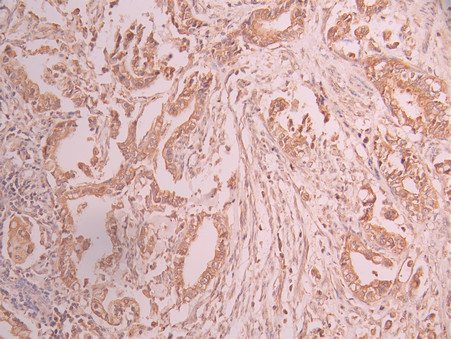
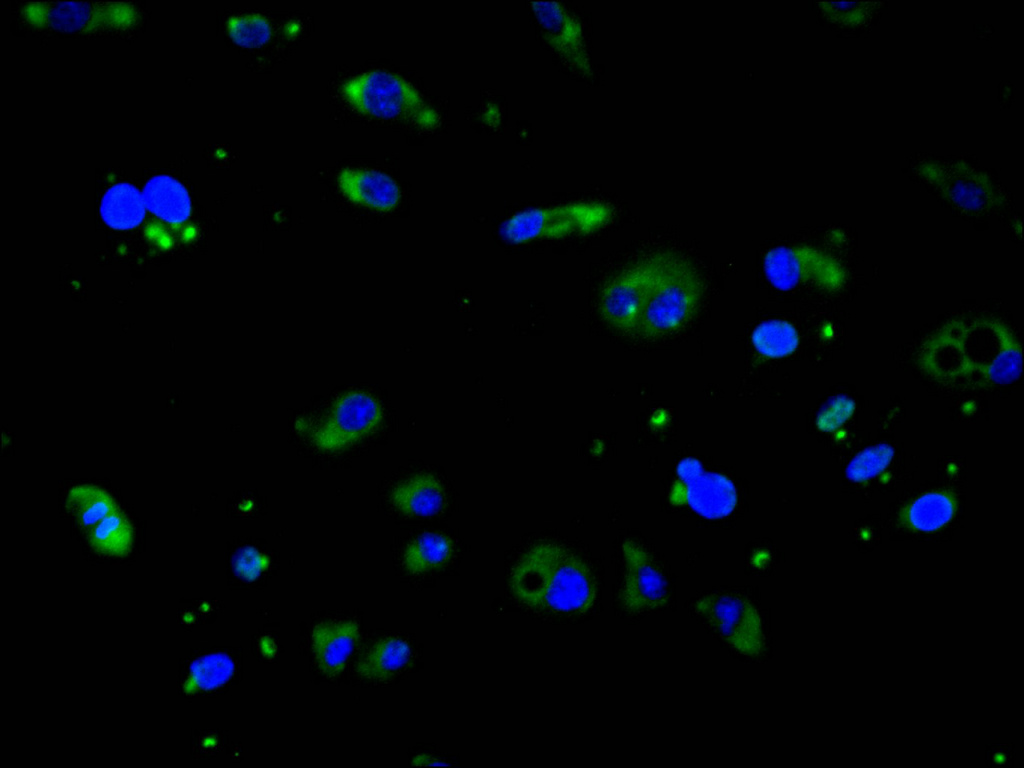
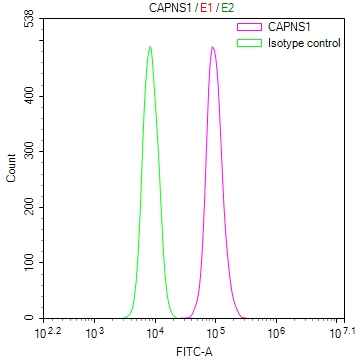
Validation across multiple detection platforms demonstrates the versatility of this antibody for diverse experimental approaches. Immunohistochemical staining of paraffin-embedded human cervical cancer tissue at 1:100 dilution reveals clear target detection, while immunofluorescence analysis of A549 lung adenocarcinoma cells shows distinct cytoplasmic localization patterns. Flow cytometry validation using HeLa cells confirms robust performance in single-cell analysis applications, with clear separation between specific staining and isotype control populations.
Whether investigating calpain-mediated proteolysis in cancer biology, studying calcium signaling pathways, or examining cellular stress responses, this antibody provides a reliable tool for detecting CAPNS1 in human samples across immunohistochemistry, immunofluorescence, and flow cytometry applications.
There are currently no reviews for this product.





