
Call us
301-363-4651 (Available 9 a.m. to 5 p.m. CST from Monday to Friday)

| Code | CSB-RA162790A0HU |
| Size | US$210 |
| Order now | |
| Image |
|
| Have Questions? | Leave a Message or Start an on-line Chat |
| Application | Recommended Dilution |
|---|---|
| IHC | 1:50-1:200 |
| IF | 1:50-1:200 |
| FC | 1:50-1:200 |
PSMA2, or proteasome subunit alpha type-2, serves as an essential structural component of the 20S proteasome core particle. This multicatalytic protease complex plays a central role in the ubiquitin-proteasome pathway, governing protein turnover, cell cycle regulation, and antigen processing. Given the proteasome's involvement in cancer progression, neurodegenerative diseases, and immune function, reliable detection of its subunits remains critical for researchers investigating these fundamental cellular processes.
This recombinant monoclonal antibody, clone 6B6, offers the consistency and reproducibility that demanding experimental workflows require. Produced using recombinant technology with a defined sequence, it eliminates the lot-to-lot variability often encountered with traditional hybridoma-derived antibodies. This sequence-defined approach ensures that your results remain comparable across extended studies and between laboratory groups.
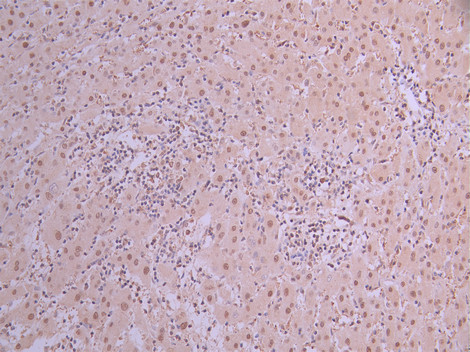
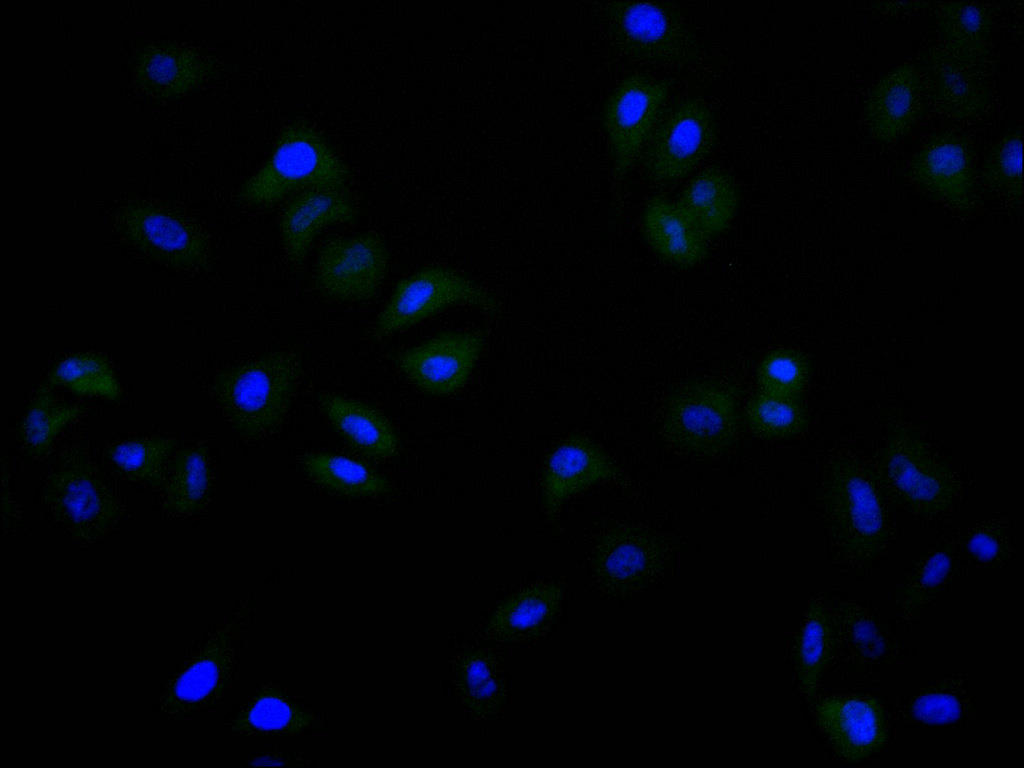
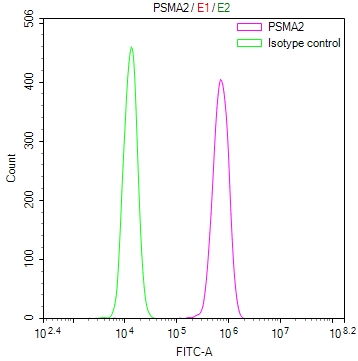
Validation data demonstrates robust performance across multiple detection platforms. In immunohistochemistry, the antibody produces clear cytoplasmic staining in paraffin-embedded human liver cancer tissue at dilutions of 1:50 to 1:200, using standard citrate buffer antigen retrieval. Immunofluorescence studies in HeLa cells reveal distinct intracellular localization patterns when counterstained with DAPI, supporting subcellular distribution analysis. Flow cytometry validation using 786-O renal carcinoma cells shows a clear positive shift compared to isotype controls, confirming utility for quantitative single-cell analysis of proteasome expression.
The unconjugated format provides flexibility for pairing with your preferred secondary detection systems across these applications. Whether you are examining proteasome dynamics in cancer models, studying protein degradation pathways, or investigating cellular stress responses, this antibody delivers the technical reliability needed for meaningful experimental outcomes.
There are currently no reviews for this product.





