Recombinant Foot-and-mouth disease virus Genome polyprotein, partial

In Stock
Code CSB-EP361015FCJ
Abbreviation Recombinant Foot-and-mouth disease virus serotype O Genome polyprotein, partial
MSDS
Size $256
Order now
Image
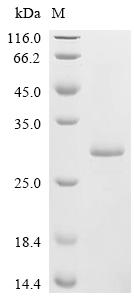
  • (Tris-Glycine gel) Discontinuous SDS-PAGE (reduced) with 5% enrichment gel and 15% separation gel.
Have Questions? Leave a Message or Start an on-line Chat

Product Details

Purity
Greater than 85% as determined by SDS-PAGE.
Activity
Not Test
Target Names
N/A
Uniprot No.
Research Area
Others
Species
Foot-and-mouth disease virus serotype O (FMDV)
Source
E.coli
Expression Region
1-201aa
Target Protein Sequence
MNTTDCFIALVQAIREIKALFLSRTTGKMELTLYNGEKKTFYSRPNNHDNCWLNAILQLFRYVEEPFFDWVYSSPENLTLEAIKQLEDLTGLELHEGGPPALVIWNIKHLLHTGIGTASRPSEVCMVDGTDMCLADFHAGIFLKGQEHAVFACVTSNGWYAIDDEDFYPWTPDPSDVLVFVPYDQEPLNGEWKAKVQRKLK
Note: The complete sequence may include tag sequence, target protein sequence, linker sequence and extra sequence that is translated with the protein sequence for the purpose(s) of secretion, stability, solubility, etc.
If the exact amino acid sequence of this recombinant protein is critical to your application, please explicitly request the full and complete sequence of this protein before ordering.
Mol. Weight
30.4 kDa
Protein Length
Partial
Tag Info
N-terminal 10xHis-tagged and C-terminal Myc-tagged
Form
Liquid or Lyophilized powder
Note: We will preferentially ship the format that we have in stock, however, if you have any special requirement for the format, please remark your requirement when placing the order, we will prepare according to your demand.
Buffer
If the delivery form is liquid, the default storage buffer is Tris/PBS-based buffer, 5%-50% glycerol. If the delivery form is lyophilized powder, the buffer before lyophilization is Tris/PBS-based buffer, 6% Trehalose, pH 8.0.
Reconstitution
We recommend that this vial be briefly centrifuged prior to opening to bring the contents to the bottom. Please reconstitute protein in deionized sterile water to a concentration of 0.1-1.0 mg/mL.We recommend to add 5-50% of glycerol (final concentration) and aliquot for long-term storage at -20°C/-80°C. Our default final concentration of glycerol is 50%. Customers could use it as reference.
Troubleshooting and FAQs
Storage Condition
Store at -20°C/-80°C upon receipt, aliquoting is necessary for mutiple use. Avoid repeated freeze-thaw cycles.
Shelf Life
The shelf life is related to many factors, storage state, buffer ingredients, storage temperature and the stability of the protein itself.
Generally, the shelf life of liquid form is 6 months at -20°C/-80°C. The shelf life of lyophilized form is 12 months at -20°C/-80°C.
Lead Time
3-7 business days
Datasheet & COA
Please contact us to get it.
Customer Reviews and Q&A

 Customer Reviews

There are currently no reviews for this product.

Submit a Review here

Target Background

Function
Autocatalytically cleaves itself from the polyprotein at the L/VP0 junction. Cleaves also the host translation initiation factors EIF4G1 and EIF4G3, in order to shutoff the capped cellular mRNA transcription. Plays a role in counteracting host innate antiviral response using diverse mechanisms. Possesses a deubiquitinase activity acting on both 'Lys'-48 and 'Lys'-63-linked polyubiquitin chains. In turn, inhibits the ubiquitination and subsequent activation of key signaling molecules of type I IFN response such as host DDX58, TBK1, TRAF3 and TRAF6. Inhibits host NF-kappa-B activity by inducing a decrease in RELA mRNA levels. Cleaves a peptide bond in the C-terminus of host ISG15, resulting in the damaging of this mofidier that can no longer be attached to target proteins. Cleaves also host G3BP1 and G3BP2 in order to inhibit cytoplasmic stress granules assembly.; Lies on the inner surface of the capsid shell. After binding to the host receptor, the capsid undergoes conformational changes. Capsid protein VP4 is released, capsid protein VP1 N-terminus is externalized, and together, they shape a pore in the host membrane through which the viral genome is translocated into the host cell cytoplasm. After genome has been released, the channel shrinks.; Forms an icosahedral capsid of pseudo T=3 symmetry with capsid proteins VP1 and VP3. The capsid is composed of 60 copies of each capsid protein organized in the form of twelve pentamers and encloses the viral positive strand RNA genome.; Capsid protein V1: Forms an icosahedral capsid of pseudo T=3 symmetry with capsid proteins VP2 and VP3. The capsid is composed of 60 copies of each capsid protein organized in the form of twelve pentamers and encloses the viral positive strand RNA genome. Mediates cell entry by attachment to an integrin receptor, usually host ITGAV/ITGB6, via a conserved arginine-glycine-aspartic acid (R-G-D) motif.; Capsid protein V3: Forms an icosahedral capsid of pseudo T=3 symmetry with capsid proteins VP0 and VP3. The capsid is composed of 60 copies of each capsid protein organized in the form of twelve pentamers and encloses the viral positive strand RNA genome.; Mediates self-processing of the polyprotein by a translational effect termed 'ribosome skipping'. Mechanistically, 2A-mediated cleavage occurs between the C-terminal glycine and the proline of the downstream protein 2B. In the case of foot-and-mouth disease virus, the 2A oligopeptide is post-translationally 'trimmed' from the C-terminus of the upstream protein 1D by 3C proteinase.; Plays an essential role in the virus replication cycle by acting as a viroporin. Creates a pore in the host reticulum endoplasmic and as a consequence releases Ca2+ in the cytoplasm of infected cell. In turn, high levels of cytoplasmic calcium may trigger membrane trafficking and transport of viral ER-associated proteins to viroplasms, sites of viral genome replication.; Associates with and induces structural rearrangements of intracellular membranes. Triggers host autophagy by interacting with host BECN1 and thereby promotes viral replication. Participates in viral replication and interacts with host DHX9. Displays RNA-binding, nucleotide binding and NTPase activities. May play a role in virion morphogenesis and viral RNA encapsidation by interacting with the capsid protein VP3.; Plays important roles in virus replication, virulence and host range.; Covalently linked to the 5'-end of both the positive-strand and negative-strand genomic RNAs. Acts as a genome-linked replication primer.; Covalently linked to the 5'-end of both the positive-strand and negative-strand genomic RNAs. Acts as a genome-linked replication primer.; Covalently linked to the 5'-end of both the positive-strand and negative-strand genomic RNAs. Acts as a genome-linked replication primer.; Cysteine protease that generates mature viral proteins from the precursor polyprotein. In addition to its proteolytic activity, binds to viral RNA and thus influences viral genome replication. RNA and substrate bind cooperatively to the protease.; RNA-directed RNA polymerase 3D-POL replicates genomic and antigenomic RNA by recognizing replications specific signals. Covalently attaches UMP to a tyrosine of VPg, which is used to prime RNA synthesis. The positive stranded RNA genome is first replicated at virus induced membranous vesicles, creating a dsRNA genomic replication form. This dsRNA is then used as template to synthesize positive stranded RNA genomes. ss(+)RNA genomes are either translated, replicated or encapsidated.
Subcellular Location
[Leader protease]: Host nucleus. Host cytoplasm.; [Capsid protein VP2]: Virion. Host cytoplasm.; [Capsid protein VP3]: Virion. Host cytoplasm.; [Capsid protein VP1]: Virion. Host cytoplasm.; [Protein 2B]: Host endoplasmic reticulum membrane.; [Protein 2C]: Host cytoplasmic vesicle membrane; Peripheral membrane protein; Cytoplasmic side.; [Protein 3A]: Host cytoplasm. Host endoplasmic reticulum membrane.; [Protein 3B-1]: Virion.; [Protein 3B-2]: Virion.; [Protein 3B-3]: Virion.; [Protease 3C]: Host cytoplasm.; [RNA-directed RNA polymerase 3D-POL]: Host cytoplasm. Host nucleus.
Protein Families
Picornaviruses polyprotein family
Database Links

KEGG: ag:CAA25416

icon of phone
Call us
301-363-4651 (Available 9 a.m. to 5 p.m. CST from Monday to Friday)
icon of address
Address
7505 Fannin St., Ste 610, Room 7 (CUBIO Innovation Center), Houston, TX 77054, USA
icon of social media
Join us with

Subscribe newsletter

Leave a message

* To protect against spam, please pass the CAPTCHA test below.
CAPTCHA verification
© 2007-2026 CUSABIO TECHNOLOGY LLC All rights reserved. 鄂ICP备15011166号-1
Place an order now

I. Product details

*
*
*
*

II. Contact details

*
*

III. Ship To

*
*
*
*
*
*
*

IV. Bill To

*
*
*
*
*
*
*
*



