
Call us
301-363-4651 (Available 9 a.m. to 5 p.m. CST from Monday to Friday)

| Code | CSB-YP839308HUe1 |
| Abbreviation | Recombinant Human BPIFA2 protein |
| MSDS | |
| Size | $416 |
| Order now | |
| Image |
|
| Have Questions? | Leave a Message or Start an on-line Chat |
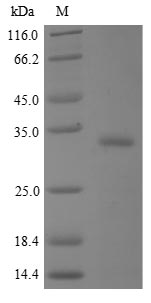
Recombinant Human BPIFA2 gets expressed in a yeast system, spanning the full length of the mature protein from amino acids 19 to 249. This tag-free protein demonstrates high purity levels above 90%, which SDS-PAGE analysis has confirmed. The protein is designed strictly for research purposes and appears to offer a dependable tool for scientific studies that require recombinant BPIFA2.
BPIFA2 belongs to the BPI fold-containing family and seems to play an important role in the body's innate immune defense systems. The protein is mainly involved in host defense through antimicrobial activities and likely participates in maintaining balance within the upper respiratory tract. Research interest in BPIFA2 stems from its function in mucosal immunity and possible connections to respiratory health.
Potential Applications
Note: The applications listed below are based on what we know about this protein's biological functions, published research, and experience from experts in the field. However, we haven't fully tested all of these applications ourselves yet. We'd recommend running some preliminary tests first to make sure they work for your specific research goals.
Based on the provided information, the folding state and bioactivity of this recombinant BPIFA2 protein are unknown and cannot be assumed. BPIFA2 is a secreted protein that typically adopts a characteristic BPI-fold structure stabilized by disulfide bonds, which is essential for its proposed functions in innate immunity and surfactant properties. While expression in a yeast system (eukaryotic) is favorable for disulfide bond formation compared to bacterial systems, and the protein is tag-free, representing the full-length mature sequence (19-249aa), there is no verification of correct folding or bioactivity. The >90% purity indicates minimal contaminants but does not confirm proper tertiary structure or functional activity. Therefore, applications relying on specific biological interactions or native conformation are speculative without validation.
1. Antibody Development and Validation Studies
This recombinant BPIFA2 protein is suitable as an immunogen for generating antibodies. The tag-free, full-length nature and high purity are advantageous for presenting potential conformational epitopes. Antibodies generated will be against this yeast-expressed recombinant BPIFA2. Their ability to recognize the natively folded, properly modified BPIFA2 protein in human airway secretions must be empirically validated. The recombinant BPIFA2 protein is reliable for developing detection tools, but functionality in recognizing endogenous protein requires confirmation.
2. Protein-Protein Interaction Studies
The tag-free recombinant BPIFA2 protein can be used in interaction studies. However, the utility for identifying physiological binding partners is entirely contingent on correct folding. BPIFA2 is proposed to interact with bacterial lipopolysaccharides, surfactant lipids, or host proteins in a structure-dependent manner. If misfolded, it will not present native binding surfaces, potentially leading to the identification of non-specific interactors. This application should be considered exploratory until protein folding is validated.
3. Biochemical Characterization and Stability Studies
This recombinant BPIFA2 protein is well-suited for detailed biochemical and biophysical characterization. Techniques like size exclusion chromatography, dynamic light scattering, and stability assays can provide valuable data on its oligomerization state, stability, and solution behavior. This application is valid as it focuses on intrinsic physical properties independent of bioactivity. The tag-free nature is a significant advantage for obtaining data relevant to the native protein's structure.
4. Functional Domain Mapping Studies
The full-length recombinant BPIFA2 protein can serve as a reference for structural studies. Techniques like limited proteolysis and cross-linking mass spectrometry can identify stable domains and structural features of this recombinant BPIFA2 protein, but conclusions about function cannot be drawn without confirming that the protein is bioactive.
Final Recommendation & Action Plan
The immediate priority is to validate the structural integrity and bioactivity of this recombinant BPIFA2 before investing in functional studies. The tag-free, full-length nature and yeast expression are positive indicators. Validation should include: 1) Structural analysis using circular dichroism to verify the characteristic BPI-fold secondary structure; 2) Assessment of disulfide bond formation via non-reducing PAGE or mass spectrometry; and 3) Functional assays if possible (e.g., binding to known ligands like LPS or antimicrobial activity). Once validated, the protein becomes highly valuable for all proposed applications. If activity is confirmed, it would be particularly useful for interaction studies (Application 2) and functional domain mapping (Application 4). If inactive, its use should be focused on antibody production (Application 1) and biophysical characterization (Application 3). The high purity and tag-free nature make this a valuable reagent, but functionality must be established for biologically meaningful conclusions.
There are currently no reviews for this product.





