
Call us
301-363-4651 (Available 9 a.m. to 5 p.m. CST from Monday to Friday)

| Code | CSB-EP744236MO |
| Abbreviation | Recombinant Mouse Fez2 protein |
| MSDS | |
| Size | $224 |
| Order now | |
| Image |
|
| Have Questions? | Leave a Message or Start an on-line Chat |
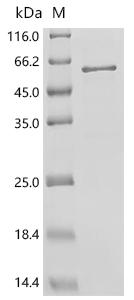
Recombinant Mouse Fasciculation and elongation protein zeta-2 (Fez2) is produced in E. coli and contains the full-length protein from amino acids 1 to 348. The protein carries a C-terminal 6xHis tag for easier purification and detection. SDS-PAGE analysis confirms the product reaches a purity level greater than 85%, which appears suitable for various research applications. This protein is intended for research use only and is not for diagnostic or therapeutic purposes.
Fez2 seems to play a role in intracellular transport processes and is likely involved in the development and maintenance of neuronal structures. The protein belongs to a family associated with axonal growth and guidance, contributing to the fasciculation and elongation of axons. Understanding how Fez2 functions and is regulated may be important for research in neural development and neurobiology, potentially offering insights into the complex mechanisms of neuronal connectivity.
Potential Applications
Note: The applications listed below are based on what we know about this protein's biological functions, published research, and experience from experts in the field. However, we haven't fully tested all of these applications ourselves yet. We'd recommend running some preliminary tests first to make sure they work for your specific research goals.
Based on the provided information, the folding state and bioactivity of this recombinant mouse Fez2 protein are unknown and cannot be assumed. While the protein is full-length (1-348aa), expression in a prokaryotic E. coli system for a eukaryotic protein carries an inherent risk of misfolding, as the necessary chaperones and post-translational modification machinery may be absent. The presence of a C-terminal 6xHis tag could also potentially interfere with the structure or function of the protein's native C-terminal region. Therefore, any application that depends on the protein's specific biological activity or correct tertiary structure is speculative without experimental validation.
1. Protein-Protein Interaction Studies Using His-Tag Pull-Down Assays
The C-terminal 6xHis tag allows this recombinant Fez2 to be immobilized for pull-down assays to identify potential binding partners from cell lysates. However, a critical caveat is that the success of this application is entirely contingent on the recombinant Fez2 protein being correctly folded. If the Fez2 protein is misfolded, it may not present the correct binding interfaces, leading to false-negative results or the identification of non-specific interactors that bind to the misfolded protein. Results must be interpreted with caution and confirmed with orthogonal methods.
2. Antibody Development and Validation
The recombinant full-length Fez2 protein is suitable for use as an immunogen to generate specific antibodies. The >85% purity is adequate for immunization. It is important to note that antibodies generated will primarily recognize linear epitopes. Their ability to bind the natively folded Fez2 protein in mouse tissues is not guaranteed and requires empirical validation (e.g., by immunocytochemistry or immunoprecipitation from native lysates). The protein is excellent for initial antibody screening and validation in techniques like Western blotting against denatured samples.
3. Biochemical Characterization and Biophysical Analysis
This purified recombinant Fez2 protein is well-suited for detailed biochemical and biophysical characterization. Techniques like size exclusion chromatography, dynamic light scattering, and analytical ultracentrifugation can provide insights into its oligomerization state, stability, and solution behavior. This application is valid and largely independent of the protein's specific bioactivity, as it focuses on intrinsic physical properties.
4. In Vitro Functional Assays Development
The full-length recombinant Fez2 can be used as a starting material for developing assay protocols. However, its utility in actual functional assays is entirely dependent on the confirmation of its bioactivity. The protein can be used to establish technical workflows for immobilization and detection. Until activity is confirmed, it cannot be considered a functional substrate, and any results from such assays would be uninterpretable.
Final Recommendation & Action Plan
The immediate and essential first step is to attempt to validate the protein's folding and/or bioactivity. Since Fez2 is involved in zinc binding and neuronal development, a logical initial experiment would be to test for zinc binding capability or to use a known functional assay if one exists. The outcome of this validation is critical: a positive result would justify and enable functional studies in Applications 1 and 4, while a negative result would limit the protein's reliable use to Applications 2 (with the caveat of linear epitope recognition) and 3 (biophysical characterization). Therefore, all proposed functional work should be considered preliminary until the protein's native state is confirmed.
There are currently no reviews for this product.





