Recombinant Mouse Proheparin-binding EGF-like growth factor (Hbegf), partial

In Stock
Code CSB-EP857429MO
Abbreviation Recombinant Mouse Hbegf protein, partial
MSDS
Size $306
Order now
Image
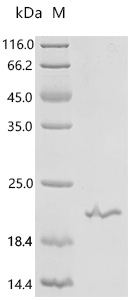
  • (Tris-Glycine gel) Discontinuous SDS-PAGE (reduced) with 5% enrichment gel and 15% separation gel.
Have Questions? Leave a Message or Start an on-line Chat

Product Details

Purity
Greater than 90% as determined by SDS-PAGE.
Activity
Not Test
Target Names
Uniprot No.
Research Area
Others
Alternative Names
Hbegf;Dtr, Hegfl
Species
Mus musculus (Mouse)
Source
E.coli
Expression Region
63-148aa
Target Protein Sequence
DLEGTDLNLFKVAFSSKPQGLATPSKERNGKKKKKGKGLGKKRDPCLRKYKDYCIHGECRYLQEFRTPSCKCLPGYHGHRCHGLTL
Note: The complete sequence may include tag sequence, target protein sequence, linker sequence and extra sequence that is translated with the protein sequence for the purpose(s) of secretion, stability, solubility, etc.
If the exact amino acid sequence of this recombinant protein is critical to your application, please explicitly request the full and complete sequence of this protein before ordering.
Mol. Weight
16.7 kDa
Protein Length
Partial
Tag Info
C-terminal 6xHis-tagged
Form
Liquid or Lyophilized powder
Note: We will preferentially ship the format that we have in stock, however, if you have any special requirement for the format, please remark your requirement when placing the order, we will prepare according to your demand.
Buffer
If the delivery form is liquid, the default storage buffer is Tris/PBS-based buffer, 5%-50% glycerol. If the delivery form is lyophilized powder, the buffer before lyophilization is Tris/PBS-based buffer, 6% Trehalose, pH 8.0.
Reconstitution
We recommend that this vial be briefly centrifuged prior to opening to bring the contents to the bottom. Please reconstitute protein in deionized sterile water to a concentration of 0.1-1.0 mg/mL.We recommend to add 5-50% of glycerol (final concentration) and aliquot for long-term storage at -20°C/-80°C. Our default final concentration of glycerol is 50%. Customers could use it as reference.
Troubleshooting and FAQs
Storage Condition
Store at -20°C/-80°C upon receipt, aliquoting is necessary for mutiple use. Avoid repeated freeze-thaw cycles.
Shelf Life
The shelf life is related to many factors, storage state, buffer ingredients, storage temperature and the stability of the protein itself.
Generally, the shelf life of liquid form is 6 months at -20°C/-80°C. The shelf life of lyophilized form is 12 months at -20°C/-80°C.
Lead Time
3-7 business days
Datasheet & COA
Please contact us to get it.
Customer Reviews and Q&A

 Customer Reviews

There are currently no reviews for this product.

Submit a Review here

Target Background

Function
Growth factor that mediates its effects via EGFR, ERBB2 and ERBB4. Required for normal cardiac valve formation and normal heart function. Promotes smooth muscle cell proliferation. May be involved in macrophage-mediated cellular proliferation. It is mitogenic for fibroblasts, but not endothelial cells. It is able to bind EGF receptor/EGFR with higher affinity than EGF itself and is a far more potent mitogen for smooth muscle cells than EGF. Also acts as a diphtheria toxin receptor.
Gene References into Functions
  1. via binding to hypoxia-responsive elements in MMP9 gene, HIF1alpha stimulated MMP9 expression, and therefore appeared as a prominent intermediary in HB-EGF-induced blood-brain barrier damage PMID: 27431094
  2. Using the best available methods for preclinical evaluation in animal models, it is likely that HB-EGF-like growth factor treatment leads to regeneration of chronic tympanic membrane perforations and restoration of the tympanic membrane to normal function, suggesting a potential route for nonsurgical treatment. PMID: 28142401
  3. In a clinically relevant CADASIL mouse model, we show that exogenous ADAM17 or HB-EGF restores cerebral arterial tone and blood flow responses, and identify upregulated voltage-dependent potassium channel (KV) number in cerebral arterial myocytes as a heretofore-unrecognized downstream effector of TIMP3-induced deficits. PMID: 27476853
  4. HB-EGF Tg mice were shown to develop more severe liver fibrosis when treated with carbon tetrachloride or bile duct ligation, with increased matrix metalloproteinases 13 activity and enhanced expression of fibrogenic genes including alpha-smooth muscle actin and collagen I. PMID: 28864379
  5. These results indicate that ATX-lysophosphatidic acid-LPA3 signaling at the embryo-epithelial boundary induces decidualization via the canonical HB-EGF and COX-2 pathways. PMID: 28588064
  6. our results suggest that shedding of HB-EGF from endothelium plays an important role in Ang II-induced renal injury by linking Ang II-AT1R with EGFR transactivation. PMID: 27226110
  7. Results suggest that HB-EGF secreted from KRas-mutated colorectal cancer cells promotes intestinal myofibroblasts migration through ERK and JNK activation, which, in turn, could support cancer progression. PMID: 28339087
  8. this study revealed that HB-EGF as well as HGF inhibited BDL-induced cholestatic liver injury by predominantly exerting acute cytoprotective and chronic antifibrotic effects, respectively. PMID: 27779646
  9. Abnormal keratinocyte migration and down-regulated expression of the Hbegf gene might be associated with impaired eyelid development in B6-Co mice. PMID: 27706598
  10. Psychiatric, social-behavioral and cognitive abnormalities were also observed in hippocampal Hbegf knockout mice. PMID: 26637193
  11. HB-EGF promotes enteric neural stem cell proliferation and migration in a mouse model PMID: 25806717
  12. mice in which DTR is expressed on conventional Dendritic cells display marked lymph node hypocellularity and reduced frequency of Dendritic cells in the same organs but not in spleen or nonlymphoid tissues. PMID: 25411201
  13. Decreased nitric oxide bioavailability leads to increased HB-EGF expression, which may be an important mediator of the resulting progressive diabetic nephropathy in eNOS-knockout diabetic mice. PMID: 23760291
  14. HB-EGF changed morphology of 2D and Bioactive3D cultured astrocytes toward a radial glia-like phenotype and induced the expression of intermediate filament and progenitor cell marker protein nestin. PMID: 24188029
  15. HB-EGF induction on Snail expression is dependent on the EGFR-ERK-Stat3 pathway. PMID: 23994020
  16. HB-EGF did not prevent the TGF-beta-induced nuclear accumulation of Smad3, but did lead to stabilization of the Smad transcriptional co-repressor TG-interacting factor PMID: 23743191
  17. HB-EGF induced heart fibrosis and proliferation of cardiac fibroblasts occurs through activation of the Akt/mTor/p70s6k pathway PMID: 22984591
  18. HB-EGF gene knockout increases susceptibility to peritonitis-induced intestinal injury, which can be reversed by administration of HB-EGF. These results support a protective role of HB-EGF in peritonitis-induced sepsis. PMID: 22703966
  19. HB-EGF plays a pivotal role in synaptic plasticity and memory formation. PMID: 21945083
  20. Heparin-binding epidermal growth factor-like growth factor suppresses experimental liver fibrosis in mice. PMID: 22330337
  21. Lung cancer-derived galectin-1 enhances tumorigenic potentiation of tumor-associated dendritic cells by expressing heparin-binding EGF-like growth factor. PMID: 22291012
  22. Our results demonstrate that HB-EGF is an important factor involved in the healing of intestinal anastomoses. PMID: 20850767
  23. This study indicated that HB-EGF may play a pivotal role in ischemia and reperfusion injury and that endogenously synthesized HB-EGF is necessary for both the neuroprotective effect and for regulation of cell proliferation in the subventricular zone. PMID: 21524692
  24. Overexpression of HB-EGF increases resistance to hemorrhagic shock and resuscitation in mice. PMID: 20965535
  25. Results indicate that extracellular heparan-sulfate proteoglycans sequester the transmembrane pro-form of heparin-binding EGF-like growth factor at the point of cell-cell contact, governing the balance between juxtacrine vs. autocrine/paracrine signaling. PMID: 20530570
  26. Data demonstrated that overexpression of airway HB-EGF induced by IL-17 secreted from redundant expanding Th17 cells might contribute to excessive mucus expression and ASM proliferation in chronic asthma. PMID: 20530256
  27. These results indicate that interactions with HSPGs are essential for the function of HB-EGF, especially in cardiac valve development, in which HB-EGF suppresses mesenchymal cell proliferation. PMID: 20530548
  28. alterations affecting HB-EGF signaling could comprise a contributing factor in psychiatric disorder, as shown in a knockout mouse model PMID: 19829704
  29. Exogenously administered diphtheria toxin (DT) binds to and damages cells expressing the human precursor of heparin binding-EGF-like growth factor (proHB-EGF), also known as the diphtheria toxin receptor (DTR). PMID: 19850947
  30. role in regulating mesangial cell hexokinase activity and expression PMID: 11782486
  31. selective up-regulation of the mitogen heparin-binding EGF-like growth factor by IGF-1 PMID: 12213819
  32. HB-EGF activation of receptor tyrosine kinases is essential for normal heart function. PMID: 12621152
  33. An elevation in HB-EGF protein in pancreatic islets led to altered interactions among islet cells and among islets, stromal tissues, and ductal epithelium involving altered cell adhesion. PMID: 12671899
  34. cardiac valvulogenesis is dependent on EGFR activation by TACE-derived soluble HB-EGF, and that EGFR signaling is required to regulate bone morphogenetic protein signaling PMID: 12773386
  35. HB(uc/uc) mice developed severe heart failure and enlarged heart valves, phenotypes similar to those in proHB-EGF null mice. Ectodomain shedding of proHB-EGF is essential for HB-EGF function in vivo and requires strict control. PMID: 14597776
  36. Lysophosphatidic acid accelerates blastocyst differentiation through its ability to induce Ca2+(i) transients and HB-EGF autocrine signaling PMID: 15149861
  37. the heparin-binding domain serves as a negative regulator of heparin-binding EGF-like Growth Factor PMID: 15331606
  38. HB-EGF is a key factor for hepatocyte progression through G(1)/S transition during liver regeneration PMID: 15536070
  39. HB-EGF is a mediator of multiple physiological and pathological pathways [review] PMID: 15621728
  40. role for PI3K/Akt and MEK/ERK signaling in HB-EGF-stimulated cell proliferation PMID: 15952178
  41. HB-EGF is not required for arteriogenesis or angiogenesis in hindlimb ischemia PMID: 15994441
  42. Overexpression of Hbegf in transgenic mice downregulates Igfbp3 and Igfbp4 and mRNA. PMID: 16019424
  43. HB-EGF secreted from the tip of the leading edge activates the EGFR and ERK pathway, and that synergy with TGFalpha is required for leading edge extension in epithelial sheet migration during eyelid closure. PMID: 16141218
  44. EGF may have a role in accelerating expression of integrin alphanubeta3 in peri-implantation mouse embryos PMID: 16622802
  45. Expression of HB-EGF in smooth muscle and/or endothelial cell lineages is essential for proper heart development and function in mice. PMID: 17010937
  46. These findings demonstrate that amino-terminally truncated, membrane-bound form of HB-EGF stimulates cell proliferation but lacks insulin-like signalling. PMID: 17472728
  47. HB-EGF has a novel suppressive function that contributes to decelerating distal lung cell proliferation synergistically with TGFalpha through EGFR in perinatal distal lung development. PMID: 18069687
  48. HB-EGF signaling is required for low flow-induced hypertrophic remodeling and may participate in vascular wall disease and remodeling PMID: 18436796
  49. Endogenous HB-EGF significantly enhances healing by restitution, prolongs survival, and enhances angiogenesis in mice subjected to intestinal I/R injury. PMID: 18558204
  50. a novel characteristic of regulatory macrophages is the production of angiogenic HB-EGF. PMID: 19201846

Show More

Hide All

Subcellular Location
[Heparin-binding EGF-like growth factor]: Secreted, extracellular space. Note=Mature HB-EGF is released into the extracellular space and probably binds to a receptor.; [Proheparin-binding EGF-like growth factor]: Cell membrane; Single-pass type I membrane protein.
Tissue Specificity
Most abundant in kidney, skeletal muscle, lung, spleen, brain and heart.
Database Links
icon of phone
Call us
301-363-4651 (Available 9 a.m. to 5 p.m. CST from Monday to Friday)
icon of address
Address
7505 Fannin St., Ste 610, Room 7 (CUBIO Innovation Center), Houston, TX 77054, USA
icon of social media
Join us with

Subscribe newsletter

Leave a message

* To protect against spam, please pass the CAPTCHA test below.
CAPTCHA verification
© 2007-2026 CUSABIO TECHNOLOGY LLC All rights reserved. 鄂ICP备15011166号-1
Place an order now

I. Product details

*
*
*
*

II. Contact details

*
*

III. Ship To

*
*
*
*
*
*
*

IV. Bill To

*
*
*
*
*
*
*
*



