
Call us
301-363-4651 (Available 9 a.m. to 5 p.m. CST from Monday to Friday)

| Code | CSB-BP720289MO |
| Abbreviation | Recombinant Mouse Sema3c protein |
| MSDS | |
| Size | $472 |
| Order now | |
| Image |
|
| Have Questions? | Leave a Message or Start an on-line Chat |
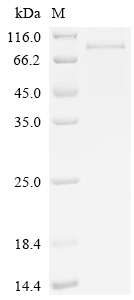
Recombinant Mouse Semaphorin-3C (Sema3c) is produced through a baculovirus expression system, spanning amino acids 21-751, which represents the full length of the mature protein. The protein includes a C-terminal 10xHis-tag that aids in purification and detection. SDS-PAGE analysis confirms it reaches a purity level greater than 85%. This product is designed solely for research purposes and has not been evaluated for therapeutic applications.
Semaphorin-3C belongs to the semaphorin family, which appears to be involved in axonal guidance and cell signaling. It likely plays an important role in nervous system development by influencing how neurons form patterns and connections. Beyond neural development, researchers are investigating Semaphorin-3C for its potential role in angiogenesis and its possible impact on cancer biology, which makes it an interesting target across different research areas.
Potential Applications
Note: The applications listed below are based on what we know about this protein's biological functions, published research, and experience from experts in the field. However, we haven't fully tested all of these applications ourselves yet. We'd recommend running some preliminary tests first to make sure they work for your specific research goals.
Based on the provided information, the recombinant mouse Sema3c is expressed in a Baculovirus expression system (insect cells), which is a eukaryotic system capable of supporting proper protein folding, disulfide bond formation, and some post-translational modifications important for semaphorin family proteins. The protein is expressed as the full-length mature protein (21-751aa), which includes all functional domains. However, since activity is unverified, the protein cannot be assumed to be correctly folded or bioactive without functional validation. Semaphorin-3C requires precise folding for its receptor binding and signaling functions, and while the baculovirus system is favorable for complex eukaryotic proteins, experimental confirmation is essential to ensure bioactivity.
1. Protein-Protein Interaction Studies Using His-Tag Pulldown Assays
The C-terminal 10xHis tag enables technical feasibility for pull-down assays to study interactions with potential binding partners like plexins and neuropilins. However, if Sema3c is misfolded, it may not interact physiologically with its receptors, leading to non-specific or false interactions. The 85% purity helps reduce background, but results should be interpreted cautiously until folding and receptor binding capability are validated. If correctly folded, this application is valuable; otherwise, identified interactions may be artifactual.
2. Antibody Development and Validation
This application is well-supported. The full-length mature Sema3c can serve as an effective immunogen for antibody generation, as antibodies may recognize both linear and conformational epitopes. The baculovirus expression system likely preserves native-like folding, enhancing antigenicity. However, if misfolded, antibodies may not recognize the native protein. Validation against endogenous Sema3c is recommended to ensure specificity for physiological studies.
3. Biochemical Characterization and Stability Studies
This application is appropriate and should be prioritized to assess folding. Techniques like size exclusion chromatography, dynamic light scattering, and thermal stability assays can directly evaluate protein conformation, oligomerization state, and stability. These studies are valuable even if the protein is inactive, as they characterize the recombinant product and inform optimal handling conditions.
4. Cell-Based Binding and Localization Studies
This application is highly dependent on correct folding and bioactivity. If Sema3c is properly folded, it can be used to study binding to cell surface receptors and cellular internalization. However, if misfolded, binding and localization patterns may not reflect physiological behavior, leading to misleading conclusions. It should emphasize that functional validation (e.g., receptor binding assays) is a prerequisite for such studies. Fluorescent labeling should be verified not to disrupt protein function.
Final Recommendation & Action Plan
Given the uncertainty in folding and bioactivity, the recommended approach is to first perform biochemical characterization (e.g., size exclusion chromatography for oligomeric state, circular dichroism for secondary structure) and functional validation (e.g., receptor binding assays using cells expressing neuropilins/plexins) to confirm the protein's conformation and activity. If validated, the protein is suitable for all described applications; if not, focus on antibody development and biochemical studies, while avoiding interaction or cell-based assays. The baculovirus expression system is appropriate for this complex protein, but activity confirmation remains crucial for functional applications. Always include appropriate controls, such as known Sema3c receptors or activity standards.
There are currently no reviews for this product.





