
Call us
301-363-4651 (Available 9 a.m. to 5 p.m. CST from Monday to Friday)

| Code | CSB-YP018836PI |
| Abbreviation | Recombinant Pig PSAP protein |
| MSDS | |
| Size | $436 |
| Order now | |
| Image |
|
| Have Questions? | Leave a Message or Start an on-line Chat |
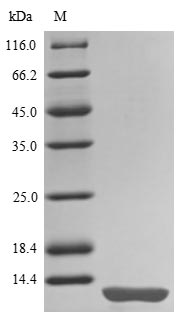
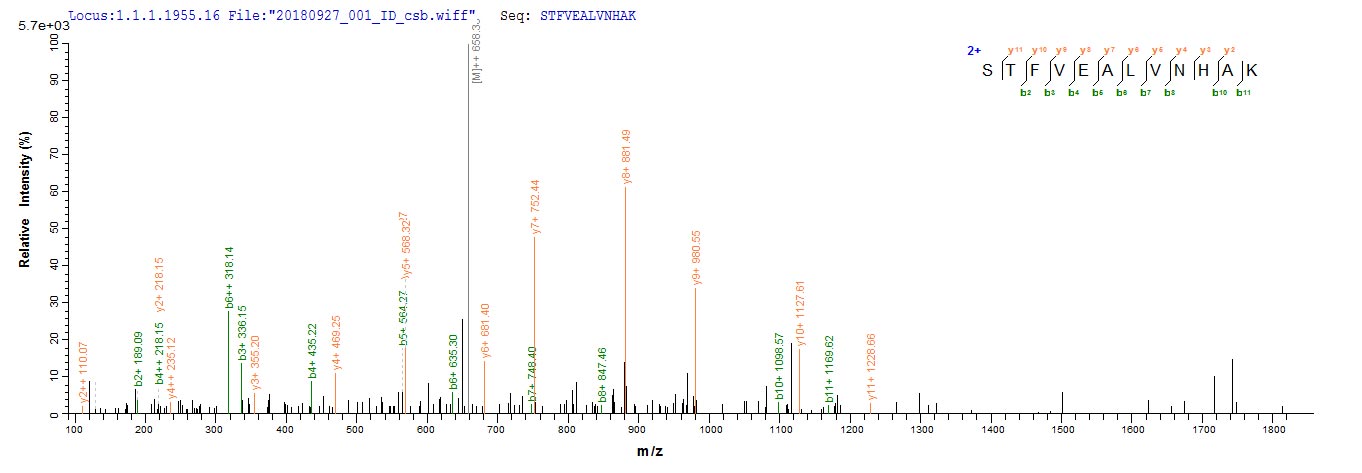
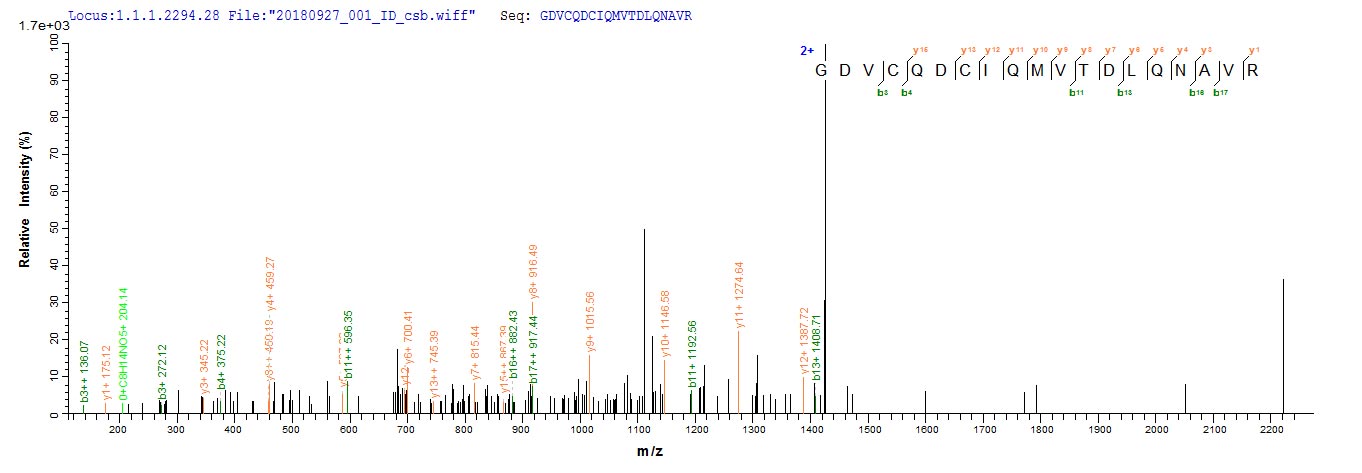
Recombinant Pig Saposin-B-Val (PSAP) is expressed in a yeast system, yielding a full-length protein with 80 amino acids. The protein carries an N-terminal 6xHis-Flag tag, which makes purification and detection more straightforward. SDS-PAGE analysis shows the product achieves greater than 90% purity, suggesting it meets high-quality standards for research work. This product is meant for research use only and should not be used for clinical or diagnostic purposes.
Saposin-B-Val appears to play a crucial role in breaking down sphingolipids—lipids that are involved in cell membrane structure and signaling pathways. It works as an activator for certain lysosomal enzymes, helping these enzymes break down lipids more effectively. Studying Saposin-B-Val may be important for understanding lysosomal storage disorders and how sphingolipid metabolism affects broader cellular processes.
Potential Applications
Note: The applications listed below are based on what we know about this protein's biological functions, published research, and experience from experts in the field. However, we haven't fully tested all of these applications ourselves yet. We'd recommend running some preliminary tests first to make sure they work for your specific research goals.
Based on the provided information, recombinant pig PSAP is produced in a yeast expression system as a full-length protein (1-80aa) with an N-terminal 6xHis-Flag tag. PSAP is a small, disulfide-rich protein involved in sphingolipid metabolism, and its bioactivity depends on precise folding and disulfide bond formation. Yeast expression systems provide eukaryotic folding machinery capable of supporting disulfide bond formation and some post-translational modifications, which increases the probability of correct folding for this small protein. However, the dual His-Flag tag at the N-terminus is relatively large and may sterically interfere with native folding or function, as the N-terminal region could be critical for PSAP's activity. No validation data (e.g., lipid binding assays, circular dichroism) are provided. Therefore, while yeast expression offers advantages, the protein's folding status and bioactivity cannot be confirmed without experimental validation.
1. Protein-Protein Interaction Studies
If the recombinant PSAP is correctly folded, the dual His-Flag tag allows for pull-down assays to identify binding partners, such as lipids or other proteins involved in sphingolipid metabolism. However, if misfolded, interaction domains may be altered, leading to non-specific binding or failure to recognize genuine biological partners, compromising the validity of results. The large tag may also sterically hinder some interactions even if the protein is properly folded.
2. Comparative Structural and Functional Analysis
If properly folded, the recombinant PSAP can be used for comparative biophysical analyses (e.g., circular dichroism, dynamic light scattering) to study structural differences across species. However, if misfolded, structural data would misrepresent the native protein's architecture, and any cross-species comparisons would be biologically irrelevant. The tag should be removed for high-resolution structural studies to avoid interference.
3. Antibody Development and Validation
This application is suitable as antibody generation primarily relies on linear epitope recognition, which is independent of folding status. The high purity and full-length sequence support consistent immunization and screening. However, if correctly folded, antibodies may recognize conformational epitopes relevant to native PSAP; if misfolded, generated antibodies might not optimally bind the full-length protein in biological contexts.
4. In Vitro Biochemical Assay Development
If correctly folded and functional, the recombinant protein can be used to develop biochemical assays for studying stability, pH sensitivity, or lipid binding. However, if misfolded, assay results would be unreliable, and any optimization based on such data could lead to inaccurate protocols. The tag may affect protein behavior in assays, so validation is critical.
Final Recommendation & Action Plan
Before using this recombinant PSAP in functional applications, validate its folding and bioactivity through biophysical methods (e.g., circular dichroism for secondary structure, disulfide bond analysis) and functional assays (e.g., lipid binding tests); if validation confirms proper folding, proceed with applications while considering the potential tag interference—especially for interaction and structural studies where tag removal may be beneficial; if misfolded, consider using tag-free protein or alternative expression systems; for immediate use, antibody development can proceed but validate antibodies against native PSAP; avoid functional studies until folding and bioactivity are confirmed. Always include appropriate controls, such as known PSAP standards or lipid binding positives, to ensure reliability.
There are currently no reviews for this product.
UniGene: Ssc.54000





