
Call us
301-363-4651 (Available 9 a.m. to 5 p.m. CST from Monday to Friday)

| Code | CSB-RA981854A0HU |
| Size | US$210 |
| Order now | |
| Image |
|
| Have Questions? | Leave a Message or Start an on-line Chat |
| Application | Recommended Dilution |
|---|---|
| IHC | 1:50-1:200 |
| FC | 1:50-1:200 |
APBB1, also known as FE65, serves as a critical adaptor protein in neuronal signaling pathways, where it interacts with the intracellular domain of amyloid precursor protein (APP). This interaction plays a significant role in APP processing and trafficking, making APBB1 a protein of considerable interest in neuroscience research, particularly in studies exploring the molecular mechanisms underlying neurodegenerative conditions.
This recombinant monoclonal antibody, clone 25D4, offers researchers the consistency and reliability that comes with sequence-defined production. Unlike traditional hybridoma-derived antibodies, recombinant technology ensures that every lot performs identically to the last, eliminating the variability that can compromise longitudinal studies or multi-site collaborations. The rabbit host and monoclonal nature provide excellent specificity for detecting human APBB1.
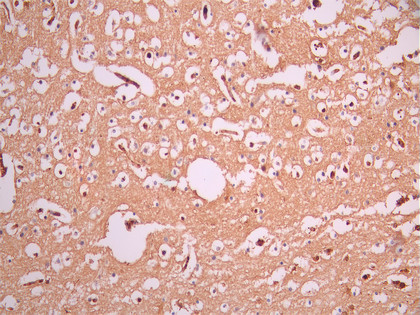
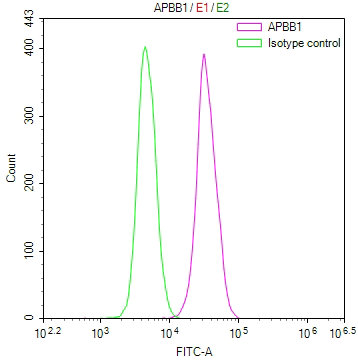
Validation studies demonstrate this antibody's versatility across multiple experimental platforms. Immunohistochemistry performed on paraffin-embedded human brain tissue at 1:100 dilution using a Leica Bond system with citrate buffer antigen retrieval shows clear target detection, making it well-suited for examining APBB1 expression patterns in neural tissue sections. Flow cytometry analysis using the SH-SY5Y neuroblastoma cell line confirms the antibody's utility for quantitative single-cell studies, with fixed and permeabilized cells showing distinct positive staining compared to isotype controls.
The antibody arrives purified by affinity chromatography in a glycerol-containing buffer optimized for long-term storage stability. With validated performance in ELISA, immunohistochemistry, and flow cytometry applications, this APBB1 antibody provides neuroscience researchers with a dependable tool for investigating APP-associated signaling pathways and their implications in neuronal function.
There are currently no reviews for this product.





