
Call us
301-363-4651 (Available 9 a.m. to 5 p.m. CST from Monday to Friday)

| Code | CSB-RA001939MA1HU |
| Size | $49.9 |
| Order now | |
| Promotion |

|
| Image |
|
| Have Questions? | Leave a Message or Start an on-line Chat |
| Application | Recommended Dilution |
|---|---|
| IHC | 1:50-1:200 |
| FC | 1:50-1:200 |
Apolipoprotein H, also known as beta-2-glycoprotein I, plays a central role in lipid metabolism and hemostatic regulation. This multifunctional plasma glycoprotein serves as a critical cofactor in antiphospholipid antibody-mediated thrombosis and functions as an inhibitor of activated protein C. Its involvement in cardiovascular pathophysiology, particularly in antiphospholipid syndrome and atherosclerosis, makes APOH a significant target for researchers investigating coagulation disorders, autoimmune conditions, and lipid-related cardiovascular disease.
This recombinant monoclonal antibody, clone 20C3, offers the reproducibility and consistency that demanding research protocols require. Produced using recombinant technology with a defined sequence, this antibody eliminates the lot-to-lot variability inherent in traditional hybridoma-derived reagents. The human IgG1 isotype format, combined with affinity chromatography purification, ensures high specificity for human APOH with minimal background interference.
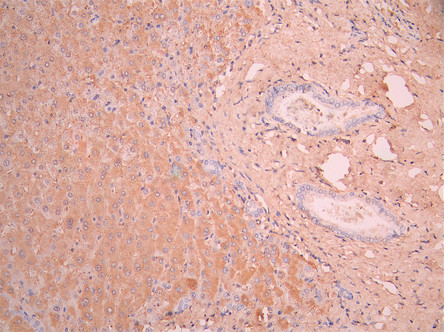
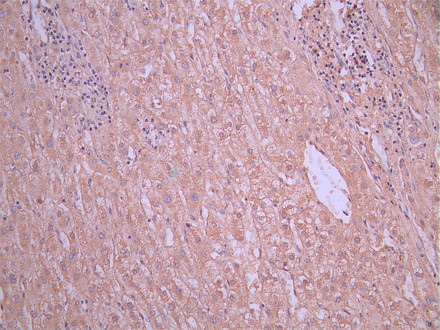
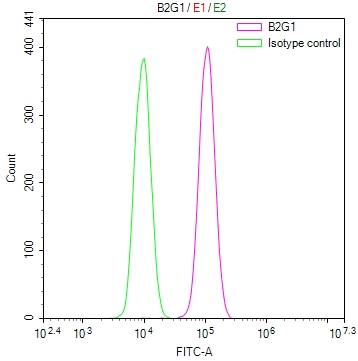
Validation studies demonstrate reliable performance across multiple experimental platforms. Immunohistochemistry testing in paraffin-embedded human liver tissue and liver cancer specimens shows clear target detection at 1:50 dilution using citrate buffer antigen retrieval, providing researchers flexibility when examining both normal and pathological tissue contexts. Flow cytometry analysis using HepG2 hepatocellular carcinoma cells confirms intracellular detection capability, with distinct signal separation from isotype control when cells are fixed and permeabilized. The antibody is also validated for ELISA applications, expanding its utility across different experimental workflows.
For investigators studying cardiovascular biology, thrombotic mechanisms, or hepatic protein expression, this APOH antibody delivers the technical performance and experimental versatility needed to advance understanding of this clinically relevant target.
There are currently no reviews for this product.





