
Call us
301-363-4651 (Available 9 a.m. to 5 p.m. CST from Monday to Friday)

| Code | CSB-RA699720A0HU |
| Size | US$210 |
| Order now | |
| Image |
|
| Have Questions? | Leave a Message or Start an on-line Chat |
| Application | Recommended Dilution |
|---|---|
| WB | 1:500-1:2000 |
| IHC | 1:50-1:200 |
| IF | 1:50-1:200 |
| FC | 1:50-1:200 |
CHAF1B, also known as chromatin assembly factor 1 subunit B or p60, serves as an essential component of the CAF-1 complex responsible for depositing histones onto newly synthesized DNA during replication. This histone chaperone plays a critical role in maintaining chromatin structure and epigenetic inheritance, making it a key target for researchers investigating DNA replication, cell cycle regulation, and chromatin dynamics. As an M-phase phosphoprotein, CHAF1B is also relevant to studies examining mitotic progression and cancer cell proliferation.
This recombinant monoclonal antibody, clone 5G7, offers the consistency and reproducibility that demanding experimental workflows require. Generated against a synthetic peptide derived from human CHAF1B and produced using recombinant technology, this antibody provides sequence-defined specificity with minimal lot-to-lot variation, ensuring reliable results across extended research projects.
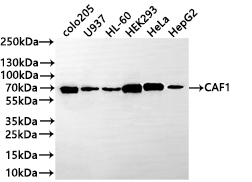
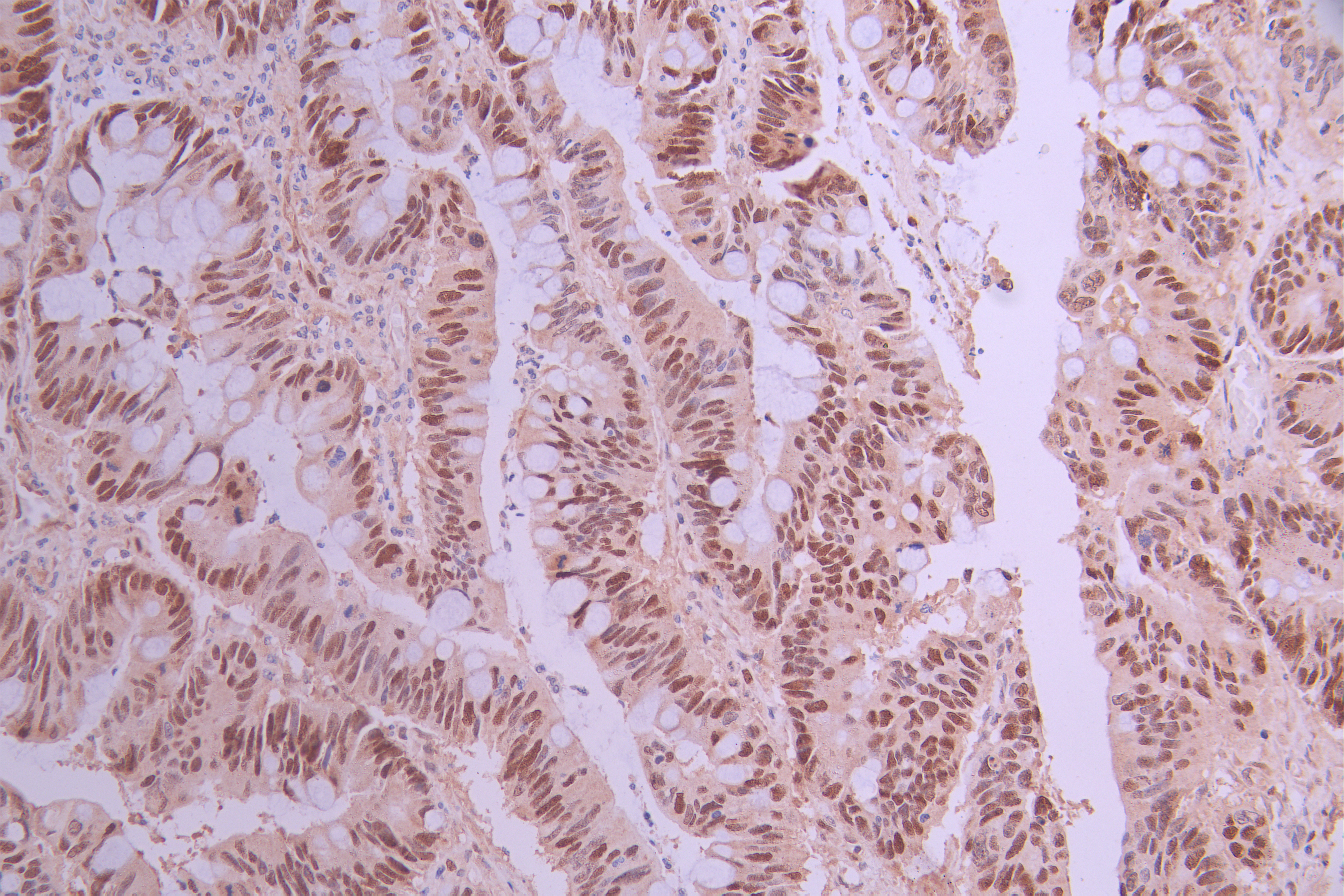
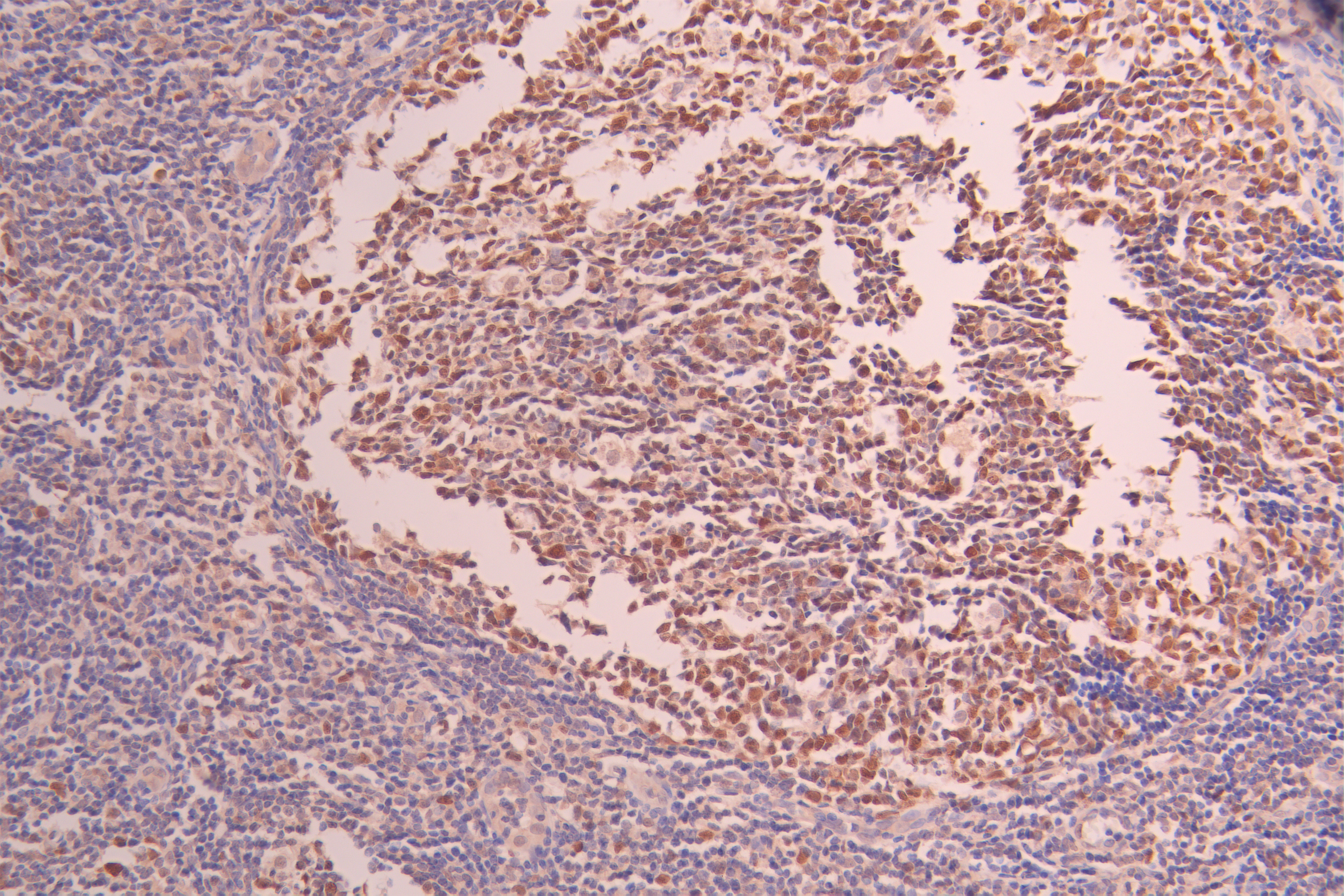
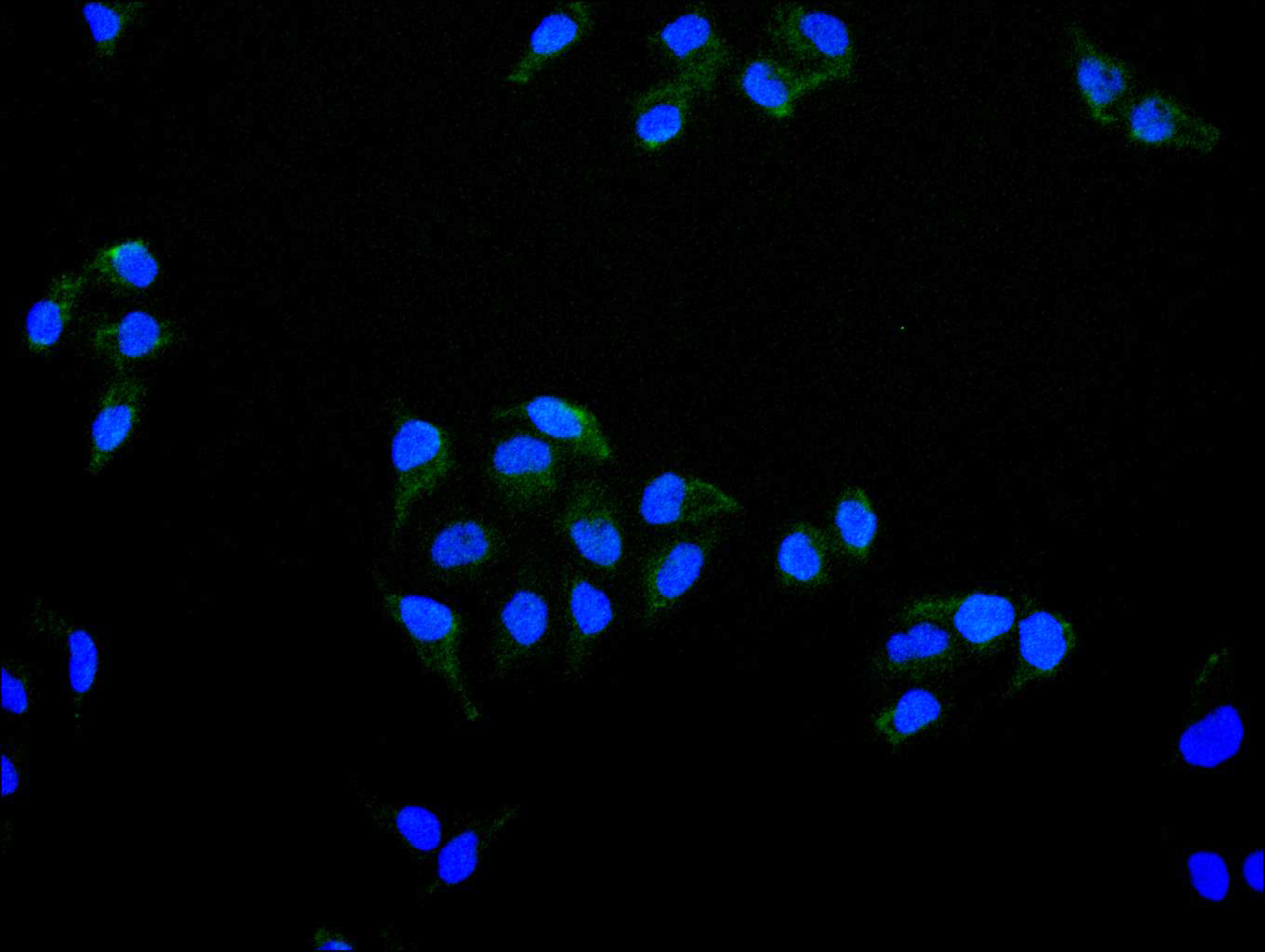
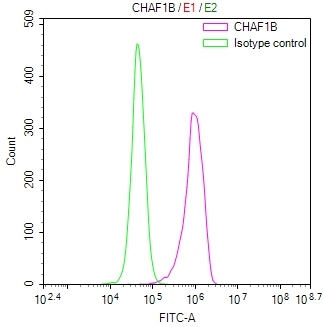
Validation across multiple applications demonstrates considerable experimental flexibility. Western blot analysis detects CHAF1B in diverse human cell lines including COLO205, U937, HL-60, HEK293, HeLa, and HepG2, with an observed band at approximately 70 kDa. This migration above the predicted 61 kDa molecular weight likely reflects post-translational modifications such as phosphorylation, consistent with CHAF1B's known regulation during the cell cycle. Immunohistochemistry staining has been validated in human colorectal cancer and tonsil tissue sections, while immunofluorescence studies in HeLa cells reveal the expected nuclear localization pattern. Flow cytometry analysis in MCF-7 cells further confirms utility for single-cell applications.
This antibody supports research into chromatin biology, DNA replication mechanisms, and cancer-associated epigenetic alterations, providing a reliable tool for investigating CHAF1B function across multiple experimental platforms.
There are currently no reviews for this product.





