
Call us
301-363-4651 (Available 9 a.m. to 5 p.m. CST from Monday to Friday)

| Code | CSB-RA108916A0HU |
| Size | US$210 |
| Order now | |
| Image |
|
| Have Questions? | Leave a Message or Start an on-line Chat |
| Application | Recommended Dilution |
|---|---|
| IHC | 1:50-1:200 |
| FC | 1:50-1:200 |
DCTN5, also known as dynactin subunit 5 or p25, serves as an essential component of the dynactin complex, a multisubunit protein assembly that works alongside cytoplasmic dynein to facilitate minus-end-directed microtubule transport. This molecular machinery plays fundamental roles in organelle positioning, mitotic spindle organization, and intracellular cargo trafficking, making DCTN5 a relevant target for researchers investigating cytoskeletal dynamics, cell division, and neurodegenerative conditions where dynein-dynactin dysfunction has been implicated.
This recombinant monoclonal antibody, clone 11D2, offers the reproducibility advantages that come with sequence-defined production. Unlike traditional hybridoma-derived antibodies, recombinant technology ensures consistent performance across lots, allowing you to establish protocols with confidence that results will remain comparable over extended study timelines. The antibody was generated against a synthetic peptide derived from human DCTN5 and has been validated for human sample detection.
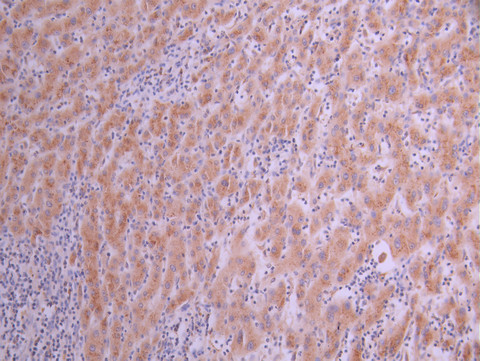
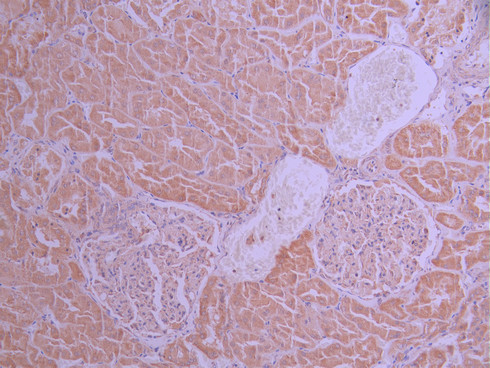
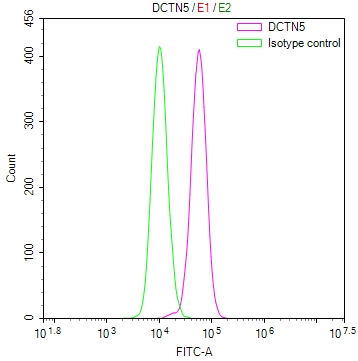
Experimental validation demonstrates reliable performance across multiple platforms. Immunohistochemistry testing in paraffin-embedded human tissues, including liver cancer and kidney sections, shows specific staining when used at 1:100 dilution with citrate buffer antigen retrieval. Flow cytometry analysis using Raji cells confirms intracellular detection capability, with clear signal separation from isotype control when cells are fixed and permeabilized prior to staining. These validated applications provide flexibility for researchers working with both tissue sections and suspension cell populations.
The unconjugated format and affinity-purified preparation make this antibody suitable for studies examining dynactin complex assembly, microtubule-based transport mechanisms, and cellular processes dependent on proper cytoskeletal organization. Supplied in a glycerol-containing buffer for long-term stability at -20°C or -80°C.
There are currently no reviews for this product.





