
Call us
301-363-4651 (Available 9 a.m. to 5 p.m. CST from Monday to Friday)

| Code | CSB-RA238318A0HU |
| Size | US$210 |
| Order now | |
| Image |
|
| Have Questions? | Leave a Message or Start an on-line Chat |
| Application | Recommended Dilution |
|---|---|
| WB | 1:500-1:5000 |
DOT1L, also known as histone-lysine N-methyltransferase KMT4, plays a uniquely important role in epigenetic regulation as the sole enzyme responsible for methylating histone H3 at lysine 79. Unlike other histone methyltransferases, DOT1L lacks a SET domain and operates through a distinct catalytic mechanism, making it an essential player in transcriptional regulation, DNA damage response, and cell cycle progression. Its involvement in MLL-rearranged leukemias has positioned DOT1L as a significant therapeutic target, driving demand for reliable detection tools in both basic research and translational studies.
This recombinant monoclonal antibody, generated in rabbit using clone 3B6, offers the reproducibility and consistency that demanding epigenetics research requires. Because the antibody sequence is defined and produced recombinantly, you can expect uniform performance across experiments and between lots, eliminating the variability that can complicate long-term studies or multi-site collaborations. The antibody was raised against a synthetic peptide derived from human DOT1L and purified by affinity chromatography, ensuring high specificity for your target.
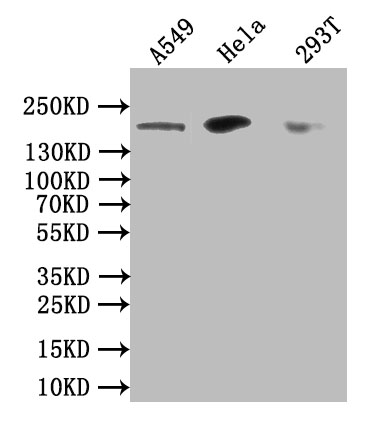
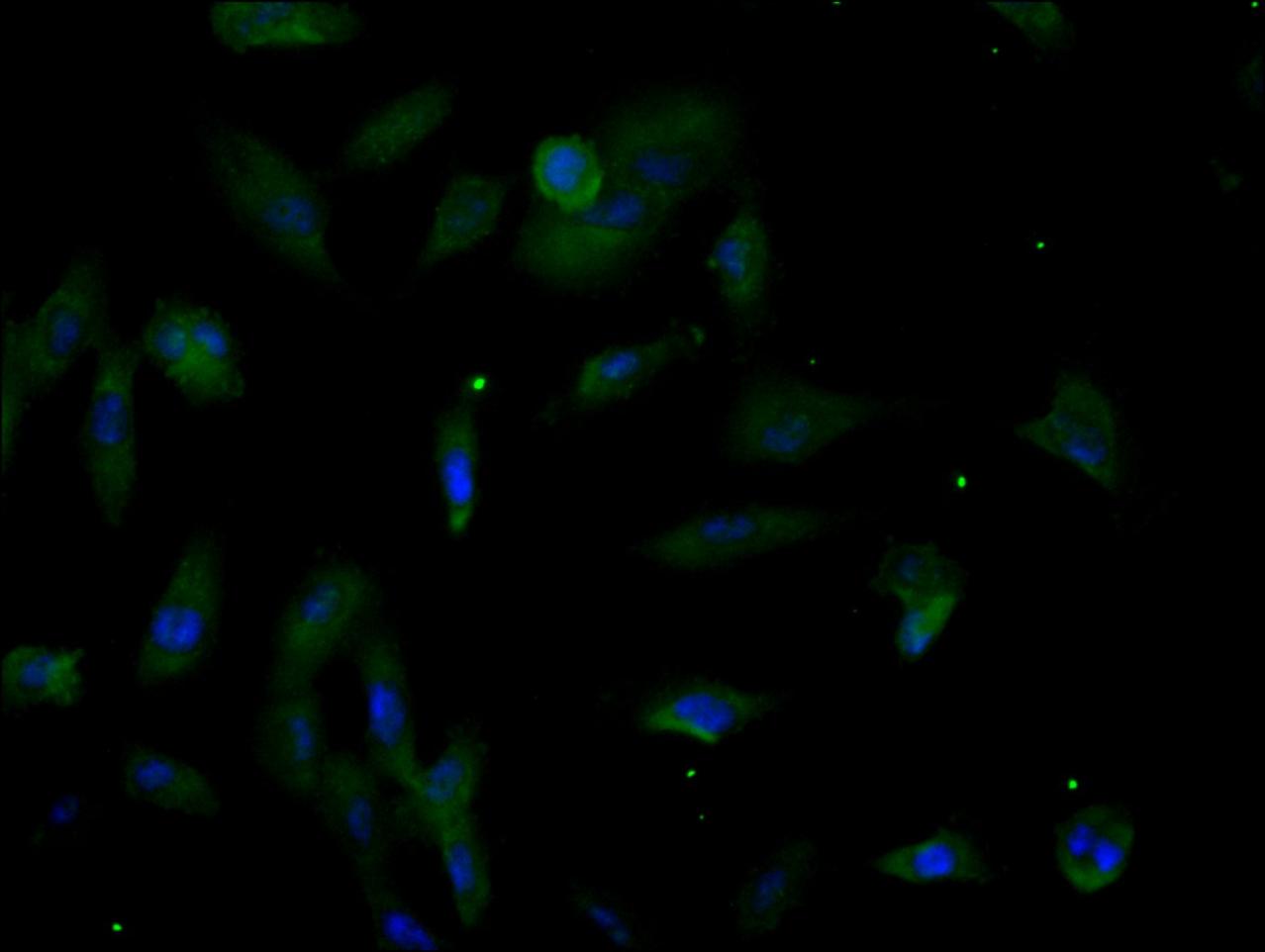
Validation by western blot demonstrates clean detection of DOT1L at the expected 165 kDa molecular weight across multiple human cell lines, including A549, HeLa, and 293T whole cell lysates, with effective working dilutions ranging from 1:500 to 1:5000. Beyond western blotting, immunofluorescence staining in HeLa cells confirms the antibody's utility for visualizing DOT1L localization in fixed cell preparations, expanding your experimental options for studying this methyltransferase in different contexts.
Whether you are investigating chromatin dynamics, exploring DOT1L's role in transcriptional elongation, or characterizing its function in disease models, this antibody provides a dependable tool for your epigenetics and nuclear signaling research.
There are currently no reviews for this product.





