
Call us
301-363-4651 (Available 9 a.m. to 5 p.m. CST from Monday to Friday)

| Code | CSB-RA795437A0HU |
| Size | US$210 |
| Order now | |
| Image |
|
| Have Questions? | Leave a Message or Start an on-line Chat |
| Application | Recommended Dilution |
|---|---|
| WB | 1:500-1:2000 |
| IF | 1:50-1:200 |
| FC | 1:50-1:200 |
DPF2, also known as BAF45D or Requiem, serves as a critical component of the SWI/SNF chromatin remodeling complex, where it functions as a tissue-specific subunit that helps regulate gene expression programs. This zinc finger protein plays important roles in apoptosis and cellular differentiation, making it a significant target for researchers investigating chromatin biology, transcriptional regulation, and cell fate decisions.
This recombinant monoclonal antibody, clone 3E2, offers the reproducibility and consistency that demanding experimental workflows require. Because the antibody sequence is defined and produced recombinantly in rabbit, researchers can expect reliable performance across experiments and eliminate the lot-to-lot variability that often complicates long-term studies. The affinity-purified IgG format ensures high specificity for your target while minimizing background.
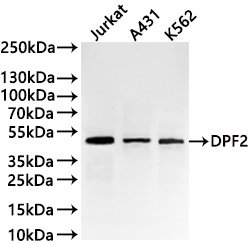
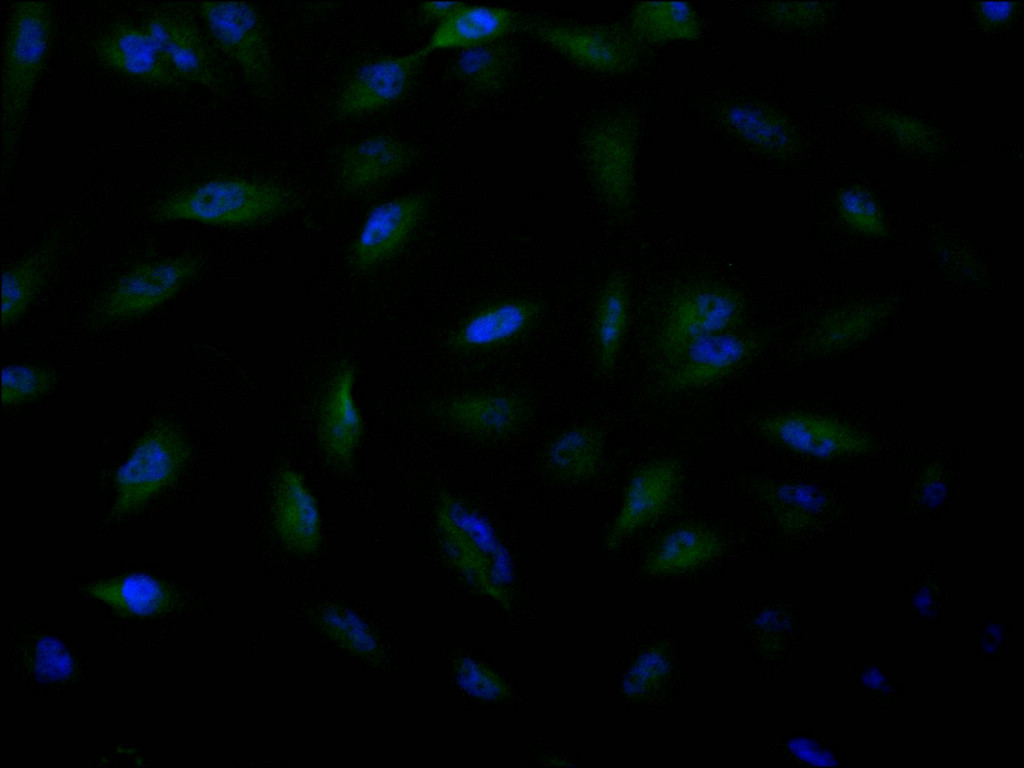
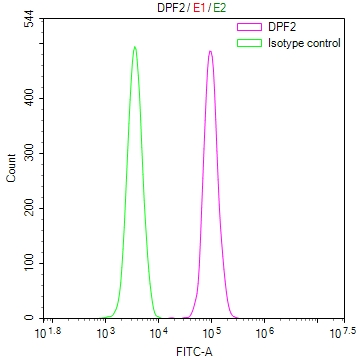
Validation across multiple platforms demonstrates this antibody's versatility in your research toolkit. Western blot analysis confirms detection of DPF2 at the expected 44 kDa molecular weight in human cell lines including Jurkat, A431, and K562, with recommended dilutions ranging from 1:500 to 1:2000. For cellular localization studies, immunofluorescence staining in U-251MG glioblastoma cells reveals clear signal when used at 1:50 to 1:200 dilutions. Flow cytometry applications have been validated in Jurkat cells, enabling quantitative analysis of DPF2 expression at the single-cell level.
Whether you are exploring SWI/SNF complex function, investigating chromatin remodeling mechanisms, or studying apoptotic pathways, this antibody provides a dependable tool for detecting endogenous DPF2 in human samples across multiple experimental approaches.
There are currently no reviews for this product.





