
Call us
301-363-4651 (Available 9 a.m. to 5 p.m. CST from Monday to Friday)

| Code | CSB-RA190124A0HU |
| Size | US$210 |
| Order now | |
| Image |
|
| Have Questions? | Leave a Message or Start an on-line Chat |
| Application | Recommended Dilution |
|---|---|
| IHC | 1:50-1:200 |
| IF | 1:50-1:200 |
| FC | 1:50-1:200 |
DTL, also known as Denticleless protein homolog or DCAF2, serves as a critical substrate receptor for the CUL4-DDB1 E3 ubiquitin ligase complex, playing essential roles in cell cycle regulation and DNA damage response pathways. This protein facilitates the targeted degradation of key cell cycle regulators, making it a significant focus for researchers investigating ubiquitin-mediated proteolysis, replication licensing, and genomic stability mechanisms.
This recombinant monoclonal antibody, clone 3E8, offers the reproducibility and consistency that demanding experimental workflows require. Developed using recombinant technology with a sequence-defined approach, this rabbit IgG antibody eliminates the lot-to-lot variability often encountered with traditional hybridoma-derived reagents, ensuring your results remain comparable across extended studies and collaborative projects.
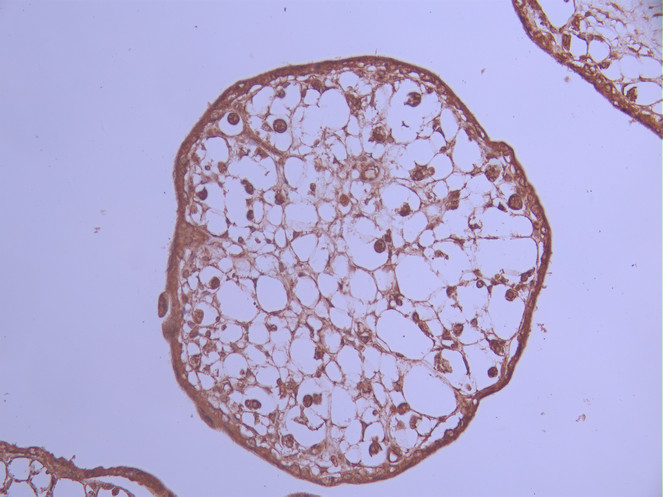
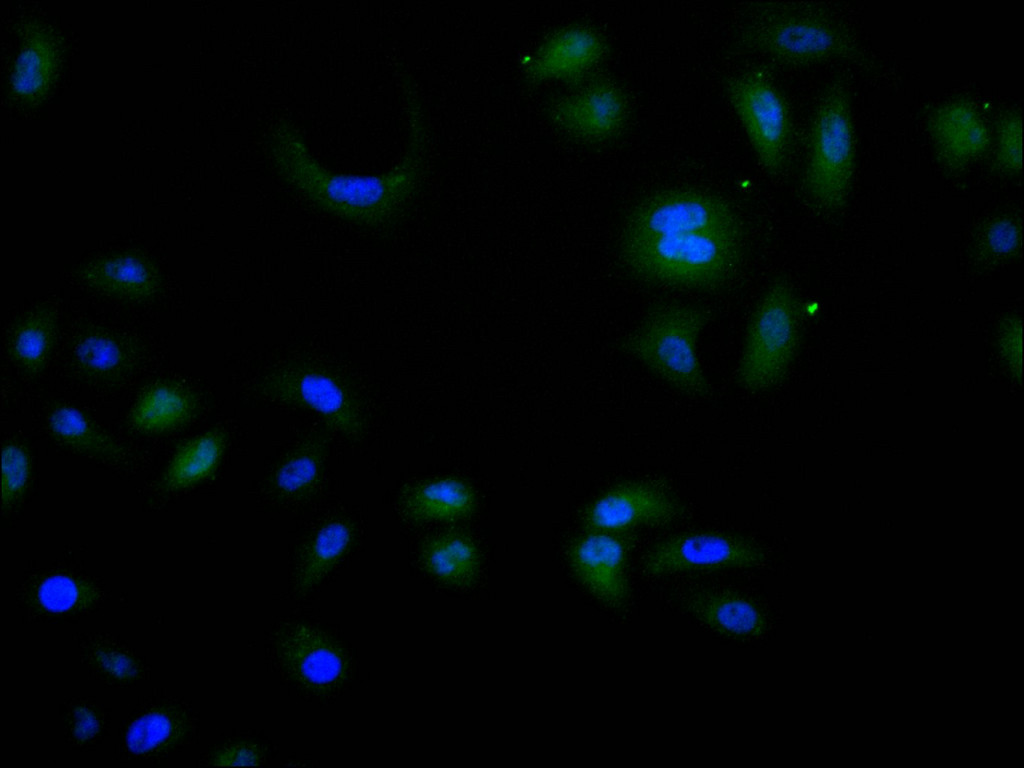
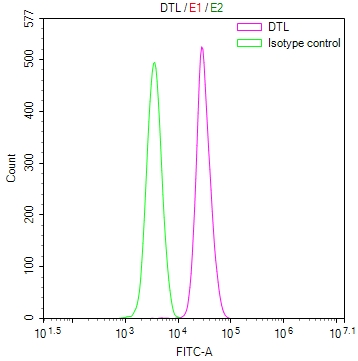
Validation across multiple detection platforms demonstrates this antibody's versatility in your research toolkit. Immunohistochemistry studies using human placenta tissue sections show clear target detection at dilutions of 1:100, with citrate buffer antigen retrieval providing optimal results on paraffin-embedded samples. Immunofluorescence analysis in HeLa cells reveals specific staining patterns at 1:50 dilution, while flow cytometry experiments using Jurkat cells demonstrate distinct positive population shifts compared to isotype controls, confirming reliable performance in suspension cell analysis.
The antibody arrives in a stabilized liquid format containing glycerol for convenient long-term storage at -20°C or -80°C, ready for immediate use without reconstitution. Affinity chromatography purification ensures high purity suitable for sensitive downstream applications.
Whether investigating cell cycle checkpoint mechanisms, exploring CUL4-DDB1 complex biology, or examining DNA damage response pathways, this DTL antibody provides the validated performance and experimental flexibility needed to advance your research with confidence.
There are currently no reviews for this product.





