
Call us
301-363-4651 (Available 9 a.m. to 5 p.m. CST from Monday to Friday)

| Code | CSB-RA547483A0HU |
| Size | US$210 |
| Order now | |
| Image |
|
| Have Questions? | Leave a Message or Start an on-line Chat |
| Application | Recommended Dilution |
|---|---|
| IHC | 1:50-1:200 |
| FC | 1:50-1:200 |
EIF3A serves as the largest subunit of the eukaryotic translation initiation factor 3 complex, a critical molecular machine that orchestrates the assembly of ribosomal subunits during protein synthesis. This 170 kDa scaffold protein plays essential roles in recruiting mRNA to the 40S ribosomal subunit and has emerged as a significant focus in cancer biology, where its dysregulation has been linked to altered translational control and tumor progression.
This recombinant monoclonal antibody, clone 9A8, offers researchers the reproducibility and consistency that recombinant technology provides. Generated from a defined sequence and produced in rabbit host, each lot delivers identical binding characteristics, eliminating the variability that can compromise longitudinal studies or multi-site collaborations. The affinity-purified IgG format ensures minimal background while maintaining strong specific signal.
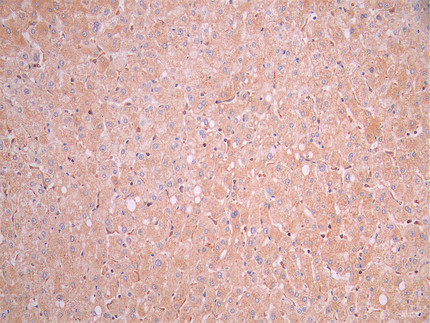
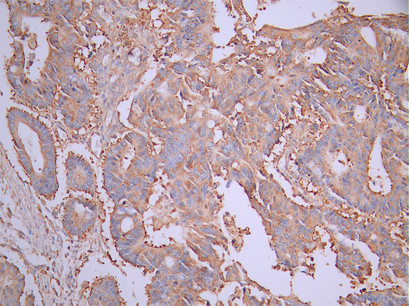
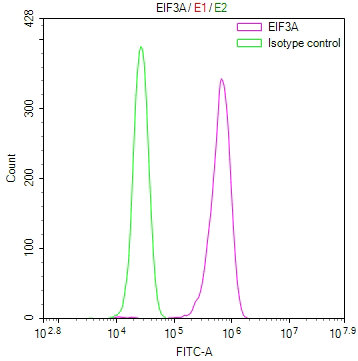
Validation studies demonstrate robust performance across multiple experimental platforms. Immunohistochemistry applications have been successfully optimized in paraffin-embedded human tissues, with testing in both normal liver and colorectal cancer specimens at 1:100 dilution using citrate buffer antigen retrieval. These results confirm the antibody's utility for examining EIF3A expression patterns in both physiological and pathological contexts. Flow cytometry validation in HepG2 hepatocellular carcinoma cells shows clear positive signal separation from isotype controls, supporting intracellular detection studies in fixed and permeabilized samples at dilutions ranging from 1:50 to 1:200.
The unconjugated format provides flexibility for researchers to pair this antibody with their preferred detection systems. Whether investigating translational regulation mechanisms, exploring EIF3A's role in oncogenesis, or characterizing protein synthesis machinery in disease models, this antibody delivers the specificity and batch consistency essential for meaningful experimental outcomes.
There are currently no reviews for this product.





