
Call us
301-363-4651 (Available 9 a.m. to 5 p.m. CST from Monday to Friday)

| Code | CSB-RA619084MA1HU |
| Size | US$210 |
| Order now | |
| Image |
|
| Have Questions? | Leave a Message or Start an on-line Chat |
| Application | Recommended Dilution |
|---|---|
| IHC | 1:20-1:200 |
Fascin-1 (FSCN1) is a highly conserved actin-bundling protein that plays a central role in organizing filamentous actin into parallel bundles within cellular protrusions such as filopodia, lamellipodia, and invadopodia. This 55 kDa protein has garnered significant research attention due to its critical involvement in cell motility, migration, and invasion—processes fundamental to both normal development and pathological conditions including cancer metastasis. FSCN1 expression is notably upregulated in numerous aggressive carcinomas, making it a valuable marker for studying tumor progression and metastatic potential.
This recombinant monoclonal antibody, clone 7C4, offers researchers the reproducibility and consistency that recombinant technology provides. Because the antibody sequence is defined and produced from a stable expression system, you can expect uniform performance across different lots, eliminating the variability that can complicate long-term studies or multi-site collaborations. The antibody is raised against recombinant human FSCN1 protein and demonstrates reactivity with human samples.
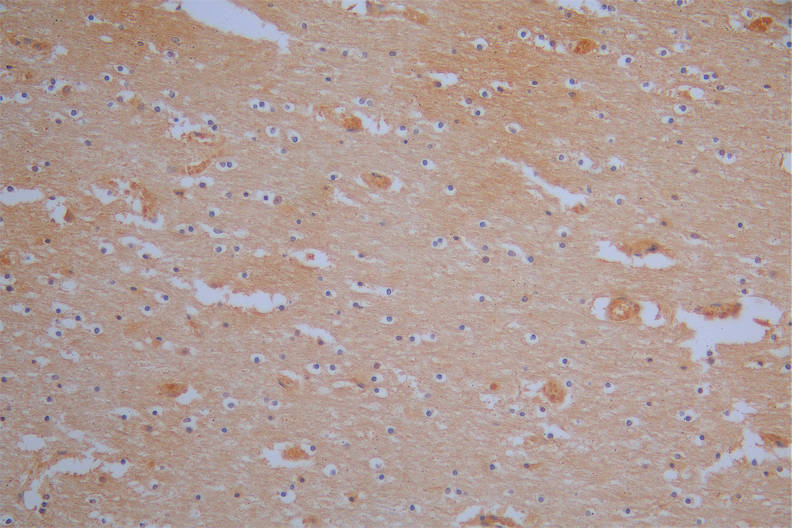
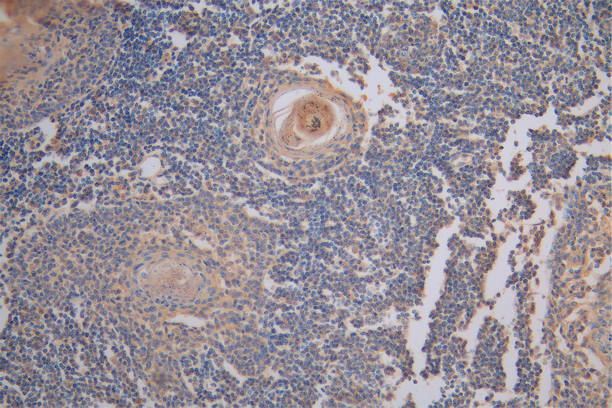
Validation studies confirm robust performance in immunohistochemistry applications on formalin-fixed, paraffin-embedded tissues. Testing in human brain tissue reveals the expected neuronal expression pattern, consistent with FSCN1's known abundance in neural tissues where dynamic actin remodeling supports synaptic plasticity. Additional validation in human tonsil tissue demonstrates reliable detection in lymphoid compartments. For IHC applications, dilutions ranging from 1:20 to 1:200 provide flexibility for optimization across different tissue types and detection systems.
This antibody serves researchers investigating signal transduction pathways, cytoskeletal dynamics, and the molecular mechanisms underlying cell migration and invasion, supporting studies from basic cell biology through translational cancer research.
There are currently no reviews for this product.





