
Call us
301-363-4651 (Available 9 a.m. to 5 p.m. CST from Monday to Friday)

| Code | CSB-RA599206A0HU |
| Size | US$210 |
| Order now | |
| Image |
|
| Have Questions? | Leave a Message or Start an on-line Chat |
| Application | Recommended Dilution |
|---|---|
| IHC | 1:50-1:200 |
| IF | 1:50-1:200 |
| FC | 1:50-1:200 |
HMGA1, also known as High Mobility Group AT-hook protein 1, serves as a critical architectural transcription factor that modulates chromatin structure and gene expression. This non-histone chromosomal protein binds to AT-rich regions in DNA and plays significant roles in cell proliferation, differentiation, and transformation. HMGA1 overexpression has been documented across numerous malignancies, making it a compelling target for cancer biology research and studies investigating transcriptional regulation mechanisms.
This recombinant monoclonal antibody, clone 1C6, offers the reproducibility and consistency that demanding experimental workflows require. Generated against a synthetic peptide derived from human HMGA1, the antibody undergoes affinity chromatography purification to ensure high specificity. Because recombinant production relies on defined genetic sequences rather than traditional hybridoma methods, researchers benefit from lot-to-lot consistency that supports longitudinal studies and reproducible results across experiments.
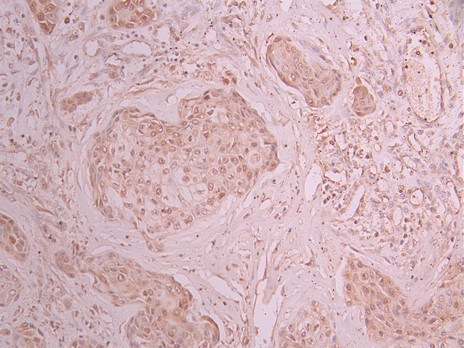
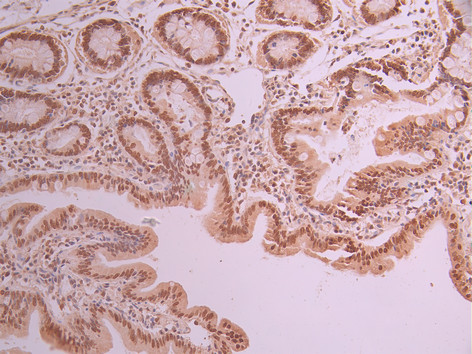
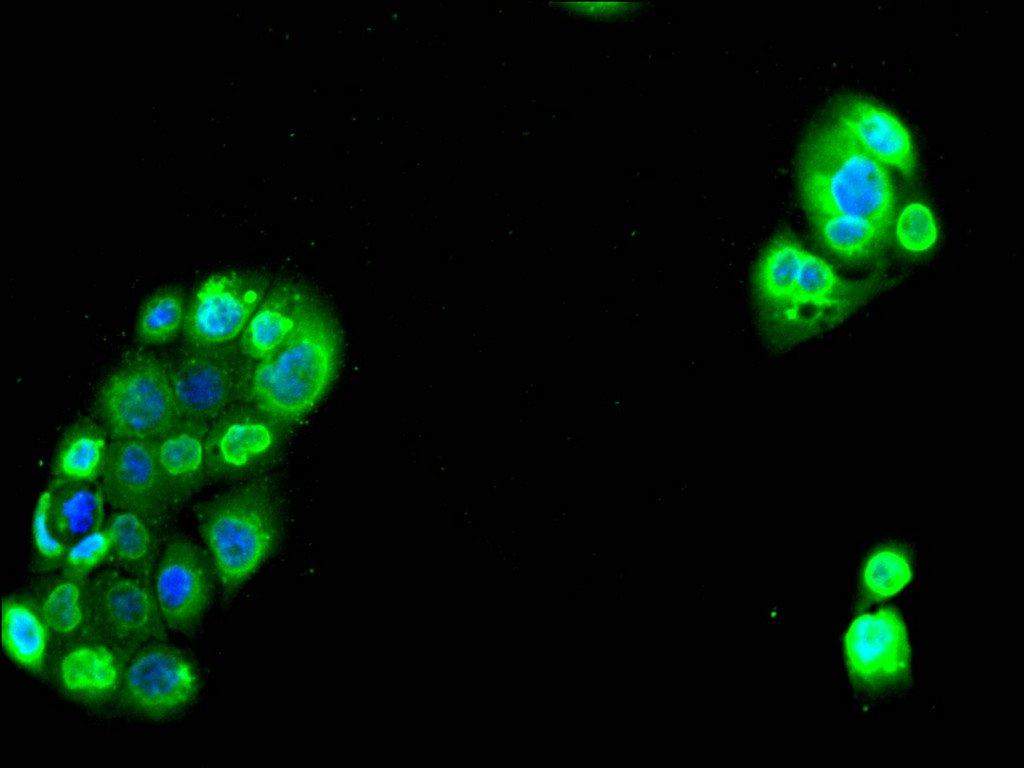
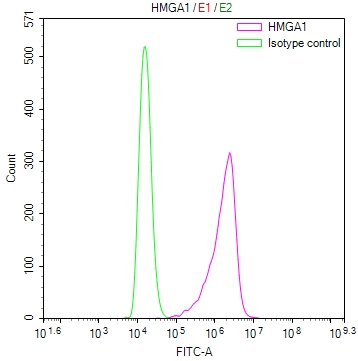
Validation studies demonstrate robust performance across multiple detection platforms. Immunohistochemistry applications have been confirmed in paraffin-embedded human tissues, including pancreatic cancer and small intestine sections, with optimal results achieved at 1:100 dilution using citrate buffer antigen retrieval. Immunofluorescence staining in A431 cells reveals clear nuclear localization patterns consistent with HMGA1's known function as a chromatin-associated protein. Flow cytometry analysis using BxPC-3 pancreatic cancer cells shows distinct positive signal separation from isotype controls, confirming utility for quantitative single-cell studies.
This antibody supports researchers investigating chromatin dynamics, transcriptional regulation, and oncogenic mechanisms. Its validated performance in both tissue sections and cell-based assays provides flexibility for studies examining HMGA1 expression patterns in cancer progression, developmental biology, and cellular transformation pathways.
There are currently no reviews for this product.





