
Call us
301-363-4651 (Available 9 a.m. to 5 p.m. CST from Monday to Friday)

| Code | CSB-RA551654A0HU |
| Size | US$210 |
| Order now | |
| Image |
|
| Have Questions? | Leave a Message or Start an on-line Chat |
| Application | Recommended Dilution |
|---|---|
| IHC | 1:50-1:200 |
Keratin 15 is a type I intermediate filament protein that serves as a well-established marker for stem cell populations in stratified epithelia, particularly within the hair follicle bulge region. Its expression pattern makes it valuable for researchers investigating epithelial stem cell biology, skin homeostasis, and the cellular origins of various carcinomas. Understanding KRT15 expression dynamics provides important insights into tissue regeneration, wound healing, and cancer stem cell identification.
This recombinant monoclonal antibody, generated from clone 11G10, offers the reproducibility and consistency that demanding research applications require. Because the antibody sequence is defined and produced recombinantly in rabbit host cells, researchers can expect uniform performance across experiments and studies, eliminating the lot-to-lot variability that can complicate long-term projects or multi-site collaborations. The antibody was raised against a synthetic peptide derived from human KRT15, ensuring precise epitope targeting.
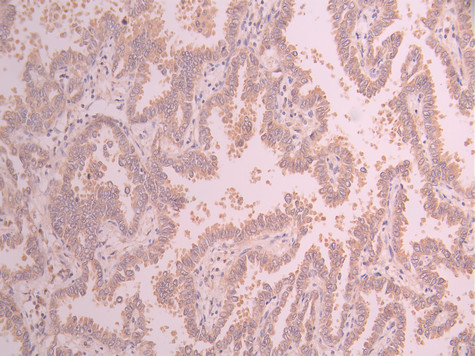
Validation in immunohistochemistry demonstrates reliable performance in formalin-fixed, paraffin-embedded human tissue sections. Testing in human lung cancer tissue using a Leica Bond system with citrate buffer antigen retrieval at pH 6.0 confirms compatibility with standard automated staining platforms, with optimal results achieved at 1:100 dilution. This workflow flexibility extends to ELISA applications, with recommended working dilutions between 1:50 and 1:200 for immunohistochemistry depending on specific experimental conditions.
Supplied in a glycerol-containing buffer optimized for long-term stability at -20°C or -80°C, this antibody is well-suited for researchers studying epithelial biology, cancer stem cell populations, hair follicle dynamics, and tumor pathology where accurate KRT15 detection is essential for experimental success.
There are currently no reviews for this product.





