
Call us
301-363-4651 (Available 9 a.m. to 5 p.m. CST from Monday to Friday)

| Code | CSB-RA568219A0HU |
| Size | US$210 |
| Order now | |
| Image |
|
| Have Questions? | Leave a Message or Start an on-line Chat |
| Application | Recommended Dilution |
|---|---|
| WB | 1:500-1:2000 |
| IHC | 1:50-1:200 |
| IF | 1:50-1:200 |
| FC | 1:50-1:200 |
MTA2 (Metastasis-associated protein 2) serves as a critical component of the nucleosome remodeling and deacetylase (NuRD) complex, where it functions as a key regulator of gene expression through chromatin modification. Originally identified as a p53 target protein in deacetylase complexes, MTA2 plays significant roles in transcriptional repression and has been implicated in cancer progression, making it an important target for researchers investigating epigenetic regulation, tumor biology, and metastatic mechanisms.
This recombinant monoclonal antibody, clone 11D11, offers the reproducibility and consistency that demanding experimental workflows require. Because recombinant antibodies are produced from defined sequences rather than traditional hybridoma methods, researchers benefit from lot-to-lot uniformity that supports longitudinal studies and ensures comparable results across experiments. The antibody is raised in rabbit against a synthetic peptide derived from human MTA2 and demonstrates cross-species reactivity with both human and mouse samples.
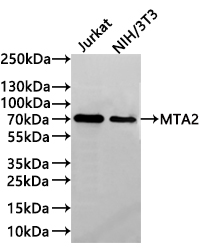
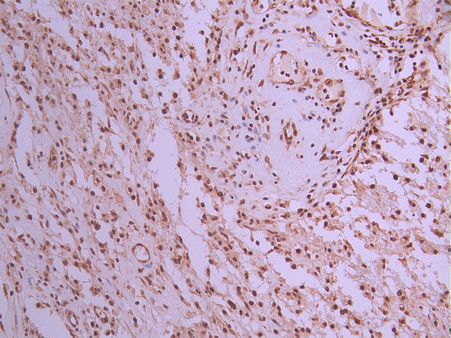
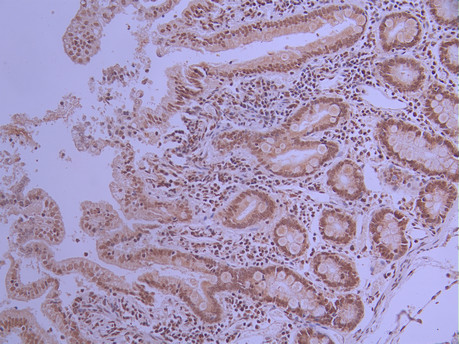
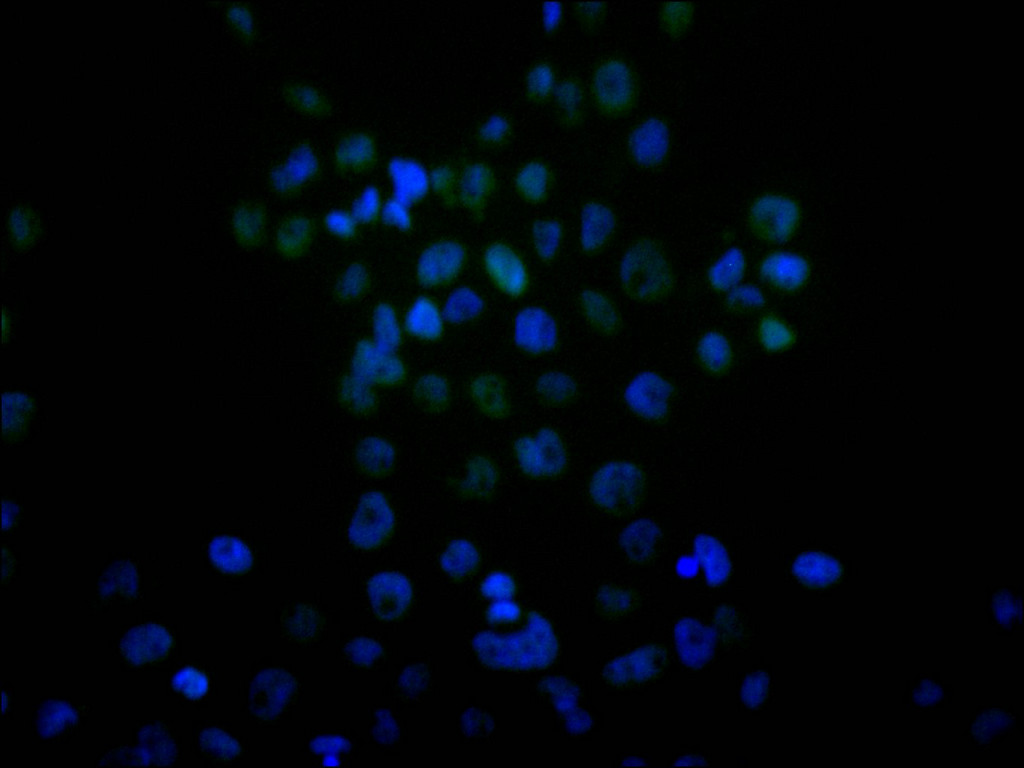
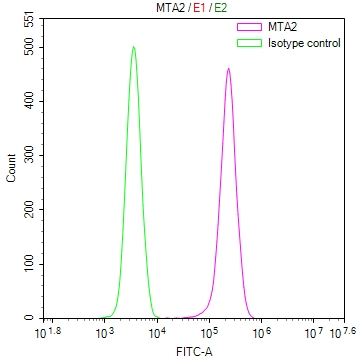
Validation studies confirm robust performance across multiple applications. Western blot analysis detects MTA2 at approximately 70 kDa in both Jurkat and NIH/3T3 whole cell lysates, with the slight difference from the predicted 75 kDa molecular weight likely attributable to alternative splicing/post-translational splicing. Immunohistochemistry staining has been successfully performed on paraffin-embedded human glioma and small intestine tissues using citrate buffer antigen retrieval. The antibody also performs well in immunofluorescence applications, as demonstrated in A431 cells, and flow cytometry analysis of Jurkat cells shows clear positive signal separation from isotype controls.
This versatile reagent supports diverse research applications in chromatin biology, cancer epigenetics, and studies examining NuRD complex function in transcriptional regulation.
There are currently no reviews for this product.





