
Call us
301-363-4651 (Available 9 a.m. to 5 p.m. CST from Monday to Friday)

| Code | CSB-RA174440A0HU |
| Size | US$210 |
| Order now | |
| Image |
|
| Have Questions? | Leave a Message or Start an on-line Chat |
| Application | Recommended Dilution |
|---|---|
| IHC | 1:50-1:200 |
PAG1, also known as Csk-binding protein (CBP), serves as a critical transmembrane adaptor protein localized to lipid rafts, where it plays a central role in regulating Src family kinase activity. By recruiting the C-terminal Src kinase (Csk) to glycosphingolipid-enriched microdomains, PAG1 functions as a key negative regulator of T cell receptor signaling and broader immune cell activation pathways. This regulatory function makes PAG1 an important target for researchers investigating signal transduction mechanisms, immune regulation, and the dysregulation of kinase signaling in disease contexts.
This recombinant monoclonal antibody, generated against a synthetic peptide derived from human PAG1, offers the reproducibility and consistency that demanding experimental workflows require. As a sequence-defined recombinant clone, it eliminates the lot-to-lot variability inherent in traditional hybridoma-derived antibodies, ensuring that your results remain comparable across extended studies and collaborative projects.
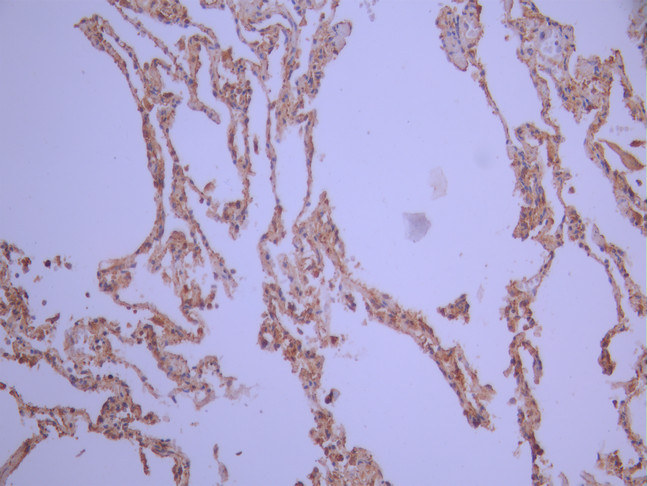
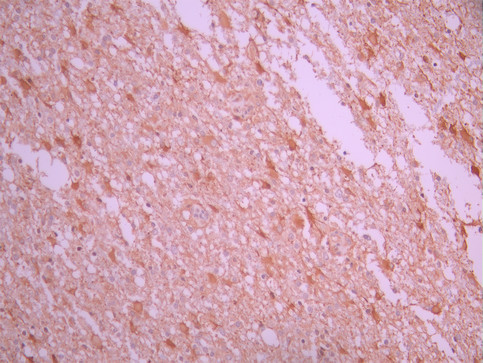
Validation testing demonstrates reliable performance in immunohistochemistry applications, with successful staining confirmed in paraffin-embedded human lung tissue and human glioma cancer specimens. Using citrate buffer antigen retrieval at pH 6.0 and working dilutions of 1:100, the antibody produces clear, specific signal when detected with HRP-conjugated secondary systems and DAB visualization. Recommended working dilutions range from 1:50 to 1:200, providing flexibility to optimize staining intensity for your specific tissue types and experimental conditions.
Whether you are exploring PAG1's role in normal immune cell signaling, investigating its potential involvement in tumor biology, or characterizing lipid raft-associated signaling complexes, this antibody provides a dependable tool for advancing your signal transduction research.
There are currently no reviews for this product.





