
Call us
301-363-4651 (Available 9 a.m. to 5 p.m. CST from Monday to Friday)

| Code | CSB-RA580897A0HU |
| Size | US$210 |
| Order now | |
| Image |
|
| Have Questions? | Leave a Message or Start an on-line Chat |
| Application | Recommended Dilution |
|---|---|
| IHC | 1:50-1:200 |
| IF | 1:50-1:200 |
| FC | 1:50-1:200 |
PDCD4, or Programmed Cell Death Protein 4, functions as a tumor suppressor that inhibits neoplastic transformation and plays a critical role in apoptosis regulation. This protein suppresses translation initiation by interfering with eIF4A helicase activity, making it a significant target for researchers investigating cancer biology, cell death pathways, and translational control mechanisms. PDCD4 expression is frequently downregulated in various malignancies, positioning it as both a prognostic marker and a potential therapeutic target.
This recombinant monoclonal antibody, clone 6F3, offers the consistency and reliability that demanding research applications require. Produced using recombinant technology with a sequence-defined rabbit IgG framework, this antibody eliminates the lot-to-lot variability that can compromise experimental reproducibility. The defined sequence ensures that your results remain consistent across extended studies and collaborative projects.
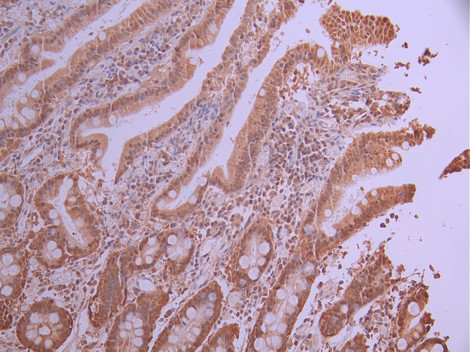
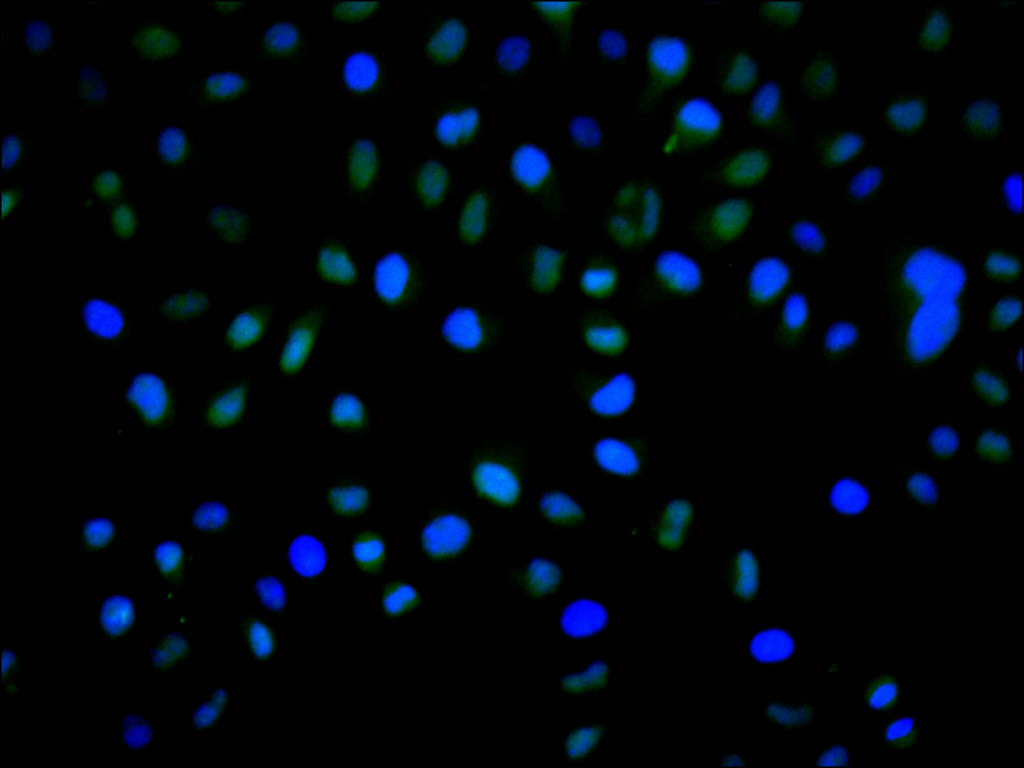
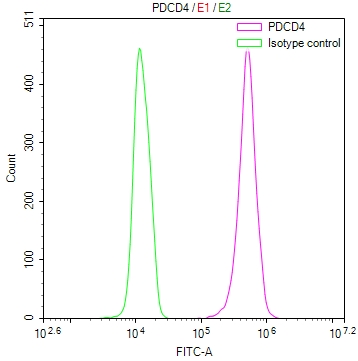
Validation testing demonstrates robust performance across multiple experimental platforms. Immunohistochemistry studies using human small intestine tissue show clear target detection with the Leica Bond system at dilutions of 1:50 to 1:200, employing citrate buffer antigen retrieval. Immunofluorescence analysis in HeLa cells reveals distinct staining patterns when counter-stained with DAPI, confirming reliable detection in fixed and permeabilized cell preparations. Flow cytometry validation, also performed in HeLa cells, demonstrates clear separation between antibody-stained and isotype control populations, confirming specificity for intracellular detection workflows.
The antibody's compatibility with ELISA, immunohistochemistry, immunofluorescence, and flow cytometry provides flexibility for researchers examining PDCD4 across different experimental contexts. Whether investigating tumor suppressor mechanisms, characterizing apoptotic pathways, or exploring translational regulation in human samples, this antibody delivers the performance and reproducibility essential for meaningful scientific discovery.
There are currently no reviews for this product.





