
Call us
301-363-4651 (Available 9 a.m. to 5 p.m. CST from Monday to Friday)

| Code | CSB-RA250534A0HU |
| Size | US$210 |
| Order now | |
| Image |
|
| Have Questions? | Leave a Message or Start an on-line Chat |
| Application | Recommended Dilution |
|---|---|
| IHC | 1:50-1:200 |
| IF | 1:50-1:200 |
| FC | 1:50-1:200 |
RYBP (RING1 and YY1-binding protein) serves as a critical component of the Polycomb repressive complex 1, where it functions as a key regulator of gene silencing and chromatin remodeling. This multifunctional protein participates in diverse cellular processes including apoptosis, stem cell maintenance, and developmental gene regulation. Its interaction with transcription factor YY1 and involvement in death effector domain signaling pathways make RYBP a compelling target for researchers investigating epigenetic mechanisms, cancer biology, and cellular differentiation.
This recombinant monoclonal antibody, generated from clone 15D5 in rabbit host, offers the reproducibility and consistency that demanding experimental workflows require. Because the antibody sequence is defined and produced recombinantly, researchers can expect reliable performance across experiments and over time, eliminating the lot-to-lot variability that can complicate longitudinal studies or multi-site collaborations.
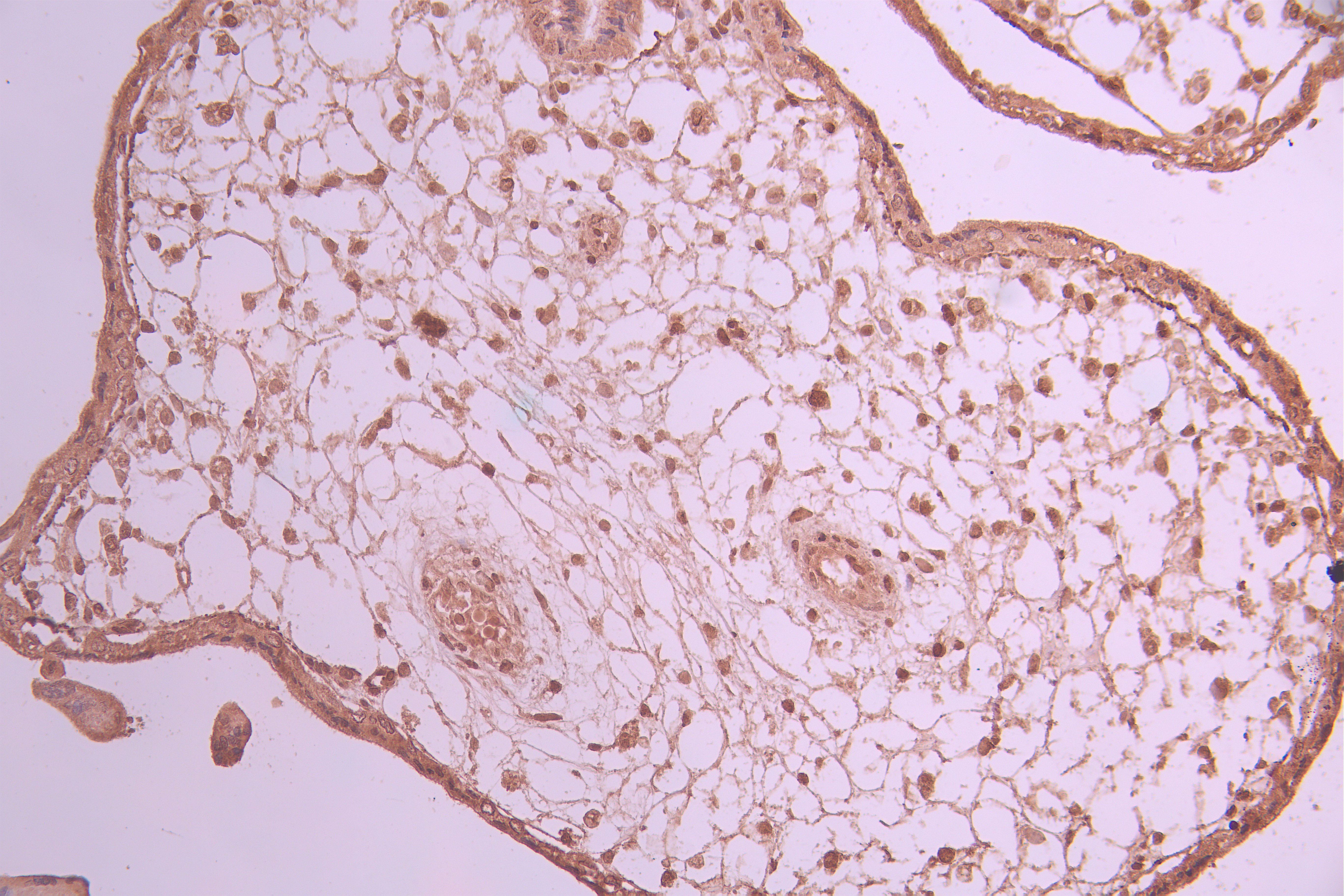
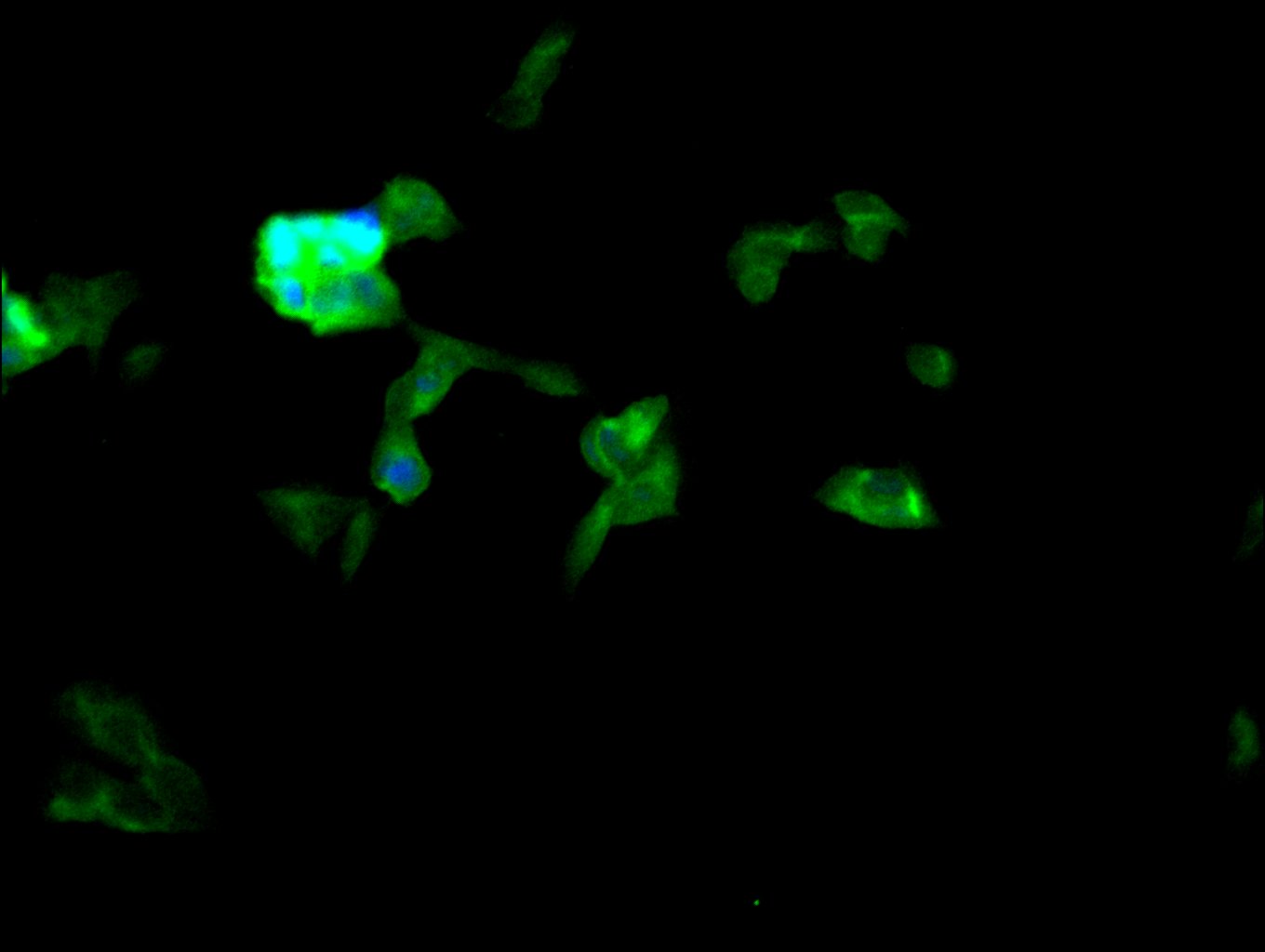
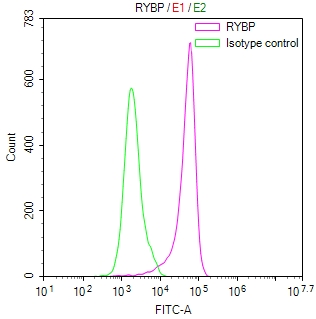
Validation across multiple detection platforms demonstrates this antibody's experimental versatility. Immunohistochemistry studies in paraffin-embedded human placenta tissue at dilutions of 1:50–1:200 confirm robust target detection in fixed tissue contexts. Immunofluorescence analysis in SH-SY5Y neuroblastoma cells reveals clear signal with appropriate subcellular localization when used at 1:50. Flow cytometry validation using A431 epidermoid carcinoma cells shows distinct positive population shifts compared to isotype controls, confirming utility for single-cell analysis applications.
The antibody is supplied in a stabilized liquid format containing glycerol for convenient long-term storage at -20°C or -80°C. Whether investigating Polycomb-mediated gene silencing, exploring RYBP's role in apoptotic pathways, or characterizing its function in stem cell biology, this antibody provides a dependable tool for advancing understanding of this important epigenetic regulator.
There are currently no reviews for this product.





