
Call us
301-363-4651 (Available 9 a.m. to 5 p.m. CST from Monday to Friday)

| Code | CSB-RA047353A0HU |
| Size | US$210 |
| Order now | |
| Image |
|
| Have Questions? | Leave a Message or Start an on-line Chat |
| Application | Recommended Dilution |
|---|---|
| IHC | 1:50-1:200 |
| IF | 1:50-1:200 |
| FC | 1:50-1:200 |
SNTA1, also known as alpha-1-syntrophin, serves as a critical scaffolding protein within the dystrophin-associated protein complex, where it anchors signaling molecules to the plasma membrane in muscle and neuronal tissues. This adapter protein plays essential roles in maintaining membrane integrity, modulating ion channel localization, and facilitating signal transduction pathways. Its involvement in muscular dystrophies and cardiac function makes SNTA1 a significant target for researchers investigating neuromuscular disorders, cardiac pathophysiology, and membrane-associated signaling networks.
This recombinant monoclonal antibody, clone 1F3, offers the reproducibility and consistency that demanding research applications require. Generated against a synthetic peptide derived from human SNTA1, the antibody is produced using recombinant technology, ensuring sequence-defined specificity and eliminating the lot-to-lot variability often encountered with traditional hybridoma-derived reagents. The rabbit IgG format provides excellent signal amplification while the affinity-chromatography purification delivers a clean reagent suitable for sensitive detection methods.
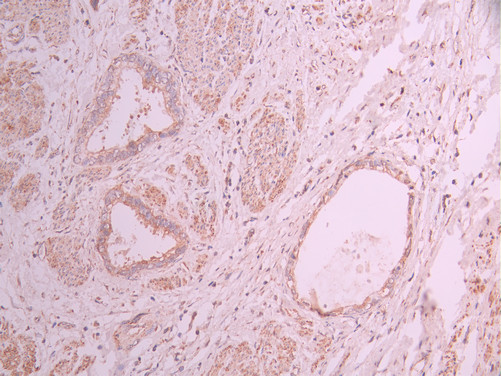
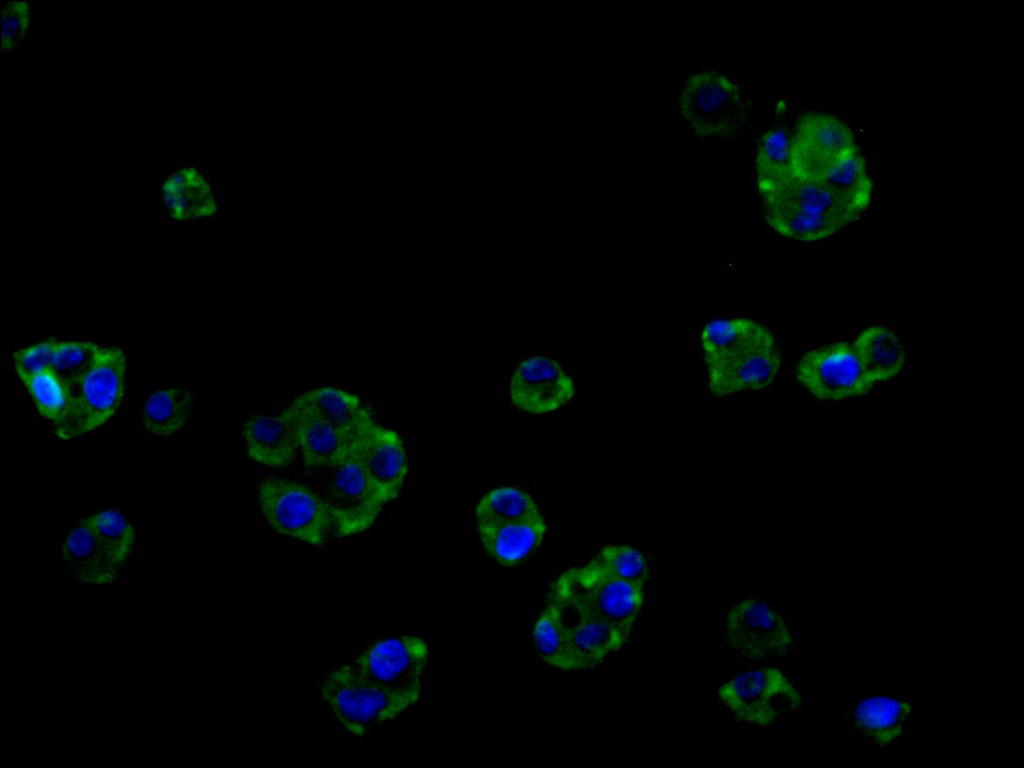
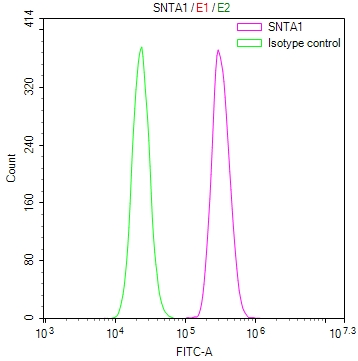
Validation across multiple platforms demonstrates this antibody's versatility in your experimental workflows. Immunohistochemistry studies in paraffin-embedded human cervical cancer tissue reveal clear target detection using citrate buffer antigen retrieval at dilutions between 1:50 and 1:200. Immunofluorescence analysis in HepG2 hepatocellular carcinoma cells shows distinct cellular localization patterns, while flow cytometry experiments using PC-3 prostate cancer cells confirm reliable detection in suspension-based assays with appropriate signal separation from isotype controls.
Whether you are investigating dystrophin complex assembly, exploring SNTA1's role as a TGF-alpha cytoplasmic domain-interacting protein, or examining its function in disease models, this antibody provides a dependable tool for advancing your understanding of membrane-associated scaffolding proteins.
There are currently no reviews for this product.





