RNF135 Antibody

Code CSB-PA811599ESR1HU
Size US$166
Order now
Image
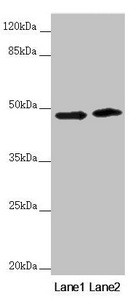
  • Western Blot
    Positive WB detected in: SY5Y whole cell lysate(30µg), 293T whole cell lysate(30µg), JK whole cell lysate(30µg), U87 whole cell lysate(30µg), PC-12 whole cell lysate(30µg), 786-O whole cell lysate(30µg),U251 whole cell lysate(30µg),MCF7 whole cell lysate(30µg),Mouse Kidney tissue lysate(30µg)
    All lanes: RNF135 antibody at 1:1000
    Secondary
    Goat polyclonal to rabbit IgG at 1/40000 dilution
    Predicted band size: 48/23/31 kDa
    Observed band size: 48,31 kDa
    Exposure time: 120s
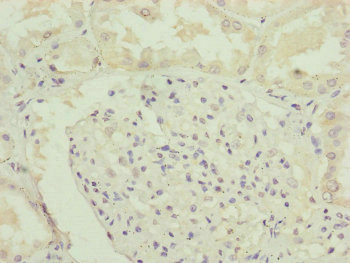
  • IHC image of CSB-PA811599ESR1HU diluted at 1:100 and staining in paraffin-embedded human kidney tissue performed on a Leica BondTM system. After dewaxing and hydration, antigen retrieval was mediated by high pressure in a citrate buffer (pH 6.0). Section was blocked with 10% normal goat serum 30min at RT. Then primary antibody (1% BSA) was incubated at 4°C overnight. The primary is detected by a Goat anti-rabbit polymer IgG labeled by HRP and visualized using 0.05% DAB. Secondary antibody only control: uses 1% BSA instead of primary antibody
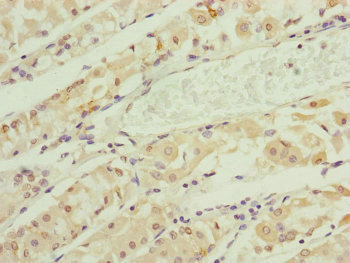
  • IHC image of CSB-PA811599ESR1HU diluted at 1:100 and staining in paraffin-embedded human stomach tissue performed on a Leica BondTM system. After dewaxing and hydration, antigen retrieval was mediated by high pressure in a citrate buffer (pH 6.0). Section was blocked with 10% normal goat serum 30min at RT. Then primary antibody (1% BSA) was incubated at 4°C overnight. The primary is detected by a Goat anti-rabbit polymer IgG labeled by HRP and visualized using 0.05% DAB. Secondary antibody only control: uses 1% BSA instead of primary antibody
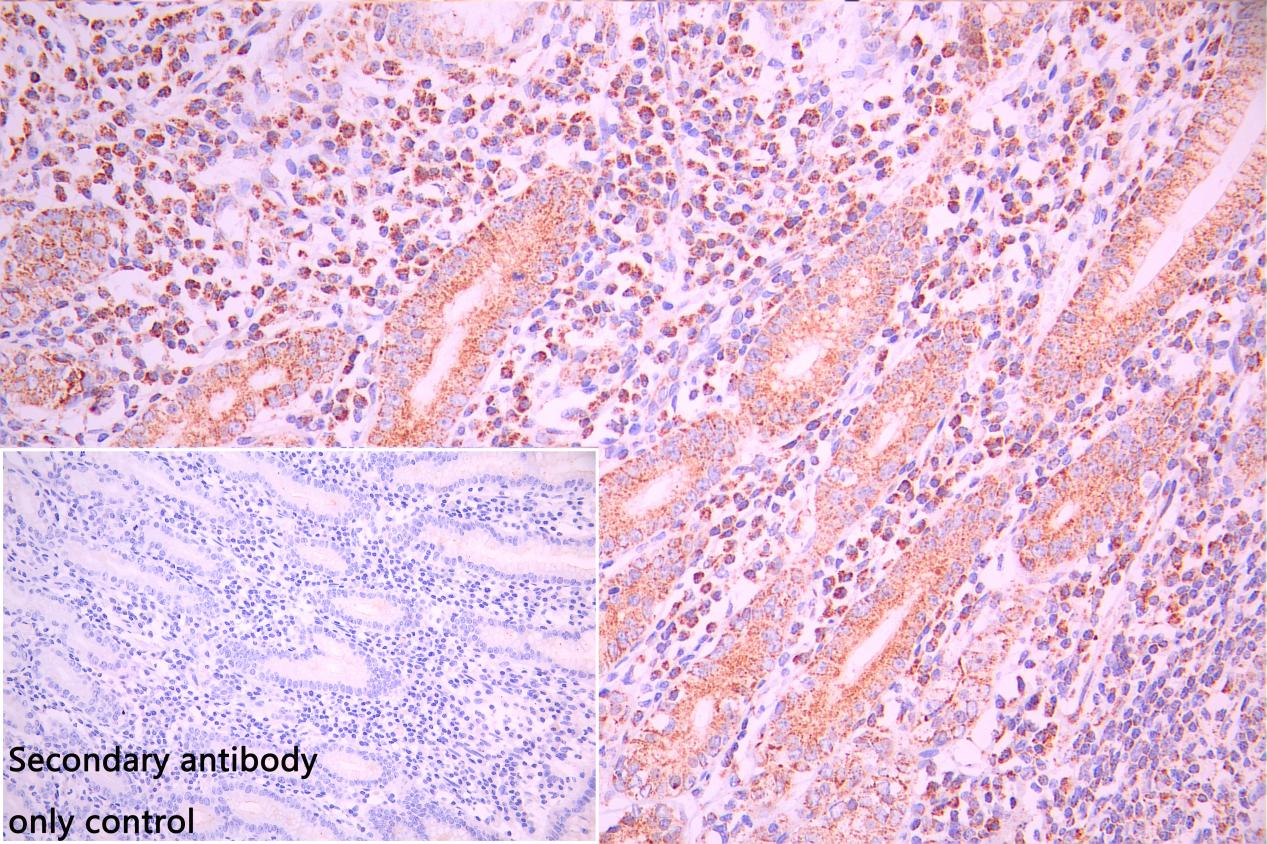
  • IHC image of CSB-PA811599ESR1HU diluted at 1:100 and staining in paraffin-embedded human stomach cancerperformed on a Leica BondTM system. After dewaxing and hydration, antigen retrieval was mediated by high pressure in a citrate buffer (pH 6.0). Section was blocked with 10% normal goat serum 30min at RT. Then primary antibody (1% BSA) was incubated at 4°C overnight. The primary is detected by a Goat anti-rabbit polymer IgG labeled by HRP and visualized using 0.05% DAB. Secondary antibody only control: uses 1% BSA instead of primary antibody
Have Questions? Leave a Message or Start an on-line Chat

Product Details

Full Product Name
Rabbit anti-Homo sapiens (Human) RNF135 Polyclonal antibody
Uniprot No.
Target Names
RNF135
Alternative Names
E3 ubiquitin-protein ligase RNF135 antibody; L13 antibody; MGC13061 antibody; MMFD antibody; REUL antibody; RIG-I E3 ubiquitin ligase antibody; RING finger protein 135 antibody; Riplet antibody; RN135_HUMAN antibody; Rnf135 antibody
Raised in
Rabbit
Species Reactivity
Human, Mouse
Immunogen
Synthesized peptide derived from human RNF135
Immunogen Species
Homo sapiens (Human)
Clonality
Polyclonal
Isotype
IgG
Purification Method
Antigen Affinity Purified
Concentration
It differs from different batches. Please contact us to confirm it.
Buffer
Liquid in PBS containing 50% glycerol, 0.5% BSA and 0.02% sodium azide
Form
Liquid
Tested Applications
ELISA, WB, IHC
Recommended Dilution
Application Recommended Dilution
WB 1:500-1:2000
IHC 1:20-1:200
Troubleshooting and FAQs
Storage
Upon receipt, store at -20°C or -80°C. Avoid repeated freeze.
Lead Time
Basically, we can dispatch the products out in 1-3 working days after receiving your orders. Delivery time maybe differs from different purchasing way or location, please kindly consult your local distributors for specific delivery time.
Usage
For Research Use Only. Not for use in diagnostic or therapeutic procedures.

Customer Reviews and Q&A

 Customer Reviews

There are currently no reviews for this product.

Submit a Review here

Target Background

Function
E2-dependent E3 ubiquitin-protein ligase that functions as a RIG-I/DDX58 coreceptor in the sensing of viral RNAs in cell cytoplasm and the activation of the antiviral innate immune response. Together with the UBE2D3, UBE2N and UB2V1 E2 ligases, catalyzes the 'Lys-63'-linked polyubiquitination of RIG-I/DDX58 oligomerized on viral RNAs, an essential step in the activation of the RIG-I signaling pathway. Through a ubiquitin-independent parallel mechanism, which consists in bridging RIG-I/DDX58 filaments forming on longer viral RNAs, further activates the RIG-I signaling pathway. This second mechanism that synergizes with the ubiquitin-dependent one would thereby allow an RNA length-dependent regulation of the RIG-I signaling pathway (Probable). Associated with the E2 ligase UBE2N, also constitutively synthesizes unanchored 'Lys-63'-linked polyubiquitin chains that may also activate the RIG-I signaling pathway.
Gene References into Functions
  1. Together with Riplet, Ube2D3 promotes covalent conjugation of polyubiquitin chains to RIG-I, while Ube2N preferentially facilitates production of unanchored chains. In the presence of these chains, RIG-I induces MAVS aggregation directly on the mitochondria. Data thus reveal two essential mechanisms underlying the activation of RIG-I and MAVS for triggering innate immune signaling in response to viral infection in cells. PMID: 28469175
  2. In-depth analysis of population-differentiated regions indicated that the coding gene, RNF135, represented a trans-regulation hotspot via cis-regulation by the population-specific variants in the region of selective sweep. PMID: 27992444
  3. findings demonstrate the biological effects of RNF135 in glioblastoma cell proliferation, migration and cell cycle, and its role in the progression of glioblastoma may be associated with the ERK signal transduction pathway. PMID: 26856755
  4. Data showed that the presence of the RNF135 K115 variant in the genotype of patients with autism was statistically significant. PMID: 26368817
  5. Riplet-mediated K63-linked polyubiquitination released RIG-I RD autorepression, which allowed the access of positive factors to the RIG-I protein. PMID: 23950712
  6. REUL is an E3 ubiquitin ligase of RIG-I and specifically stimulates RIG-I-mediated innate antiviral activity PMID: 19484123
  7. These data identify RNF135 as causative of a new overgrowth syndrome and demonstrate that RNF135 haploinsufficiency contributes to the phenotype of NF1 microdeletion cases. PMID: 17632510
  8. identify an alternative factor, Riplet/RNF135, that promotes RIG-I activation independent of TRIM25 PMID: 19017631
  9. RNF135 mutations are not present in patients with Sotos syndrome-like features. PMID: 19291764

Show More

Hide All

Involvement in disease
Macrocephaly, macrosomia, facial dysmorphism syndrome (MMFD)
Subcellular Location
Cytoplasm. Cytoplasm, Stress granule.
Tissue Specificity
Expressed in skeletal muscle, spleen, kidney, placenta, prostate, stomach, thyroid and tongue. Also weakly expressed in heart, thymus, liver and lung.
Database Links

HGNC: 21158

OMIM: 611358

KEGG: hsa:84282

STRING: 9606.ENSP00000328340

UniGene: Hs.29874

icon of phone
Call us
301-363-4651 (Available 9 a.m. to 5 p.m. CST from Monday to Friday)
icon of address
Address
7505 Fannin St., Ste 610, Room 7 (CUBIO Innovation Center), Houston, TX 77054, USA
icon of social media
Join us with

Subscribe newsletter

Leave a message

* To protect against spam, please pass the CAPTCHA test below.
CAPTCHA verification
© 2007-2026 CUSABIO TECHNOLOGY LLC All rights reserved. 鄂ICP备15011166号-1
Place an order now

I. Product details

*
*
*
*

II. Contact details

*
*

III. Ship To

*
*
*
*
*
*
*

IV. Bill To

*
*
*
*
*
*
*
*