
Call us
301-363-4651 (Available 9 a.m. to 5 p.m. CST from Monday to Friday)

| Code | CSB-RA115875A0HU |
| Size | US$210 |
| Order now | |
| Image |
|
| Have Questions? | Leave a Message or Start an on-line Chat |
| Application | Recommended Dilution |
|---|---|
| WB | 1:500-1:2000 |
| IHC | 1:50-1:200 |
| IF | 1:50-1:200 |
| FC | 1:50-1:200 |
ACTR1B, also known as beta-centractin or ARP1B, is a key component of the dynactin complex that plays essential roles in cytoplasmic dynein-mediated vesicular transport and organelle positioning. As an actin-related protein, ACTR1B contributes to the structural integrity of the dynactin complex, making it a valuable target for researchers investigating intracellular trafficking, mitotic spindle dynamics, and cytoskeletal organization.
This recombinant monoclonal antibody, clone 14D5, offers the consistency and reproducibility that demanding experimental workflows require. Developed using recombinant technology with a defined sequence, this antibody eliminates the lot-to-lot variability often encountered with traditional hybridoma-derived reagents, ensuring your results remain comparable across extended studies.
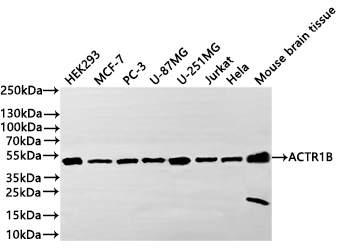
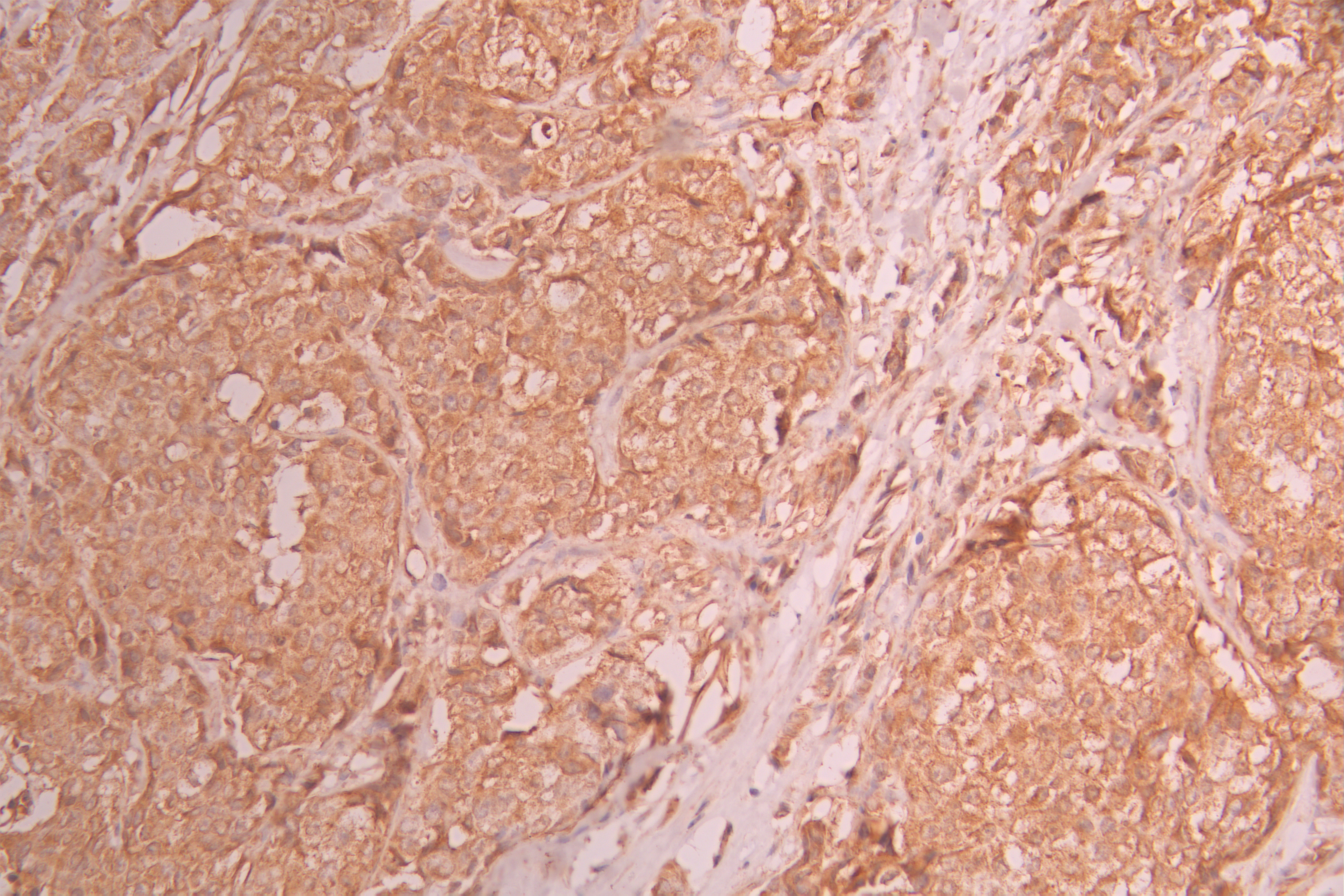
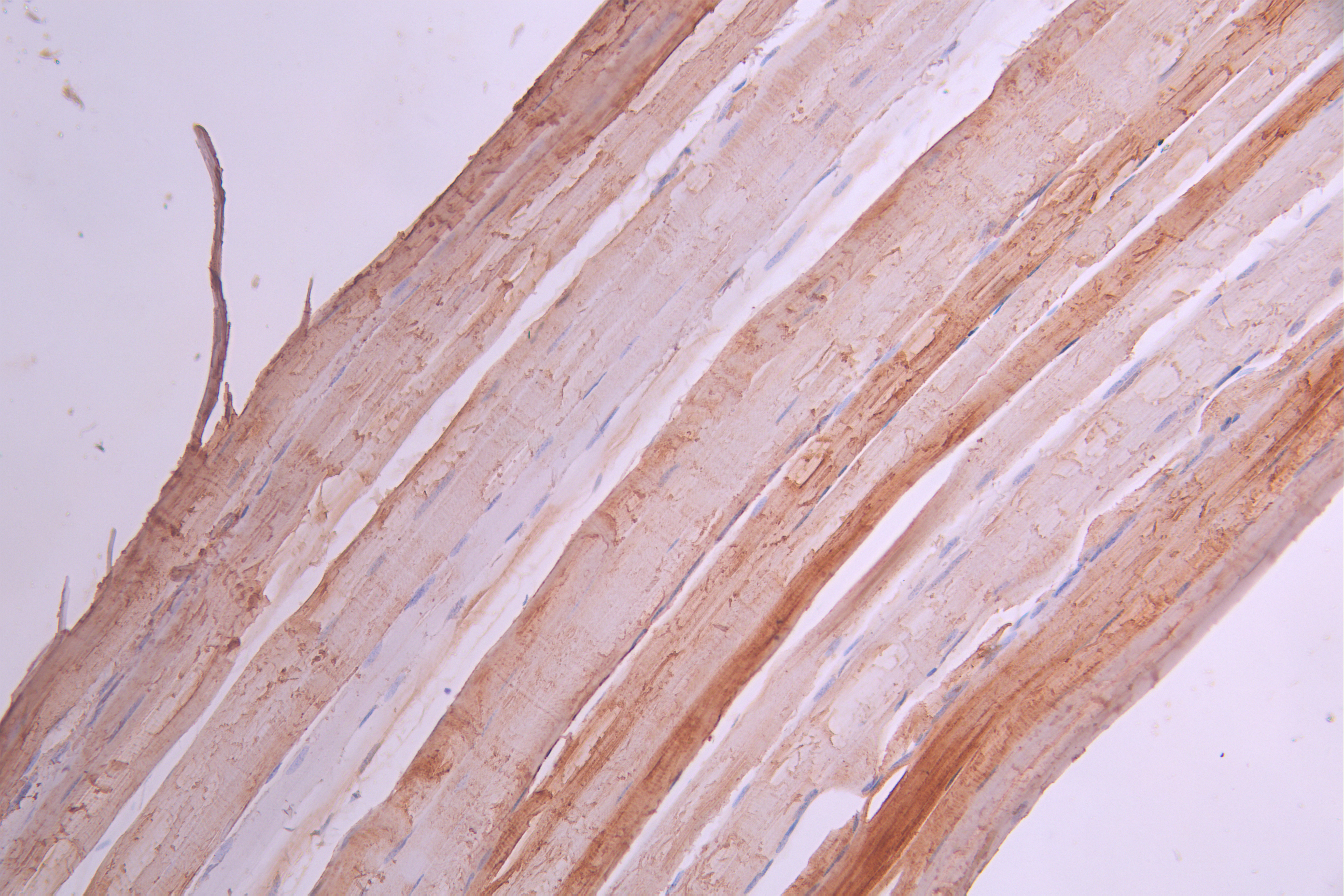
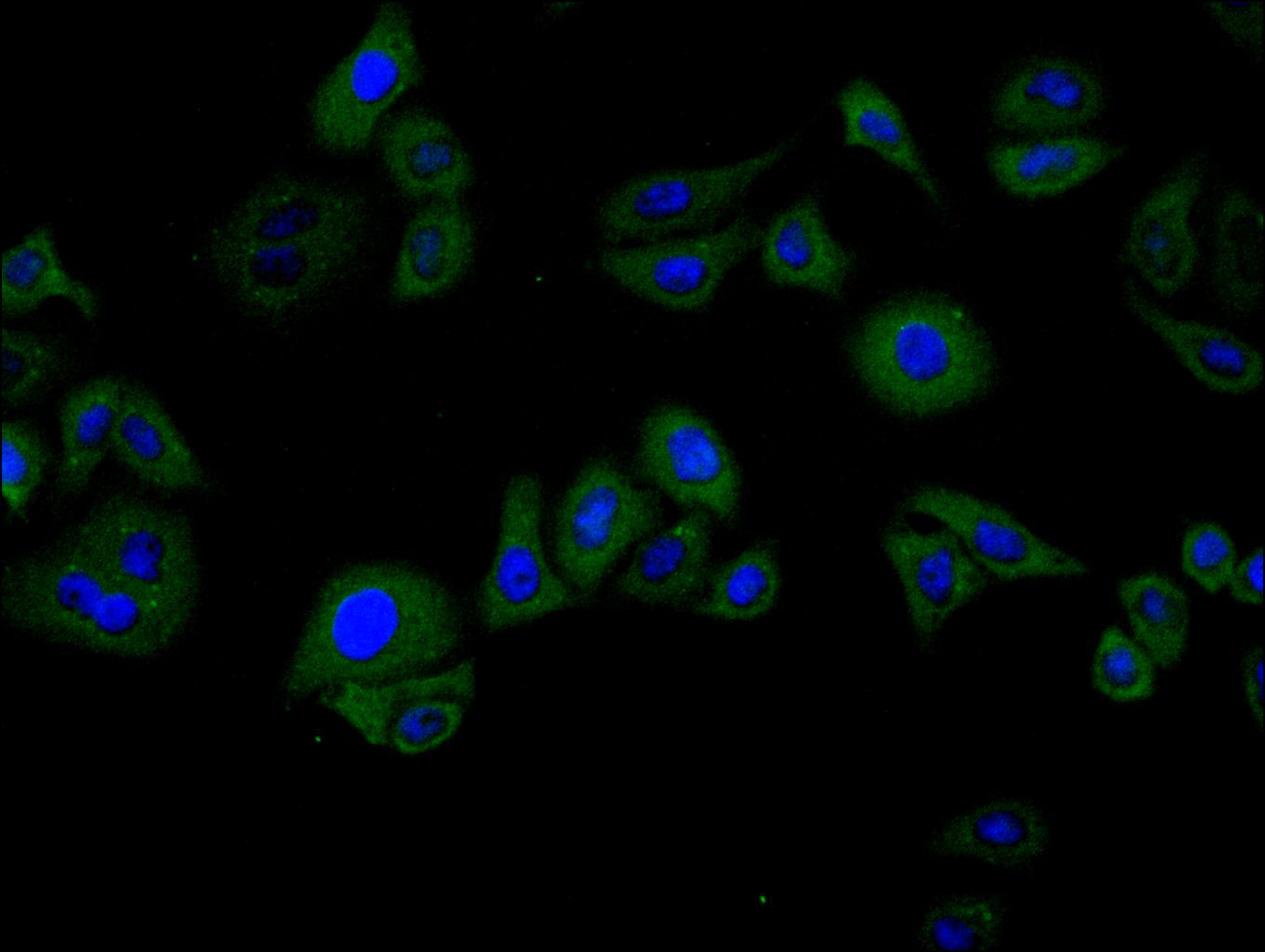
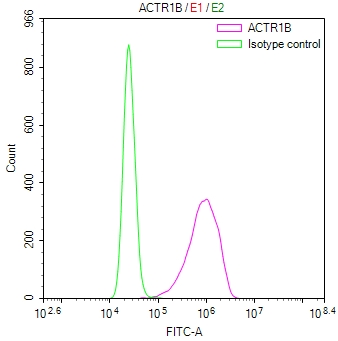
Extensive validation demonstrates this antibody's versatility across multiple applications. Western blot analysis confirms specific detection of ACTR1B at the expected 42 kDa molecular weight across a diverse panel of human cell lines including HEK293, MCF-7, PC-3, U-87MG, U-251MG, Jurkat, and HeLa cells. Cross-species reactivity with mouse has been validated using mouse brain tissue lysate, expanding utility for comparative and translational studies. Immunohistochemistry staining has been successfully performed on paraffin-embedded human breast cancer and skeletal muscle tissues, while immunofluorescence and flow cytometry applications have been validated in HeLa cells, providing flexibility for both fixed tissue and cell-based analyses.
This antibody serves researchers studying dynein-dynactin function, vesicular transport mechanisms, and cytoskeletal dynamics in both normal physiology and disease contexts, including cancer cell biology where altered intracellular trafficking contributes to malignant phenotypes.
There are currently no reviews for this product.





