
Call us
301-363-4651 (Available 9 a.m. to 5 p.m. CST from Monday to Friday)

| Code | CSB-RA272392A0HU |
| Size | US$210 |
| Order now | |
| Image |
|
| Have Questions? | Leave a Message or Start an on-line Chat |
| Application | Recommended Dilution |
|---|---|
| WB | 1:500-1:2000 |
| IHC | 1:50-1:200 |
| FC | 1:50-1:200 |
The AKT kinase family, comprising AKT1, AKT2, and AKT3, represents a central node in the PI3K/AKT signaling pathway that governs fundamental cellular processes including survival, proliferation, metabolism, and growth. Dysregulation of AKT signaling is implicated in numerous cancers and metabolic disorders, making these kinases essential targets for researchers investigating oncogenic mechanisms, insulin signaling, and therapeutic intervention strategies.
This recombinant monoclonal antibody (clone 16E10) detects all three AKT isoforms, providing comprehensive coverage of this kinase family in a single reagent. Developed using recombinant technology with a defined immunogen sequence, this antibody offers the lot-to-lot consistency critical for longitudinal studies and reproducible quantification of AKT expression across experimental conditions. The rabbit IgG format ensures high affinity binding while the affinity-chromatography purification delivers excellent signal-to-noise performance.
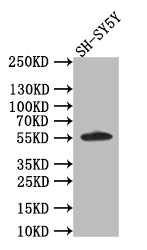
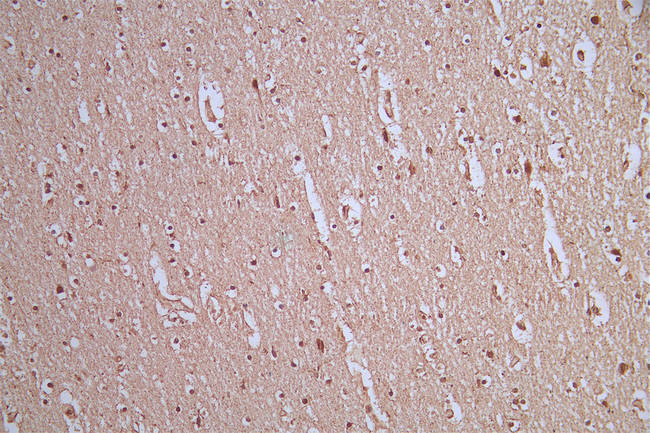
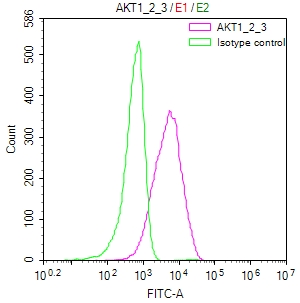
Validation studies demonstrate robust performance across multiple experimental platforms. Western blot analysis in SH-SY5Y neuroblastoma cells confirms detection at the expected 56 kDa molecular weight, with recommended dilutions of 1:500–1:2000 providing flexibility for optimization. Immunohistochemistry validation in human brain tissue sections using citrate buffer antigen retrieval shows clear staining patterns suitable for spatial expression analysis. Flow cytometry characterization in Jurkat T cells demonstrates effective intracellular detection following formaldehyde fixation and Triton X-100 permeabilization, with clear separation from isotype control at 1:50–1:200 dilutions.
This antibody serves researchers investigating cancer biology, metabolic signaling, epigenetic regulation, and signal transduction pathways where AKT activity plays a determining role in cellular outcomes.
There are currently no reviews for this product.





