
Call us
301-363-4651 (Available 9 a.m. to 5 p.m. CST from Monday to Friday)

| Code | CSB-RA001898MA1HU |
| Size | $49.9 |
| Order now | |
| Promotion |

|
| Image |
|
| Have Questions? | Leave a Message or Start an on-line Chat |
| Application | Recommended Dilution |
|---|---|
| IHC | 1:50-1:200 |
Serum amyloid P component, encoded by the APCS gene, serves as a critical plasma glycoprotein belonging to the pentraxin family of pattern recognition molecules. This protein plays a significant role in amyloid fibril formation and stability, making it a key focus in research exploring amyloidosis, cardiovascular disease, and neurodegenerative conditions. APCS also participates in innate immune responses through its ability to recognize and bind pathogens, positioning it at the intersection of inflammation and tissue homeostasis research.
This recombinant monoclonal antibody, clone 25G7, offers researchers the reproducibility and consistency that only sequence-defined antibody production can provide. Unlike traditional hybridoma-derived antibodies, recombinant technology ensures that every lot performs identically, eliminating the variability that can compromise longitudinal studies or multi-site collaborations. The human IgG1 isotype format and affinity chromatography purification deliver a highly specific reagent suitable for demanding experimental workflows.
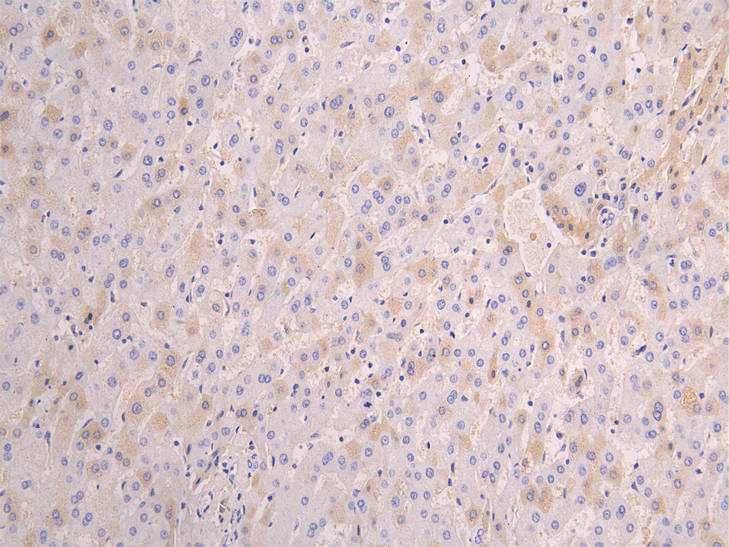
Validation in immunohistochemistry demonstrates reliable detection in paraffin-embedded human liver tissue, a particularly relevant sample type given the liver's role as the primary site of APCS synthesis. Using a Leica Bond system with citrate buffer antigen retrieval and detection at 1:100 dilution, the antibody produces clear, specific staining that enables confident identification of APCS-expressing cells within complex tissue architecture. Recommended working dilutions range from 1:50 to 1:200 for immunohistochemistry, with additional compatibility for ELISA applications.
For investigators studying amyloid-related pathologies, cardiovascular inflammation, or the broader biology of pentraxin family members, this antibody provides a dependable tool for characterizing APCS expression and distribution in human samples.
There are currently no reviews for this product.





