
Call us
301-363-4651 (Available 9 a.m. to 5 p.m. CST from Monday to Friday)

| Code | CSB-RA014345A0HU |
| Size | US$210 |
| Order now | |
| Image |
|
| Have Questions? | Leave a Message or Start an on-line Chat |
| Application | Recommended Dilution |
|---|---|
| IHC | 1:50-1:200 |
| FC | 1:50-1:200 |
ASH2L serves as an essential core subunit of the MLL/SET1 histone methyltransferase complexes, playing a critical role in catalyzing histone H3 lysine 4 methylation. This epigenetic modification is fundamental to transcriptional activation and chromatin accessibility, making ASH2L a key player in developmental regulation, cell differentiation, and disease processes including cancer progression. Researchers investigating epigenetic mechanisms and nuclear signaling pathways will find ASH2L an important target for understanding how chromatin-modifying complexes influence gene expression programs.
This recombinant monoclonal antibody, generated against a synthetic peptide from human ASH2L protein, offers the reproducibility and consistency that demanding epigenetic studies require. As a sequence-defined recombinant clone, it eliminates the lot-to-lot variability that can complicate longitudinal studies or multi-site collaborations, ensuring your experimental conditions remain constant across projects.
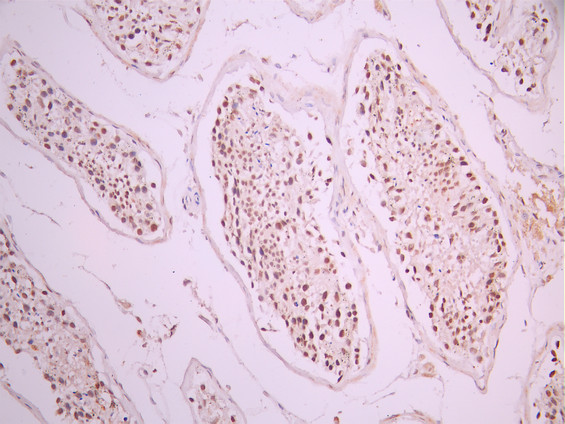
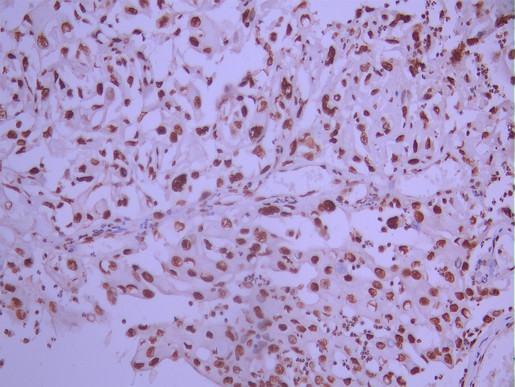
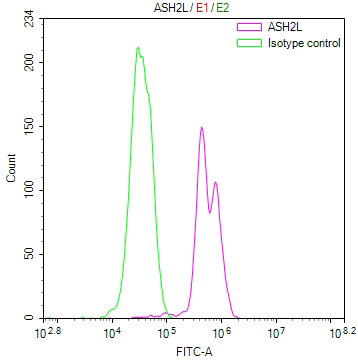
Validation studies demonstrate reliable performance across multiple detection platforms. Immunohistochemistry testing at 1:100 dilution reveals clear nuclear staining in paraffin-embedded human testis tissue and human cervical cancer specimens using citrate buffer antigen retrieval, providing researchers with optimized starting conditions for tissue-based investigations. Flow cytometry analysis in MCF-7 breast cancer cells shows distinct positive signal separation from isotype control, confirming utility for quantitative single-cell analysis of ASH2L expression in fixed and permeabilized samples.
The antibody's compatibility with both tissue sections and cultured cell lines offers workflow flexibility for researchers examining ASH2L expression patterns across different experimental systems. Whether investigating normal developmental processes or characterizing epigenetic dysregulation in cancer models, this antibody provides a dependable tool for advancing understanding of histone methyltransferase complex biology.
There are currently no reviews for this product.





