
Call us
301-363-4651 (Available 9 a.m. to 5 p.m. CST from Monday to Friday)

| Code | CSB-RA576831A0HU |
| Size | US$210 |
| Order now | |
| Image |
|
| Have Questions? | Leave a Message or Start an on-line Chat |
| Application | Recommended Dilution |
|---|---|
| WB | 1:500-1:5000 |
| IHC | 1:50-1:200 |
Asparagine synthetase (ASNS) catalyzes the ATP-dependent conversion of aspartate to asparagine using glutamine as a nitrogen source, positioning it as a critical enzyme in amino acid metabolism and cellular homeostasis. This enzyme has garnered significant research attention due to its role in cancer biology, where elevated ASNS expression correlates with resistance to L-asparaginase therapy in acute lymphoblastic leukemia and contributes to metabolic adaptation in various solid tumors. Additionally, ASNS serves as a cell cycle control protein, making it relevant to studies investigating proliferation and tumor progression.
This recombinant monoclonal antibody, generated in rabbit against a synthetic peptide derived from human ASNS, offers the reproducibility and consistency that demanding experimental workflows require. As a sequence-defined reagent produced through recombinant technology, it eliminates the lot-to-lot variability inherent to traditional hybridoma-derived antibodies, ensuring your results remain comparable across extended studies and collaborative projects.
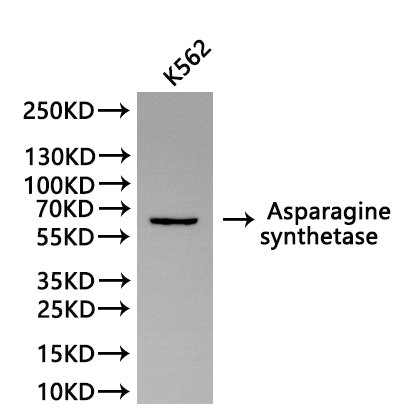
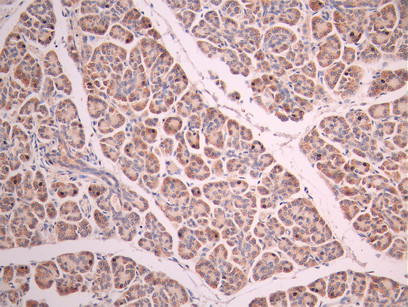
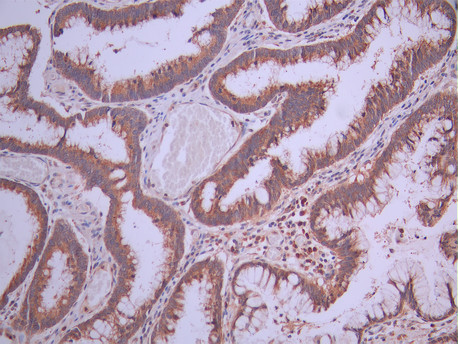
Validation data demonstrates reliable performance across multiple applications. In western blot analysis, the antibody detects a band at the predicted molecular weight of 64 kDa in K562 whole cell lysate, a human chronic myelogenous leukemia line frequently used in hematological research. The recommended working dilution range of 1:500 to 1:5000 provides flexibility for optimization in your specific system. For immunohistochemistry applications, validated staining has been achieved in paraffin-embedded human pancreatic tissue and gastric cancer specimens at 1:50 to 1:200 dilutions using citrate buffer antigen retrieval, demonstrating utility for both normal tissue characterization and oncology research.
Whether investigating metabolic reprogramming in cancer, exploring therapeutic resistance mechanisms, or examining signal transduction pathways, this antibody provides a dependable tool for ASNS detection in human samples.
There are currently no reviews for this product.





