
Call us
301-363-4651 (Available 9 a.m. to 5 p.m. CST from Monday to Friday)

| Code | CSB-RA960273A0HU |
| Size | US$210 |
| Order now | |
| Image |
|
| Have Questions? | Leave a Message or Start an on-line Chat |
| Application | Recommended Dilution |
|---|---|
| IF | 1:50-1:200 |
| FC | 1:50-1:200 |
CSDE1, also known as cold shock domain-containing protein E1 or protein UNR, functions as an RNA-binding protein that plays critical roles in translational regulation, mRNA stability, and cellular stress responses. Originally identified as an N-ras upstream gene product, CSDE1 has emerged as a significant factor in developmental biology, stem cell maintenance, and cancer progression, where its dysregulation can influence cell proliferation and differentiation pathways.
This recombinant monoclonal antibody, generated against a synthetic peptide derived from human CSDE1, offers the reproducibility and consistency that demanding research applications require. As a sequence-defined reagent produced through recombinant technology, it eliminates the lot-to-lot variability that can complicate longitudinal studies or multi-site collaborations. The rabbit IgG format, purified by affinity chromatography, ensures high specificity for your target while minimizing background interference.
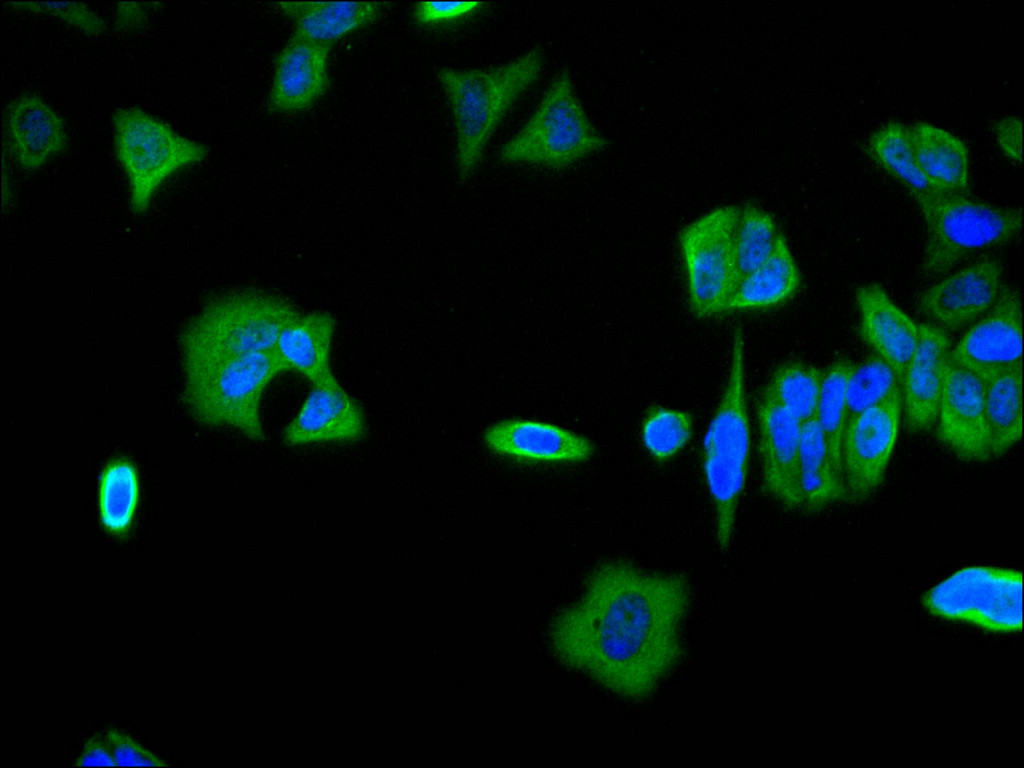
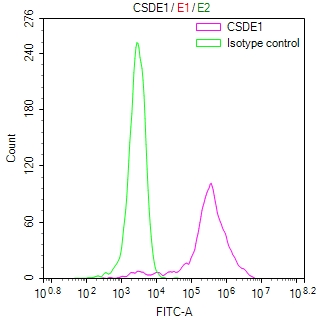
Validation studies demonstrate reliable performance across multiple experimental platforms. Immunofluorescence analysis of MCF-7 human breast cancer cells reveals clear cytoplasmic staining patterns consistent with CSDE1's known localization as an RNA-binding protein, with optimal results achieved at dilutions between 1:50 and 1:200. Flow cytometry experiments using the same cell line confirm robust detection with excellent signal separation from isotype controls, supporting quantitative analysis of CSDE1 expression at the single-cell level.
This antibody serves researchers investigating post-transcriptional gene regulation, cellular stress mechanisms, and cancer biology. Its validated performance in both imaging and flow-based applications provides flexibility for studies examining CSDE1 expression patterns, subcellular distribution, or population-level expression heterogeneity in human cell models.
There are currently no reviews for this product.





