
Call us
301-363-4651 (Available 9 a.m. to 5 p.m. CST from Monday to Friday)

| Code | CSB-RA144042A0HU |
| Size | US$210 |
| Order now | |
| Image |
|
| Have Questions? | Leave a Message or Start an on-line Chat |
| Application | Recommended Dilution |
|---|---|
| IHC | 1:50-1:200 |
Flavin-containing monooxygenase 3 (FMO3) serves as the primary hepatic enzyme responsible for the N-oxygenation of trimethylamine and numerous xenobiotic compounds, making it a critical target for researchers investigating drug metabolism, pharmacogenomics, and metabolic disorders. Mutations in FMO3 are directly linked to trimethylaminuria (TMAU), a condition characterized by impaired trimethylamine metabolism, positioning this enzyme at the intersection of basic biochemistry and clinical research.
This recombinant monoclonal antibody, clone 24E6, offers the reproducibility and consistency that demanding research protocols require. Produced using recombinant technology with a defined sequence, this rabbit IgG eliminates the lot-to-lot variability that can compromise longitudinal studies or multi-site collaborations. The antibody was raised against a synthetic peptide derived from human FMO3, ensuring precise epitope targeting.
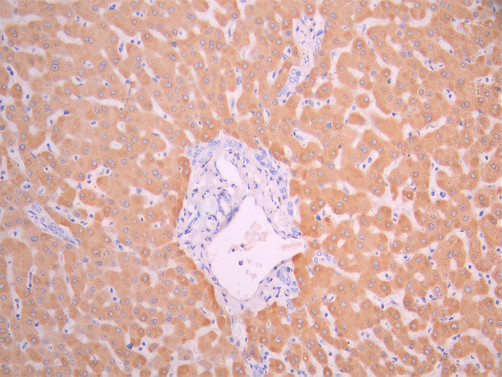
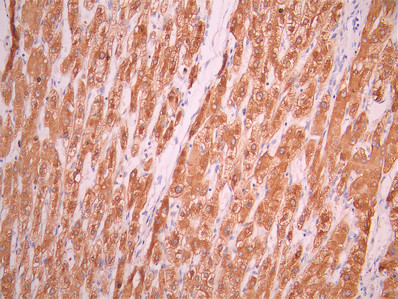
Validation through immunohistochemistry demonstrates robust performance in paraffin-embedded human tissues, with testing conducted in both normal liver and liver cancer specimens. Using a Leica Bond system with citrate buffer antigen retrieval, the antibody produces clear staining at 1:100 dilution, with a recommended working range of 1:50 to 1:200 that allows optimization for your specific tissue processing conditions. The validated performance in hepatic tissue aligns well with FMO3's predominant expression pattern in the liver.
Supplied in a stabilized liquid format with glycerol for convenient long-term storage at -20°C or -80°C, this affinity-purified antibody is ready for immediate use in your immunohistochemistry workflows. Researchers investigating hepatic drug metabolism, trimethylaminuria pathophysiology, or broader signal transduction pathways will find this antibody a reliable tool for characterizing FMO3 expression in human tissue samples.
There are currently no reviews for this product.





