
Call us
301-363-4651 (Available 9 a.m. to 5 p.m. CST from Monday to Friday)

| Code | CSB-RA267691A0HU |
| Size | US$210 |
| Order now | |
| Image |
|
| Have Questions? | Leave a Message or Start an on-line Chat |
| Application | Recommended Dilution |
|---|---|
| WB | 1:500-1:5000 |
| IHC | 1:50-1:200 |
| IP | 1:200-1:1000 |
Farnesyltransferase beta subunit (FNTB) serves as the catalytic component of the protein farnesyltransferase complex, an enzyme essential for the post-translational modification of Ras family GTPases and other CAAX motif-containing proteins. By catalyzing the attachment of farnesyl groups to these substrates, FNTB enables their membrane localization and subsequent activation of downstream signaling cascades. This central role in Ras-mediated oncogenic signaling has made FNTB a compelling target in cancer research, while its broader involvement in protein prenylation connects it to metabolic regulation and signal transduction pathways.
This recombinant monoclonal antibody, generated against a synthetic peptide derived from human FNTB, offers the consistency and reproducibility that demanding experimental workflows require. As a sequence-defined reagent produced through recombinant technology, it eliminates the lot-to-lot variability that can complicate long-term studies, ensuring your results remain comparable across experiments.
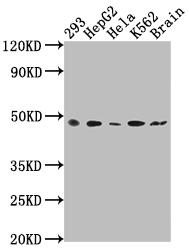
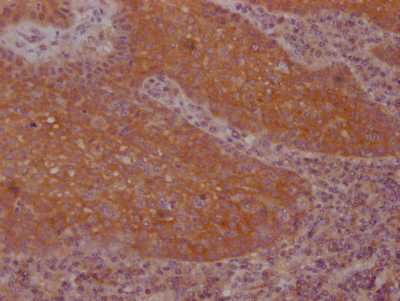
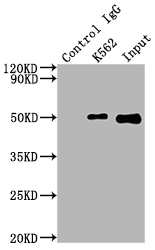
Validation across multiple platforms demonstrates genuine experimental flexibility. Western blot analysis confirms specific detection of the expected 49 kDa band across diverse human cell lines including 293, HepG2, HeLa, and K562, with cross-species reactivity extending to rat brain tissue. Immunohistochemistry staining in paraffin-embedded human tonsil tissue shows clear target visualization, while immunoprecipitation successfully enriches FNTB from K562 lysates, enabling protein interaction studies and downstream biochemical analyses.
Whether you're investigating farnesyltransferase inhibitor mechanisms in oncology research, exploring prenylation-dependent signaling events, or characterizing FNTB expression across tissue types, this antibody provides a reliable foundation for your studies in cancer biology, metabolism, and signal transduction.
There are currently no reviews for this product.





