
Call us
301-363-4651 (Available 9 a.m. to 5 p.m. CST from Monday to Friday)

| Code | CSB-RA559038A0HU |
| Size | US$210 |
| Order now | |
| Image |
|
| Have Questions? | Leave a Message or Start an on-line Chat |
| Application | Recommended Dilution |
|---|---|
| WB | 1:500-1:5000 |
| IHC | 1:50-1:200 |
GABRA5 encodes the alpha-5 subunit of the GABA-A receptor, a ligand-gated chloride channel that mediates inhibitory neurotransmission throughout the central nervous system. This particular subunit shows enriched expression in the hippocampus, where it contributes to tonic inhibition and has been implicated in cognitive processes including learning and memory. Dysregulation of GABRA5-containing receptors has attracted significant research interest in contexts ranging from anxiety disorders to age-related cognitive decline, making reliable detection of this subunit essential for neuroscience investigations.
This recombinant monoclonal antibody, generated against a synthetic peptide derived from human GABA-A receptor alpha-5, offers the consistency and reproducibility that demanding experimental workflows require. Because the antibody sequence is defined and production occurs through recombinant expression in rabbit host cells, researchers can expect minimal lot-to-lot variation across extended studies or collaborative projects requiring standardized reagents.
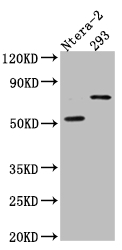
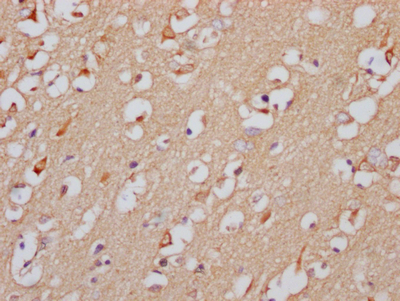
Validation testing demonstrates reliable performance across multiple applications. In western blot analysis, the antibody detects GABRA5 in Ntera-2 and HEK293 whole cell lysates at dilutions ranging from 1:500 to 1:5000. The observed band at approximately 70 kDa runs higher than the predicted 53 kDa molecular weight, a shift consistent with post-translational glycosylation commonly observed in membrane-associated receptor subunits. For tissue-based studies, immunohistochemical staining has been validated in paraffin-embedded human brain sections at dilutions of 1:50 to 1:200, with clear visualization achieved using standard antigen retrieval and polymer detection methods.
This antibody serves researchers investigating GABAergic signaling, synaptic physiology, and neurological disease mechanisms where precise localization and quantification of GABA-A receptor subunits advances experimental understanding.
There are currently no reviews for this product.





