
Call us
301-363-4651 (Available 9 a.m. to 5 p.m. CST from Monday to Friday)

| Code | CSB-RA009369MA1HU |
| Size | US$210 |
| Order now | |
| Image |
|
| Have Questions? | Leave a Message or Start an on-line Chat |
| Application | Recommended Dilution |
|---|---|
| WB | 1:1000-1:5000 |
| IHC | 1:50-1:200 |
| FC | 1:50-1:200 |
Glial fibrillary acidic protein serves as the principal intermediate filament protein in mature astrocytes, making it an indispensable marker for studying astrocyte biology, neuroinflammation, and glial responses to central nervous system injury. GFAP expression patterns provide critical insights into reactive gliosis, neurodegenerative disease progression, and brain tumor characterization, positioning it as a cornerstone target in neuroscience research.
This recombinant monoclonal antibody, generated from clone 6B12, offers the reproducibility that demanding experimental workflows require. Because the antibody sequence is defined and production occurs in controlled recombinant systems, researchers benefit from consistent performance across experiments and between lot numbers, eliminating the variability that can complicate longitudinal studies or multi-site collaborations.
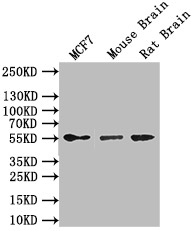
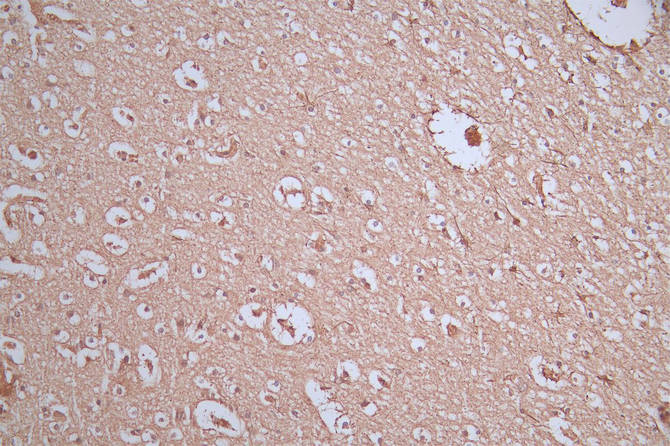
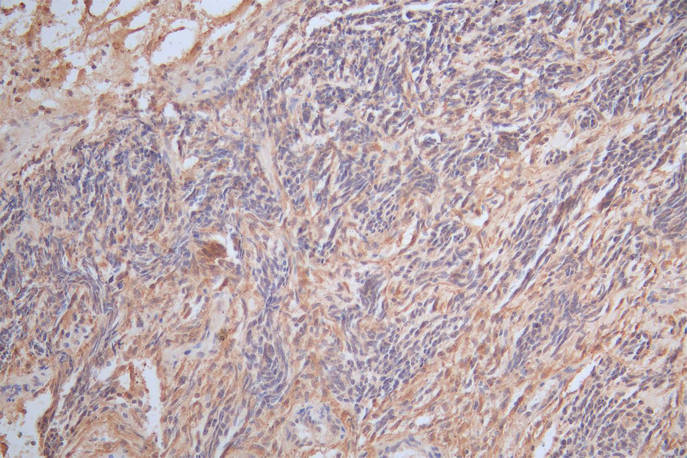
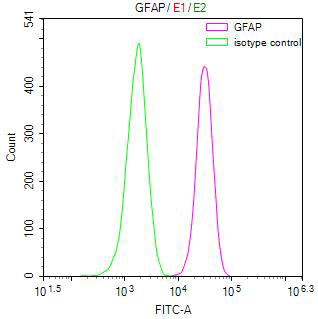
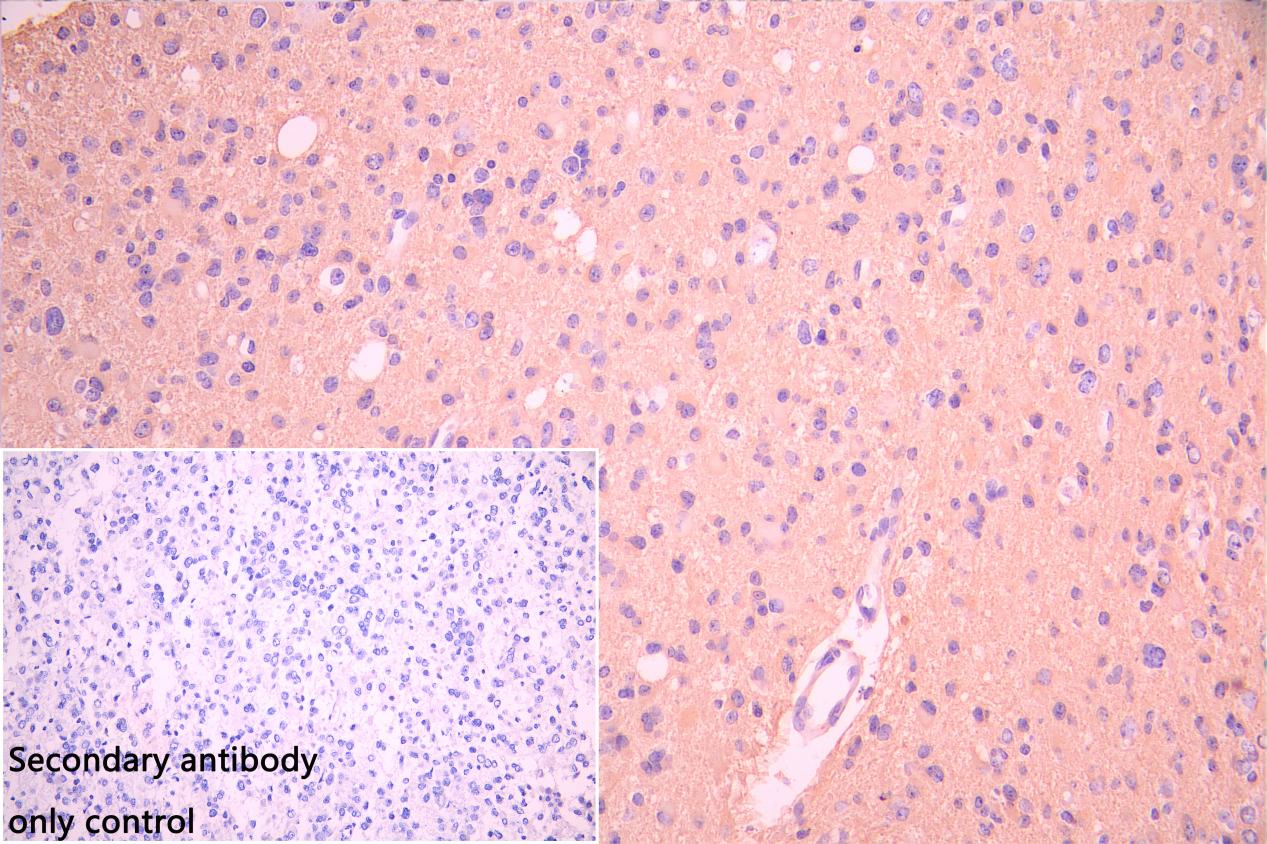
Validation data demonstrates robust performance across multiple platforms, giving researchers flexibility in experimental design. Western blot analysis detects GFAP in human glioblastoma cell lines including U251 and U87, as well as in mouse and rat brain tissue lysates, confirming cross-species reactivity across human, mouse, and rat samples. The observed bands at 50 and 55 kDa align with the predicted molecular weight, with the higher band likely reflecting post-translational modifications such as phosphorylation, which is well-documented for GFAP. Immunohistochemistry validation in paraffin-embedded human brain tissue and glioma specimens demonstrates clear staining patterns suitable for both normal tissue characterization and tumor studies. Flow cytometry data from U251 cells confirms utility for intracellular detection in fixed and permeabilized samples.
Whether investigating astrocyte activation in neurological disease models, characterizing glial tumors, or exploring neural stem cell differentiation, this antibody provides a reliable tool for GFAP detection across diverse experimental contexts.
There are currently no reviews for this product.





