
Call us
301-363-4651 (Available 9 a.m. to 5 p.m. CST from Monday to Friday)

| Code | CSB-RA079244A0HU |
| Size | US$210 |
| Order now | |
| Image |
|
| Have Questions? | Leave a Message or Start an on-line Chat |
| Application | Recommended Dilution |
|---|---|
| WB | 1:500-1:2000 |
| IHC | 1:50-1:200 |
| IF | 1:50-1:200 |
| FC | 1:50-1:200 |
Progranulin, encoded by the GRN gene, serves as a critical regulator of cell growth, wound healing, and neuronal survival. This secreted glycoprotein has garnered significant research attention due to its involvement in frontotemporal dementia, where loss-of-function mutations lead to neurodegeneration, and its emerging roles in cancer biology where it can promote tumor growth and survival. Understanding progranulin expression and localization is essential for researchers investigating neurodegenerative mechanisms, inflammatory responses, and oncogenic pathways.
This recombinant monoclonal antibody, generated against a synthetic peptide derived from human progranulin, offers the consistency and reliability that demanding experimental workflows require. As a sequence-defined reagent produced through recombinant technology, it eliminates the lot-to-lot variability that can compromise longitudinal studies and ensures reproducible results across your research program.
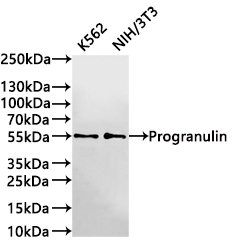
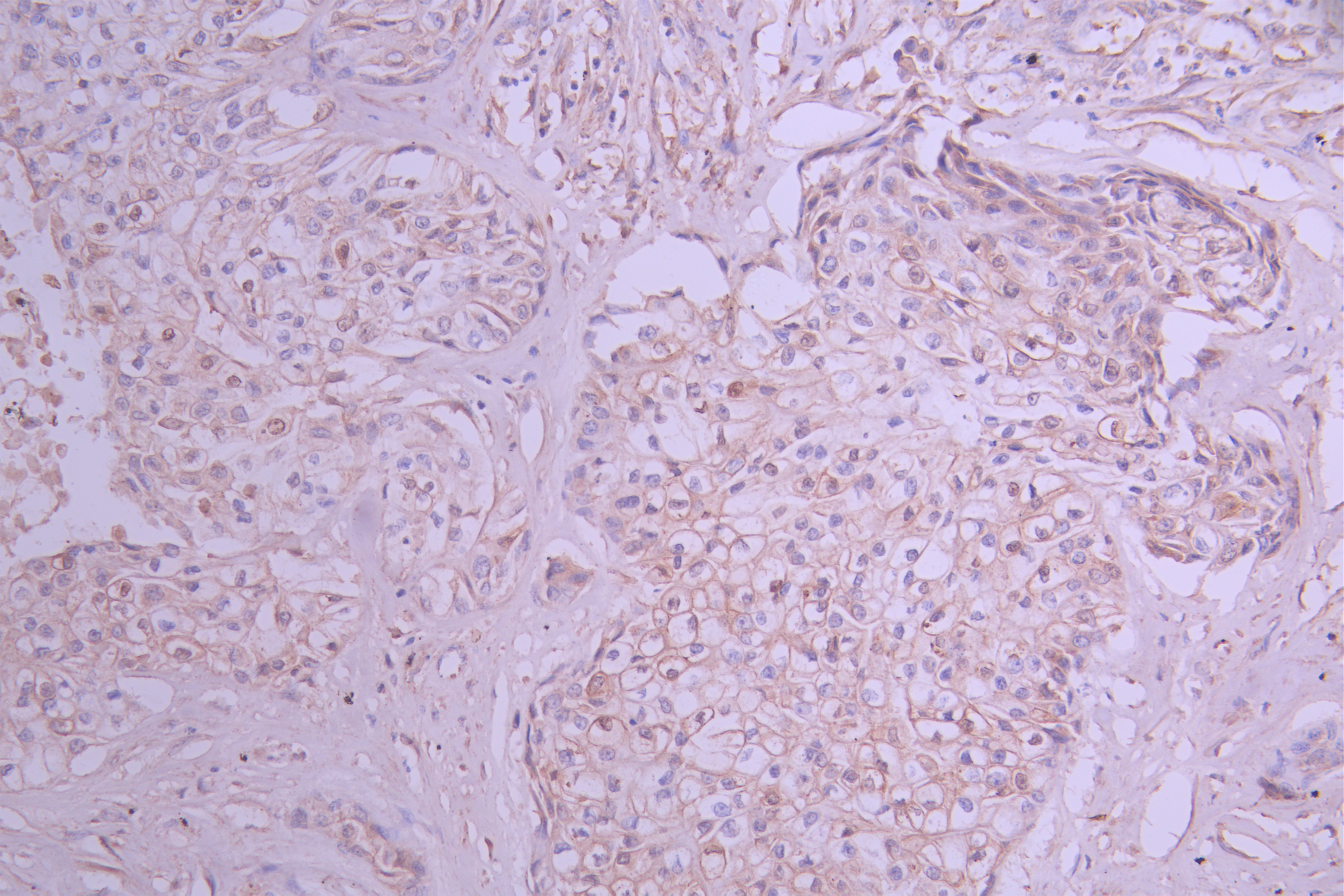
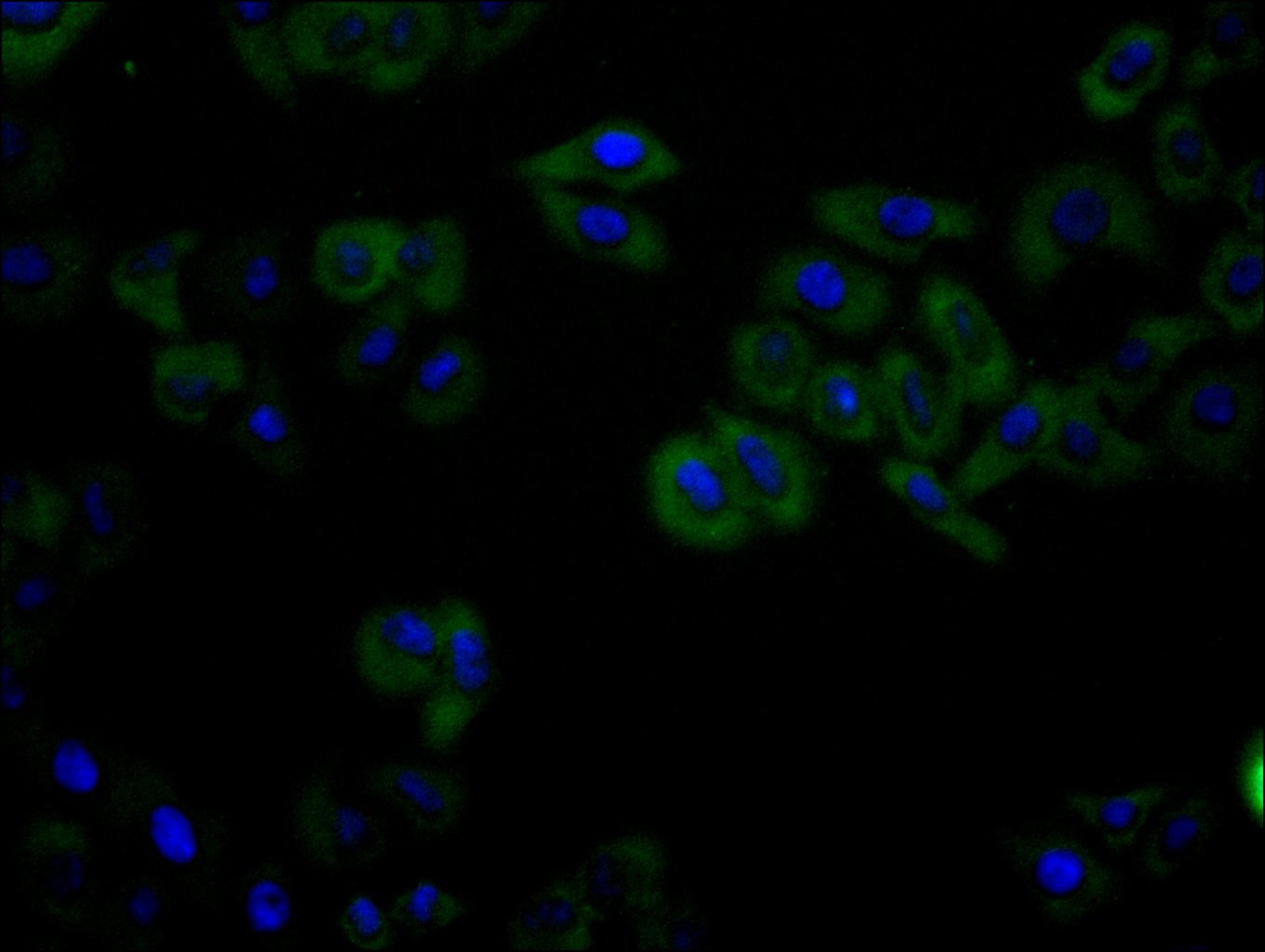
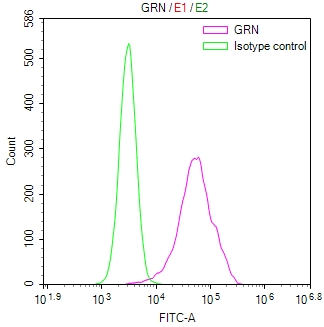
Validated across multiple applications, this antibody provides flexibility for diverse experimental approaches. Western blot analysis has confirmed detection in both human K562 and mouse NIH/3T3 cell lysates, demonstrating cross-species reactivity that expands your experimental options. The observed band at approximately 55 kDa differs from the predicted 64 kDa molecular weight, which likely reflects proteolytic processing of the progranulin precursor or differences in glycosylation state. Immunohistochemistry validation in human pancreatic cancer tissue reveals clear staining patterns, while immunofluorescence studies in HeLa cells and flow cytometry analysis of 786-O renal carcinoma cells further demonstrate the antibody's versatility across detection platforms.
Whether you are investigating progranulin's neuroprotective functions, exploring its role in tumor microenvironments, or characterizing its expression in inflammatory conditions, this antibody delivers the performance and reproducibility your research demands.
There are currently no reviews for this product.





