
Call us
301-363-4651 (Available 9 a.m. to 5 p.m. CST from Monday to Friday)

| Code | CSB-RA237696A0HU |
| Size | US$210 |
| Order now | |
| Image |
|
| Have Questions? | Leave a Message or Start an on-line Chat |
| Application | Recommended Dilution |
|---|---|
| WB | 1:500-1:5000 |
| IHC | 1:50-1:200 |
| IF | 1:50-1:200 |
| FC | 1:50-1:200 |
GTF2E1, also known as TFIIE-alpha, serves as the larger subunit of the general transcription factor IIE complex, playing an essential role in RNA polymerase II-mediated transcription initiation. This 56 kDa protein facilitates the recruitment of TFIIH to the preinitiation complex and stimulates the helicase and kinase activities necessary for promoter clearance, making it a key player in understanding fundamental transcriptional regulation mechanisms.
This recombinant monoclonal antibody, generated against a synthetic peptide derived from human GTF2E1, offers the consistency and reliability that comes with sequence-defined production. As a rabbit IgG monoclonal (clone 10A3), it provides reproducible results across experiments, eliminating the lot-to-lot variability that can complicate long-term studies of transcriptional machinery.
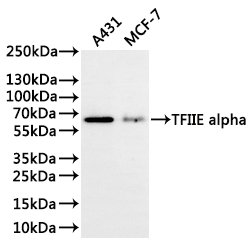
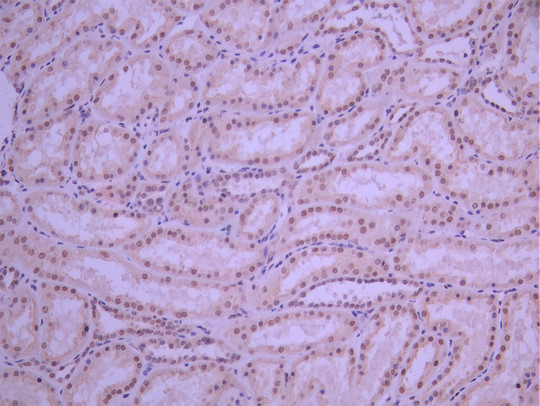
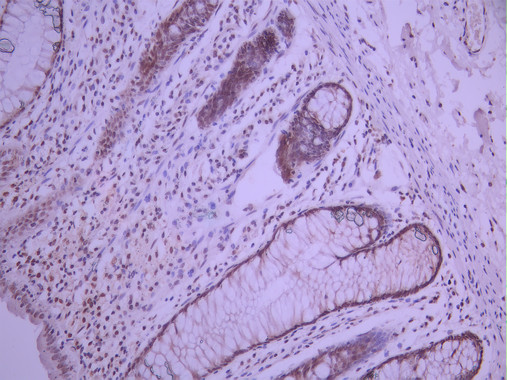
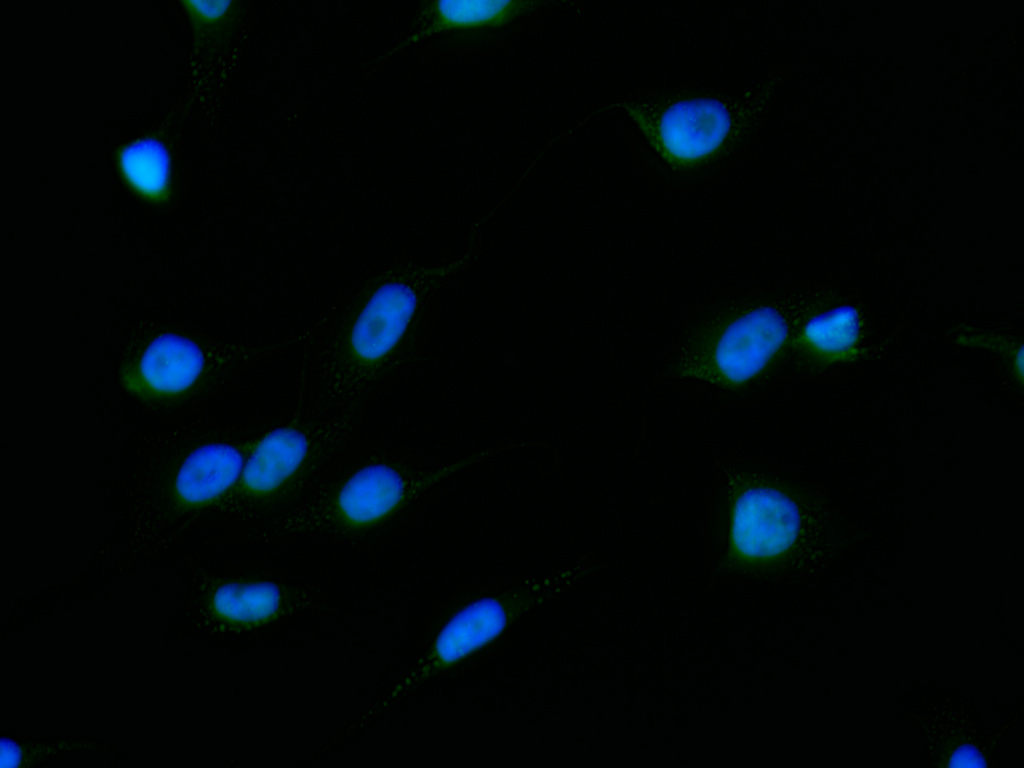
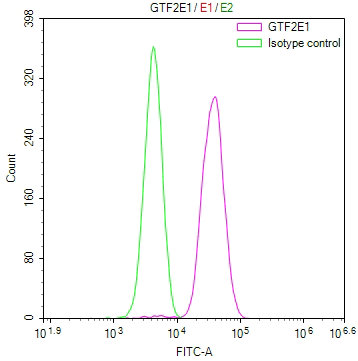
Validation across multiple platforms demonstrates this antibody's versatility for diverse experimental workflows. Western blot analysis in A431 and MCF-7 whole cell lysates reveals a band at approximately 60 kDa, which runs slightly higher than the predicted 49 kDa molecular weight—a shift commonly attributed to post-translational modifications such as phosphorylation events known to regulate TFIIE function. Immunohistochemistry applications have been validated in human kidney tissue and colorectal cancer specimens using citrate buffer antigen retrieval, while immunofluorescence staining in PC-3 prostate cancer cells confirms nuclear localization consistent with GTF2E1's role in transcription. Flow cytometry analysis in Jurkat cells further extends its utility for single-cell studies.
This antibody supports researchers investigating transcriptional regulation, cancer biology, and gene expression mechanisms, providing a reliable tool for examining TFIIE-alpha across protein detection, tissue localization, and cell-based applications.
There are currently no reviews for this product.





