
Call us
301-363-4651 (Available 9 a.m. to 5 p.m. CST from Monday to Friday)

| Code | CSB-RA781541A0HU |
| Size | US$210 |
| Order now | |
| Image |
|
| Have Questions? | Leave a Message or Start an on-line Chat |
| Application | Recommended Dilution |
|---|---|
| WB | 1:500-1:5000 |
| IHC | 1:50-1:200 |
| FC | 1:50-1:200 |
GTPBP4, also known as nucleolar GTP-binding protein 1, plays a critical role in ribosome biogenesis and cellular proliferation. This nucleolar protein participates in the assembly of the large ribosomal subunit, making it an important target for researchers investigating fundamental cellular processes, cancer biology, and conditions where ribosome function is dysregulated. Originally identified as a chronic renal failure gene protein, GTPBP4 has since emerged as a molecule of interest across multiple disease contexts where aberrant cell growth is a hallmark.
This recombinant monoclonal antibody, clone 8F2, offers the reproducibility and consistency that demanding experimental workflows require. Because it is generated from a defined sequence rather than traditional hybridoma methods, you can expect uniform performance across lots, eliminating the variability that can compromise longitudinal studies or multi-site collaborations. The rabbit host and IgG isotype provide excellent signal-to-noise characteristics across diverse detection platforms.
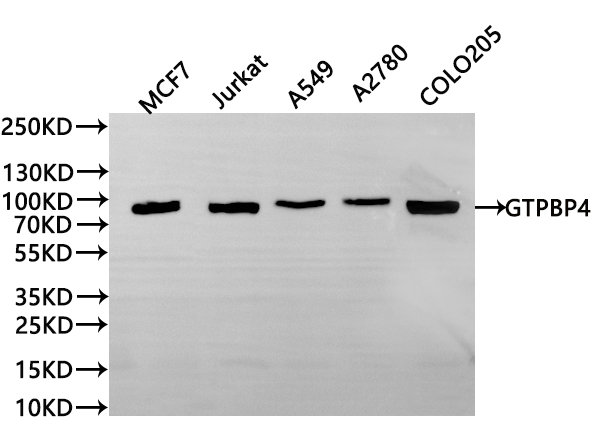
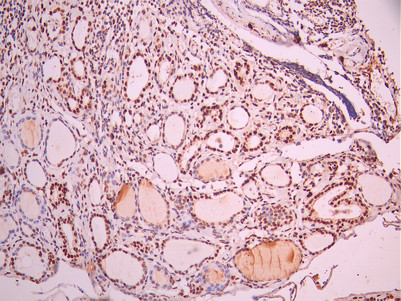
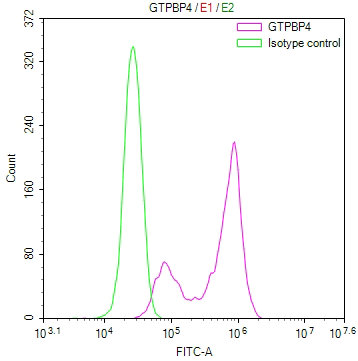
Validation studies demonstrate robust performance in western blot applications across multiple human cancer cell lines, including MCF7, Jurkat, A549, A2780, and COLO205. The observed band at approximately 80 kDa runs slightly higher than the predicted 74 kDa molecular weight, a shift likely attributable to post-translational modifications such as glycosylation. Immunohistochemistry validation in human thyroid tissue confirms utility for tissue-based studies, while flow cytometry analysis in HepG2 cells demonstrates clear separation from isotype controls, supporting intracellular detection applications.
Whether you are exploring signal transduction pathways, characterizing ribosome assembly dynamics, or investigating GTPBP4 expression patterns in disease models, this antibody provides the flexibility to move seamlessly between detection platforms while maintaining experimental confidence.
There are currently no reviews for this product.





