
Call us
301-363-4651 (Available 9 a.m. to 5 p.m. CST from Monday to Friday)

| Code | CSB-RA045000A0HU |
| Size | US$210 |
| Order now | |
| Image |
|
| Have Questions? | Leave a Message or Start an on-line Chat |
| Application | Recommended Dilution |
|---|---|
| WB | 1:500-1:5000 |
| IHC | 1:50-1:200 |
| FC | 1:50-1:200 |
HLTF (Helicase-like transcription factor) serves as a critical chromatin remodeling enzyme belonging to the SWI/SNF family, playing essential roles in DNA damage response, replication fork stability, and transcriptional regulation. This multifunctional protein, also known as SMARCA3, possesses both helicase and E3 ubiquitin ligase activities, making it a compelling target for researchers investigating genome maintenance mechanisms, cancer biology, and epigenetic regulation.
This recombinant rabbit monoclonal antibody (clone 21D10) offers the reproducibility and consistency that demanding experimental workflows require. Generated against a synthetic peptide derived from human HLTF, the antibody undergoes affinity chromatography purification to ensure high specificity. Because recombinant production relies on defined genetic sequences rather than traditional hybridoma methods, researchers benefit from lot-to-lot consistency that supports longitudinal studies and reproducible results across experiments.
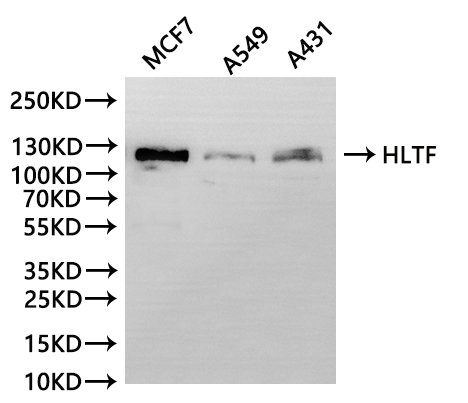
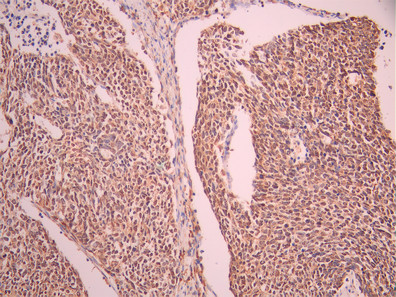
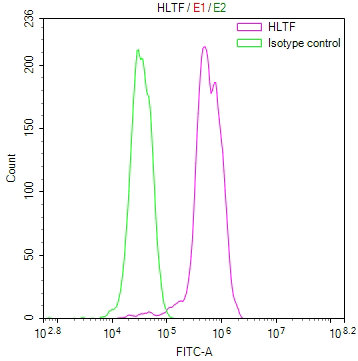
Validation studies demonstrate reliable performance across multiple detection platforms. Western blot analysis successfully detects HLTF in MCF-7 breast cancer, A549 lung adenocarcinoma, and A431 epidermoid carcinoma cell lysates, with observed bands at approximately 120 kDa—slightly higher than the predicted 114 kDa molecular weight, likely reflecting post-translational modifications such as glycosylation or phosphorylation common to nuclear proteins. Immunohistochemistry staining in paraffin-embedded human lung cancer tissue confirms utility for tissue-based studies, while flow cytometry analysis in MCF-7 cells demonstrates clear positive signal separation from isotype controls, enabling intracellular protein quantification.
With validated applications spanning ELISA, western blotting, immunohistochemistry, and flow cytometry, this antibody provides flexibility for researchers exploring HLTF's contributions to chromatin dynamics, DNA repair pathways, and tumor suppression mechanisms across diverse experimental contexts.
There are currently no reviews for this product.





