
Call us
301-363-4651 (Available 9 a.m. to 5 p.m. CST from Monday to Friday)

| Code | CSB-RA230291A0HU |
| Size | US$210 |
| Order now | |
| Image |
|
| Have Questions? | Leave a Message or Start an on-line Chat |
| Application | Recommended Dilution |
|---|---|
| WB | 1:500-1:2000 |
| IHC | 1:50-1:200 |
| IF | 1:50-1:200 |
| FC | 1:50-1:200 |
HMGB2 (High Mobility Group Box 2) is a non-histone chromosomal protein that plays essential roles in chromatin architecture, transcriptional regulation, and DNA repair processes. As a member of the HMG protein family, HMGB2 facilitates nucleosome remodeling and serves as a critical regulator of gene expression during development and cellular differentiation. Its involvement in inflammatory responses and emerging connections to cancer biology make HMGB2 an important target for researchers investigating chromatin dynamics, immune signaling, and oncogenic mechanisms.
This recombinant rabbit monoclonal antibody (clone 11B2) offers the reproducibility and consistency that demanding experimental workflows require. Generated against a synthetic peptide derived from human HMGB2 and produced through recombinant technology, this antibody provides sequence-defined specificity with minimal lot-to-lot variation, ensuring reliable results across extended studies and collaborative projects.
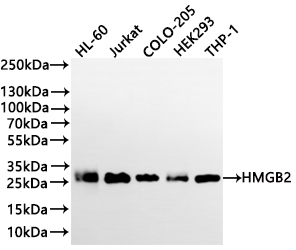
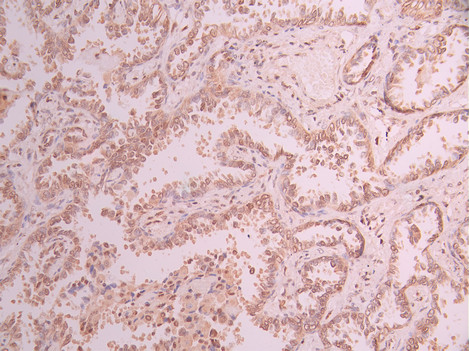
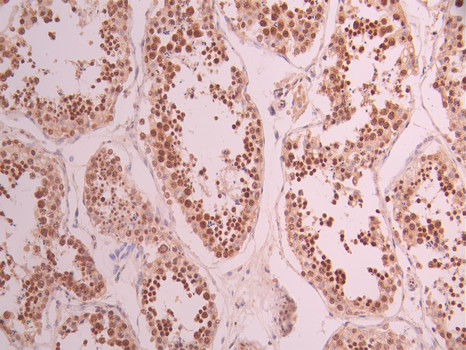
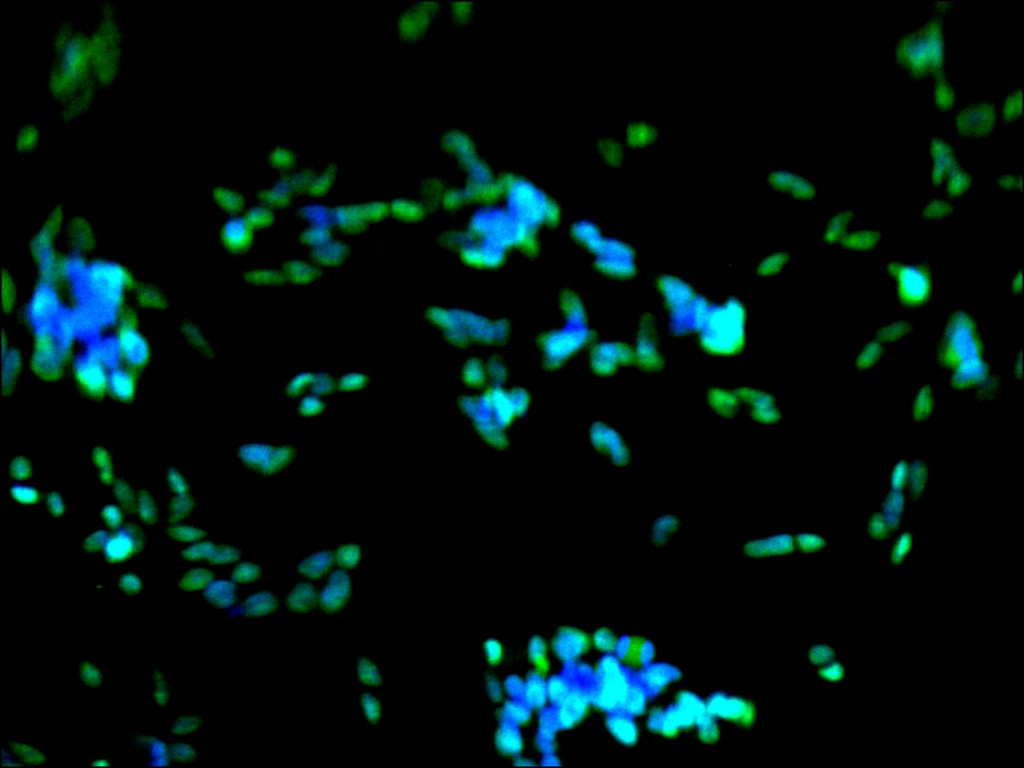
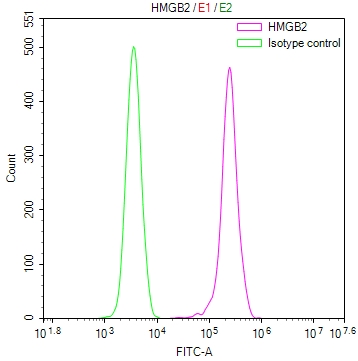
Validation across multiple platforms demonstrates broad experimental utility. Western blot analysis detects HMGB2 in diverse human cell lines including HL-60, Jurkat, COLO-205, HEK293, and THP-1, with optimal performance at dilutions between 1:500 and 1:2000. The observed band at 28 kDa, slightly higher than the predicted 24 kDa molecular weight, likely reflects post-translational modifications such as acetylation or phosphorylation commonly associated with HMGB proteins. Immunohistochemistry applications have been validated in human lung cancer and testis tissues, while immunofluorescence staining in SH-SY5Y neuroblastoma cells reveals clear nuclear localization patterns. Flow cytometry analysis in Jurkat cells further extends its utility for single-cell studies.
This antibody supports research in chromatin biology, transcriptional regulation, inflammatory signaling, and cancer research where HMGB2 expression patterns provide mechanistic insights.
There are currently no reviews for this product.





